Leave Your Message

Best China Corundum Mullite Sagger Manufacturer?

Choosing the best China Corundum Mullite Sagger manufacturer requires more than comparing prices or polished product photographs. Performance depends on raw material purity, mullite distribution, forming pressure, firing control, and dimensional accuracy. A reliable supplier should explain these factors clearly.

This guide examines manufacturers through practical evidence. It considers alumina and zirconia content, apparent porosity, bulk density, thermal shock resistance, and maximum service temperature. It also reviews sample testing, batch traceability, mold precision, packaging, and delivery consistency. Details matter. A capable manufacturer should provide inspection records, technical data sheets, and realistic operating guidance. Claims without test conditions deserve careful review.

The right Corundum Mullite Sagger depends on kiln design, firing cycles, atmosphere, loading weight, and product geometry. A sagger used for ceramic powders may need different performance from one used for battery materials or advanced electronic components. Experienced manufacturers can recommend wall thickness, corner design, and suitable firing temperatures based on actual applications. Not every supplier qualifies. Factory visits, independent testing, and trial orders can reveal weaknesses hidden by sales language. Even careful comparisons have limits, because laboratory results may not match every production line. That point deserves reflection. A lower purchase price can become expensive when saggers crack, deform, contaminate products, or require frequent replacement. This article presents a balanced framework for identifying a dependable Chinese manufacturer, while encouraging buyers to verify technical claims before making a long-term decision.
Best China Corundum Mullite Sagger Manufacturer?

What Is a Corundum Mullite Sagger?

A corundum mullite sagger is a high-temperature kiln container made mainly from corundum and mullite. Corundum provides strong alumina-based hardness, while mullite improves thermal stability and resistance to sudden temperature changes. It holds ceramic powders, electronic components, pigments, and other materials during firing. The sagger also helps shield products from kiln dust, flame contact, and unwanted chemical contamination.

In practical kiln work, performance depends on more than chemical composition. Wall thickness, inner dimensions, porosity, and firing temperature all affect service life. A well-made sagger should have a smooth interior and stable geometry. It should not warp easily after repeated heating cycles. For example, a 300 mm container with uneven walls may develop stress cracks near the corners. Small defects matter.

A reliable manufacturer should control raw material grading, mixing, molding, drying, and final firing. Quality checks may include bulk density, apparent porosity, thermal shock testing, and visual inspection. These details provide useful evidence beyond a sales specification. However, no sagger lasts forever. Excessive loading, rapid cooling, or incompatible kiln atmospheres can shorten its life. I have seen technically sound products fail because operators ignored heating rates. The better choice is not always the densest sagger; the correct balance depends on the firing cycle, load, and product chemistry.
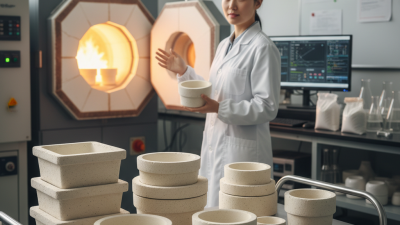
What Is a Corundum Mullite Sagger?

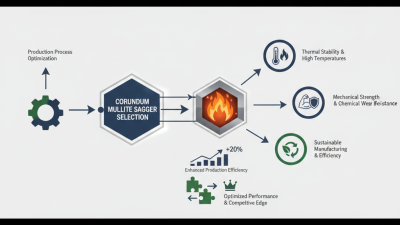
A corundum mullite sagger is a high-temperature ceramic container used to hold and protect ceramic powders, electronic components, battery materials, and other products during firing. Corundum provides high refractoriness and hardness, while mullite improves thermal-shock resistance and dimensional stability. The ranges shown are representative values commonly associated with corundum-mullite refractory saggers; actual specifications vary by formulation and manufacturing process.

How Corundum Mullite Saggers Are Manufactured in China

How Corundum Mullite Saggers Are Manufactured in China

Manufacturing corundum mullite saggers in China starts with carefully graded alumina and mullite powders. Their purity, particle size, and moisture content affect the final structure. Experienced technicians adjust the formula for thermal shock resistance, strength, and firing stability.

Moisture control matters. Binders are added during controlled mixing, then the batch rests before forming. This resting period helps distribute moisture more evenly.

Factories commonly use pressing, casting, or extrusion, depending on the sagger’s size and shape. Large saggers need uniform wall thickness, especially around corners and the base.

After forming, controlled drying removes moisture slowly. Rapid drying can create hidden cracks. The green body is then fired in a high-temperature kiln under a carefully monitored schedule. Temperature changes must remain gradual.

Small cracks matter.

Quality inspection includes dimensional checks, visual inspection, water absorption testing, and thermal shock evaluation. Some manufacturers also test sample saggers under repeated heating and cooling cycles.

Production records help connect defects with mixing, drying, or kiln conditions. Records reveal patterns.

Still, no factory avoids every variation. Uneven loading, local humidity, or small powder differences can affect results. That is why experienced engineers review both laboratory data and feedback from actual kiln use.

A reliable supplier should explain its process clearly, provide inspection records, and discuss limitations honestly. The best choice depends on operating temperature, load weight, atmosphere, and expected service life.

Key Features of a Reliable Sagger Manufacturer

Best China Corundum Mullite Sagger Manufacturer?

Key Features of a Reliable Sagger Manufacturer

A reliable corundum mullite sagger begins with stable raw materials. The manufacturer should control alumina purity, mullite content, particle grading, and moisture levels. These details affect strength, thermal shock resistance, and service life. Experienced production teams also understand kiln behavior. They know that a sagger can fail from uneven heating, not only from poor material quality.

Look for clear technical data, not vague promises. A dependable manufacturer should provide bulk density, apparent porosity, refractoriness, and thermal expansion results. Dimensional tolerances matter too. A small warp may disturb ceramic loading inside a high-temperature kiln. Each batch should have inspection records and traceable production numbers. Practical checks may include visual inspection, size measurement, and sample firing above 1,600°C.

Communication is another important feature. The supplier should ask about firing temperature, cycle duration, loading weight, and atmosphere. A standard design may work, but it may not fit every kiln. This is where many projects become inefficient. I have seen customers focus only on unit price, then replace saggers too often. That decision was understandable, but incomplete. A manufacturer willing to discuss failures openly is usually more reliable. Careful packaging also matters. Cracked corners can appear after transport, even when the firing quality is excellent.

How to Evaluate Corundum Mullite Sagger Quality

Best China Corundum Mullite Sagger Manufacturer?

How to Evaluate Corundum Mullite Sagger Quality

A reliable corundum mullite sagger should show a dense, even body and clean edges. Inspect the surface under bright light. Hairline cracks, pinholes, and loose grains may worsen during repeated firing. Measure length, width, height, and wall thickness at several points. Uneven dimensions can cause unstable stacking inside the kiln.

Ask for test data, not general promises. Important values include apparent porosity, bulk density, refractoriness, and thermal shock performance. A suitable sagger should resist deformation at the planned firing temperature. Its chemical composition must also match the ceramic glaze or powder being fired. Small reactions can create contamination or sticking. That problem is expensive.

Practical experience matters. Ask how the manufacturer controls raw material grading, forming pressure, drying, and sintering. Review batch records and sample inspection reports. A trial batch should be fired under conditions close to actual production. Check warpage afterward, not only before use. A clean sample can still mislead. I once accepted a visually excellent sagger that failed after several cycles because its base was slightly uneven. Supplier communication also matters. Clear replacement terms, traceability, and honest limitations indicate stronger reliability. No supplier is perfect, so evaluate evidence rather than polished photographs.

Best China Corundum Mullite Sagger Manufacturer? - How to Evaluate Corundum Mullite Sagger Quality
Quality Dimension What to Check Typical Technical Benchmark Why It Matters
Chemical Composition Request a batch-specific chemical analysis using X-ray fluorescence or an equivalent validated method. Verify by lot Corundum–mullite bodies commonly use high-purity alumina as the principal oxide component. The required Al2O3, SiO2, Fe2O3, alkali, and alkaline-earth limits should be agreed in the purchase specification. Impurities can increase glassy-phase formation, reduce refractoriness, and promote contamination of fired products.
Phase Composition Use X-ray diffraction when the application requires confirmation of corundum and mullite phases. The body should contain the specified corundum and mullite phases with no unexpected crystalline phases that could adversely affect thermal or chemical performance. Phase balance influences thermal expansion, thermal-shock behavior, strength, and reaction with the load.
Bulk Density Measure according to a recognized refractory or ceramic test procedure, such as an appropriate ISO or ASTM method. The value should remain within the supplier’s approved product specification and show consistent results across the same production lot. Stable density indicates controlled forming and firing. Excessive porosity can reduce strength and increase chemical penetration.
Apparent Porosity Test representative samples after firing, using a standardized water-absorption or vacuum-saturation procedure. Lower and consistent apparent porosity is generally preferred for repeated high-temperature service, provided thermal-shock requirements are also satisfied. Open pores can allow molten salts, glazes, or other process materials to penetrate the sagger and accelerate corrosion.
Cold Crushing Strength Test fired specimens according to a recognized refractory standard and compare results with the agreed specification. Results should meet the design requirement at room temperature and show low variation within a batch. A single universal value is not suitable for every sagger design. Adequate strength reduces breakage during handling, stacking, kiln loading, and unloading.
Refractoriness and Maximum Service Temperature Confirm the recommended continuous-use temperature, peak-use temperature, atmosphere, heating rate, and load conditions in writing. The rated service temperature must exceed the actual firing temperature with an appropriate safety margin. The rating should account for load, atmosphere, cycle time, and sagger geometry. A sagger may deform or react with the charge if its temperature rating is based only on material composition and not on real operating conditions.
Thermal Shock Resistance Review thermal-shock test data and, where possible, conduct a trial using the actual heating and cooling cycle. No universal pass value applies. Acceptance should be based on the number of cycles completed without critical cracking, spalling, or permanent deformation. Rapid temperature changes are a major cause of sagger cracking, especially during kiln entry, cooling, and unloading.
Dimensional Accuracy Measure length, width, height, wall thickness, flatness, squareness, and lid fit using calibrated tools. Dimensions should comply with the approved drawing. Tolerances must be defined according to the sagger size, kiln arrangement, and loading clearance. Dimensional variation can cause unstable stacking, poor kiln utilization, lid interference, and uneven heating.
Warping and Deformation Check the base and rim on a flat reference surface and inspect fired samples after cooling. The base should sit securely without rocking, and the rim should remain sufficiently flat for safe stacking or lid placement. Warped saggers can create point loading, reduce usable capacity, and increase the risk of collapse during kiln operation.
Surface Condition Perform a visual and dimensional inspection for blisters, laminations, deep scratches, open cracks, inclusions, and loose particles. Surfaces should be clean and free from through-cracks, structural laminations, loose material, and defects that compromise wall thickness or product contact. Surface defects can initiate cracks, contaminate the charge, and increase local thermal and mechanical stress.
Thermal Expansion Obtain dilatometry data over the intended operating temperature range and compare it with the kiln and load system. The supplier should provide expansion behavior rather than relying only on a room-temperature size measurement. Mismatch between sagger expansion and kiln furniture or load materials can create binding, cracking, and uneven stress.
Chemical Resistance Conduct a compatibility trial with the actual powder, glaze, salt, oxide, or molten material used in production. After testing, the sagger should show acceptable levels of corrosion, sticking, infiltration, reaction layer formation, and product contamination. Chemical attack can shorten service life and transfer unwanted elements into the fired product.
Batch Consistency Compare inspection records, test results, dimensions, and firing history for multiple production lots. Key properties should remain within the agreed control limits, with traceability from raw materials through forming, firing, inspection, and packing. Consistency is essential for predictable kiln performance and stable product quality over repeated purchases.
Manufacturing Process Control Review forming method, drying controls, firing schedule, kiln uniformity, inspection procedures, and calibration records. The manufacturer should demonstrate controlled drying and firing, documented process parameters, and inspection before shipment. Many cracks and deformations originate from uneven drying, poor compaction, or nonuniform firing rather than from the raw material alone.
Packaging and Transportation Protection Inspect the packing design, separators, moisture protection, pallet stability, and receiving inspection procedure. Each sagger should be protected against impact, abrasion, and uncontrolled stacking during transport, with visible damage records at receipt. Brittle refractory products can develop hidden cracks during handling even when the external packaging appears intact.
Application Trial and Service Life Run a controlled trial under actual temperature, atmosphere, load, cycle time, and cleaning conditions. Evaluate usable cycles, crack development, deformation, sticking, contamination, and ease of unloading against a predefined acceptance plan. Laboratory properties alone cannot fully predict performance in a specific kiln process.

Choosing the Best China Corundum Mullite Sagger Manufacturer

Choosing the Best China Corundum Mullite Sagger Manufacturer

A reliable manufacturer should understand more than catalog dimensions. In daily kiln work, saggers face repeated heating, cooling, loading, and cleaning. Ask how the factory controls alumina content, mullite formation, porosity, and firing temperature. These factors influence strength, thermal shock resistance, and service life. Request a material certificate and a recent inspection report. Vague answers are warning signs.

A serious supplier should provide samples before a large order. Test the sample in your own kiln, with your actual cycle and load. Check warping, edge chipping, surface dust, and reaction with the fired product. Measure the internal size after firing, not only before shipment. Small dimensional changes can affect stacking clearance. The best manufacturer will discuss these results openly and suggest adjustments.

Production experience matters, but it should be supported by traceable quality control. Look for batch records, mold maintenance, drying controls, and inspection points. Ask whether the same formula is used consistently across batches. It may not be. Even experienced factories can have uneven drying or rushed packing. That is worth discussing. Confirm packaging, replacement procedures, lead times, and communication during production. A dependable China partner answers with data. It accepts reasonable criticism. It helps refine the sagger design for your kiln, not merely offer the lowest quotation.