How to Choose the Best Alumina Ceramic for Your Needs?
When selecting the best Alumina Ceramic for specific applications, understanding its properties is crucial. Alumina Ceramic is renowned for its excellent hardness and wear resistance. MarketsandMarkets reported a growth rate of 6.7% in the global alumina ceramic market from 2020 to 2025. This growth emphasizes the increasing demand for high-performance materials in various industries.
Expert Dr. Susan Lee, a leader in advanced ceramic materials, states, "Choosing the right Alumina Ceramic can make or break your project's success." Her insight underlines the importance of selecting the appropriate grade and type based on operational requirements. The wide range of alumina variants, from 85% to 99.9% purity, presents a challenge.
Each application demands careful consideration. High-purity alumina offers superior chemical resistance. However, its cost may be prohibitive for some projects. Conversely, lower-purity options may save money but compromise strength and durability. Balancing these factors requires a deep understanding of project needs and material performance. A wrong choice can lead to failures and increased costs. Identifying the right Alumina Ceramic involves an interplay of knowledge and experience.
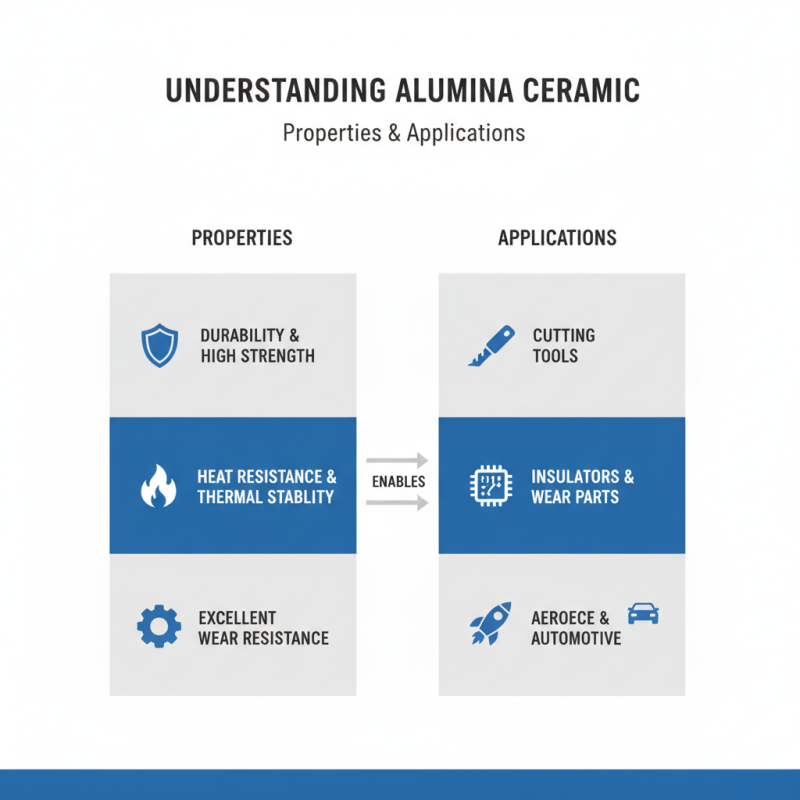
Understanding Alumina Ceramic: Properties and Applications
Alumina ceramic is a versatile material known for its durability and heat resistance. It offers various properties that make it suitable for numerous applications. With high strength and excellent wear resistance, alumina is often used in manufacturing cutting tools, wear parts, and insulators. Its thermal stability allows it to perform well in high-temperature environments, making it a popular choice in aerospace and automotive industries.
Selecting the right alumina ceramic can be challenging. Start by understanding the specific application. Consider factors like temperature, load-bearing capacity, and wear resistance. Different grades of alumina provide varying levels of performance. Pay attention to the alumina content; higher purity materials typically offer better mechanical properties.
Tips: Don't overlook your supplier's expertise. A reliable source can guide you through selecting the best grade for your needs. Always reassess the performance of your chosen material in real-world conditions. Monitor its behavior over time, as factors like crack formation can occur. This reflection will help you make better choices in the future.
Identifying Your Specific Requirements for Alumina Ceramic
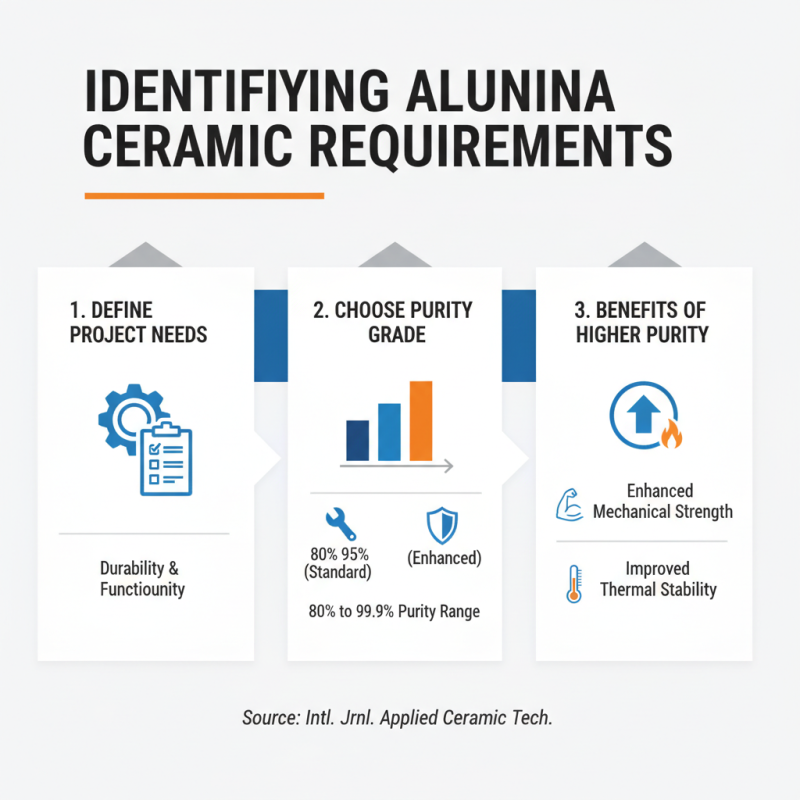
When selecting alumina ceramic, start by identifying your specific project requirements. Alumina ceramics are known for their durability and functionality across various applications. The primary grades typically range from 80% to 99.9% purity. Choosing the right level of purity is crucial. For instance, a study from the International Journal of Applied Ceramic Technology indicates that higher purity levels lead to enhanced mechanical strength and thermal stability.
Next, consider factors such as the required mechanical strength, thermal conductivity, and resistance to wear. If you need ceramics for cutting tools, a toughness rating of over 30 MPa.m1/2 is essential. Conversely, applications in electronics might prioritize thermal conductivity over strength. According to a report by Advanced Ceramics Research, alumina with a density of 3.95 g/cm³ exhibits superior performance in electrical insulation.
Lastly, don't overlook the need for cost-effectiveness within your project. For instance, sometimes opting for a lower purity can reduce costs without significantly compromising performance. However, this trade-off deserves careful consideration, as it may affect the lifespan of the product. Thus, determining your priorities will guide you toward the best alumina ceramic for your specific needs.
Evaluating Different Grades of Alumina Ceramics
When evaluating different grades of alumina ceramics, consider factors such as purity, mechanical strength, and thermal stability. Alumina ceramics range from 85% to over 99% purity. Higher purity often translates to better performance, but requirements vary based on application. For instance, a 99.5% alumina ceramic demonstrates superior wear resistance and strength compared to lower grades.
Tips: Always assess application needs before selecting a grade. Consider the environment where the ceramic will be used. Moist environments may require higher-grade alumina for longevity. Be cautious; higher purity can also increase costs.
In sectors like electronics, high-purity ceramics are essential. According to industry reports, 99.9% alumina ceramics are preferred for insulating materials. Their low dielectric loss makes them ideal for high-frequency applications. However, balance performance with cost-effectiveness.
Tips: Create a checklist of properties that align with your project requirements. Evaluate specific test reports to ensure you are making a well-informed decision. Remember, selection should not solely focus on grade but also on the properties that will best serve your application.
Comparing Manufacturing Processes and Their Impact on Quality
The manufacturing process of alumina ceramics plays a crucial role in determining their final quality. Two primary methods exist: traditional slip casting and advanced isostatic pressing. Slip casting, widely used in the industry, allows for complex shapes but can introduce inconsistencies in density. According to recent studies, pieces produced this way may have a density variation of up to 10%. This variance can lead to unpredictable performance in applications requiring high reliability.
Isostatic pressing, on the other hand, applies uniform pressure to powdered alumina. This results in higher density and improved mechanical properties. Research indicates that ceramics made through this method can achieve a density greater than 99% of the theoretical maximum. This ensures not only superior strength but also enhanced wear resistance, crucial for high-demand applications. However, the advanced equipment and longer processing times associated with this technique can increase production costs, which is a consideration for manufacturers.
Quality control is another vital aspect influenced by the chosen manufacturing process. Parameters such as temperature and pressure must be monitored closely. A deviation of just a few degrees can compromise the integrity of the final product. Yet, many manufacturers still struggle with maintaining consistent quality throughout their production runs. This inconsistency raises questions about reliability in critical applications like aerospace and medical devices, where material performance is non-negotiable.
Comparison of Alumina Ceramic Manufacturing Processes and Their Impact on Quality
This chart shows a comparative analysis of different manufacturing processes for alumina ceramics in terms of material strength measured in megapascals (MPa). As seen, Hot Pressing provides the highest strength, while Conventional Sintering has the lowest strength among the methods analyzed.
Making the Right Choice: Cost vs. Performance Considerations
When selecting the best alumina ceramic, the balance between cost and performance is crucial. High-purity alumina ceramics can provide exceptional mechanical properties.
However, they often come at a premium price. According to a 2022 market analysis from the Global Ceramic Association, prices for standard-grade alumina ceramics range from $5 to $20 per kilogram, depending on purity and application.
It is vital to assess whether the enhanced performance justifies the additional costs for your specific application needs.
Performance should not be overlooked. The right alumina ceramic offers high wear resistance, thermal stability, and excellent electrical insulation. A recent study indicated that alumina ceramics with 99.99% purity show a nearly 30% increase in wear resistance compared to lower grades.
However, this level of purity may not be necessary for every application. Users must evaluate the trade-offs between performance benefits and budget constraints.
It is essential to align the ceramic's specifications with the intended use. Some applications may benefit from lower-grade ceramics without compromising overall functionality.
Often, the decision-making process involves subjective preferences. Factors like expected lifespan, operational conditions, and temperature tolerance play roles. Misalignment of these factors can lead to overspending on materials that exceed requirements. Conversely, opting for cheaper alternatives may result in premature failures or increased maintenance costs.
Understanding these dynamics helps create a more informed purchasing strategy that reflects both economic and performance considerations effectively.