How to Choose the Best Cordierite Mullite Sagger for Your Needs?
In the ceramics industry, selecting the right kiln furniture is crucial. A Cordierite Mullite Sagger stands out for its ability to withstand high temperatures and thermal shock. Recent studies indicate that materials with a high cordierite and mullite content achieve superior performance. According to the International Journal of Advanced Ceramics, these saggers maintain structural integrity under extreme conditions.
However, choosing the best Cordierite Mullite Sagger is not always straightforward. It requires careful consideration of specific needs, including load-bearing capacity and thermal properties. The market offers various options, but not all meet industry standards. A report by the Ceramic Materials Association suggests that poorly selected saggers can lead to costly production delays and compromised product quality.
When evaluating options, buyers should prioritize reliability and consistency. This is essential to avoid long-term impacts on manufacturing processes. Engaging with suppliers who provide comprehensive data and user testimonials can help ensure informed choices. Ultimately, making an educated decision on the right Cordierite Mullite Sagger can enhance efficiency and product quality in the ceramics production process.
Understanding Cordierite Mullite Saggers and Their Applications
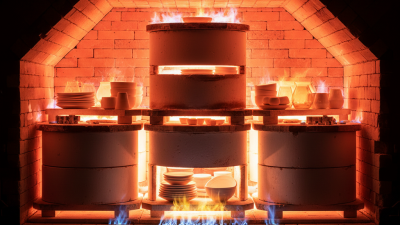
Cordierite mullite saggers are essential in high-temperature applications such as ceramics and glass industries. These structures provide support and protection to fragile products during firing. According to industry reports, cordierite mullite’s thermal stability is crucial for maintaining product quality, withstanding up to 1,400°C. This combination of thermal shock resistance and low thermal expansion helps minimize defects.
For effective usage, consider the specific firing conditions. The choice of size and shape influences its effectiveness. A well-fitted sagger can lead to better load distribution and reduce wear. Monitoring the kiln environment can prevent premature failure. Keep in mind that saggers may require periodic inspection for signs of damage.
**Tip:** Regularly assess your sagger’s condition. Small cracks can signal larger issues. If you notice irregular wear, it could affect your products. Ensure you use the right size; oversize saggers may not support the load effectively. Proper maintenance extends the lifespan of your saggers, ensuring reliability in production. Make informed decisions based on your unique production needs.
How to Choose the Best Cordierite Mullite Sagger for Your Needs?
| Property |
Description |
Typical Applications |
Temperature Resistance (°C) |
| Thermal Shock Resistance |
Ability to withstand rapid temperature changes without cracking. |
Ceramic firing, glass production. |
Up to 1400 |
| Chemical Resistance |
Resilience against corrosive substances and high-alkali environments. |
Catalytic converters, industrial kilns. |
Up to 1300 |
| Dimensional Stability |
Maintaining size and shape under heat and load. |
Support structures in kilns, industrial furnaces. |
Up to 1350 |
| Weight |
Lightweight material allowing for easy handling and transportation. |
Sagger production, casting products. |
N/A |
Key Features to Consider When Choosing a Sagger
When selecting a cordierite mullite sagger, several key features must be evaluated. One critical aspect is thermal stability. A high-quality sagger should withstand extreme temperatures without warping. Look for saggers that offer a consistent performance in thermal cycling. This ensures your ceramics remain protected during firing.
Another important feature to assess is the chemical resistance of the sagger. It should resist chemical reactions that can occur with glazes and kiln atmospheres. Choose a sagger designed to minimize contamination. This will enhance the purity and integrity of your products, reducing risks during the firing process.
Tips: Always check customer reviews for insights. Real-world feedback can guide your choices. Conduct tests with small samples before making a bulk purchase. This can save you time and resources. If your production needs change, be flexible and reevaluate your options. Adaptability is key in selecting the right sagger for your unique requirements.
Comparing Different Types of Cordierite Mullite Saggers
When selecting cordierite mullite saggers, it's essential to evaluate their specific characteristics. Various types of saggers can significantly impact firing performance. For instance, cordierite mullite saggers are noted for their exceptional thermal shock resistance. According to recent industry reports, these saggers withstand temperature fluctuations up to 1500°C without deformation. However, not all saggers are suitable for every application.
Some cordierite mullite saggers boast a high porosity level, which enhances their heat retention abilities. This feature can lead to better energy efficiency in kiln operations. On the other hand, saggers with lower porosity might be more durable but can suffer from heat retention issues, making them less efficient in certain scenarios. Evaluating the intended application is key. Determine if durability or thermal efficiency is your priority, as both aspects have trade-offs.
Additionally, consider the size and shape of the sagger. A report from the International Ceramic Society highlights that custom-sized saggers optimize kiln space and enhance productivity. However, custom solutions can sometimes lead to longer production waits and increased costs. Therefore, reflect on your specific needs before making a decision. While many options exist, your choice must align closely with your operational requirements.
Comparison of Different Types of Cordierite Mullite Saggers
Assessing the Durability and Heat Resistance of Saggers
Choosing the right cordierite mullite sagger is crucial for various applications. Durability and heat resistance are vital factors to consider. A sagger's ability to withstand high temperatures directly impacts the quality of the fired products. For ceramics, maintaining stability during firing is essential. The right materials can minimize deformation and cracking.
When assessing durability, pay attention to the manufacturing process. High-quality saggers undergo precise controls to enhance stability. The thickness of the walls affects not only insulation but also strength. Thin saggers might save weight but could crack under pressure. In contrast, overly thick saggers can be heavy and challenging to handle. Sometimes, striking a balance becomes a complex decision.
Additionally, heat resistance should never be overlooked. Different applications require different temperature tolerances. Consider the maximum firing temperature for your specific needs. Some saggers may withstand high temperatures but not perform well under thermal shock. These nuances make it vital to evaluate your specific use case carefully. Overlooking these details may lead to costly errors during the production process.
Determining the Right Size and Shape for Your Needs
Choosing the right size and shape for cordierite mullite saggers is crucial in ensuring optimal performance. These materials are widely recognized for high-temperature applications in kilns and furnaces. The dimensions of a sagger can greatly affect the thermal efficiency and stability of the kiln environment.
Consider that saggers come in various shapes. Rectangular and cylindrical saggers serve specific functions. Rectangular designs are often preferred for stacking efficiency, while cylindrical models allow for better airflow around the materials. The right shape ensures even heat distribution. According to industry reports, saggers that match the load size can reduce energy consumption by up to 15%. Mismatched sizes can lead to uneven heating or damaging fluxing.
The size of your sagger should accommodate both your product dimensions and the kiln's capacity. A sagger that’s too large can create unnecessary empty space, compromising thermal efficiency. Conversely, an undersized sagger may cause material breakage or cracking under high stress. Regularly reviewing your sagger’s size and shape in conjunction with industry data will help maintain optimal kiln performance. Make adjustments based on production needs and material changes. This reflection is essential to achieving consistent results.