How to Choose the Best Cordierite Mullite Plate for Your Needs?
Choosing the right Cordierite Mullite Plate can greatly impact your project's success. These plates are known for their excellent thermal stability and mechanical strength. However, not all plates are suitable for every application. It's crucial to assess your specific requirements.
When selecting a Cordierite Mullite Plate, consider key factors like size, thickness, and temperature resistance. Some plates perform well under high temperatures, while others do not. This can lead to unexpected failures in your processes.
Additionally, the quality of materials used in production varies widely. You might find some brands promising high durability but failing in real-world conditions. Be cautious of overly technical jargon that may cloud important details. By thoroughly researching and comparing options, you can make a more informed decision.
Understanding the Composition of Cordierite Mullite Plates
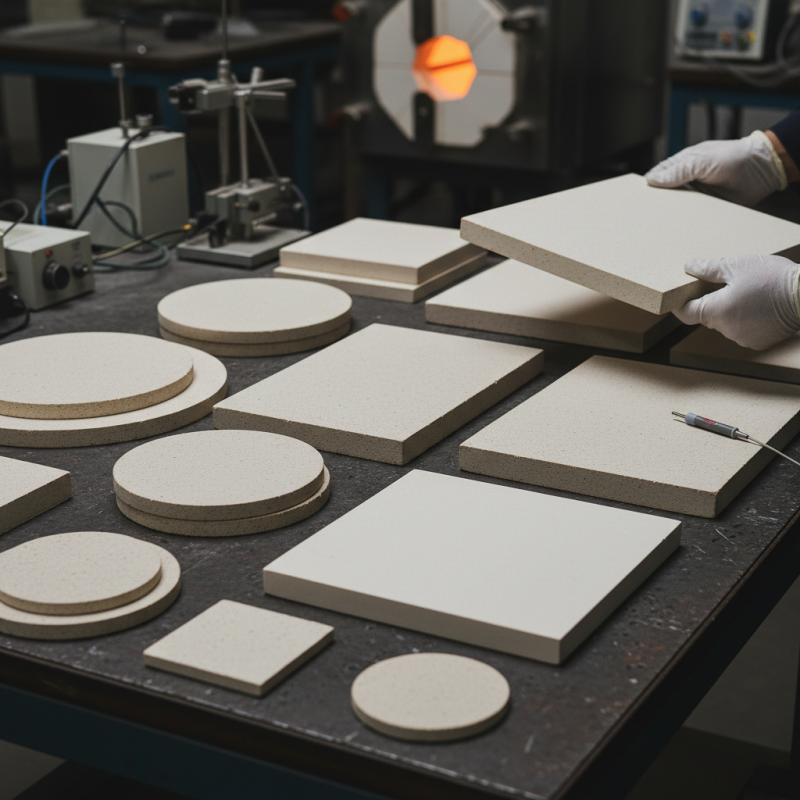
Cordierite mullite plates are essential in various applications. Understanding their composition helps you make informed choices. These plates are mainly made of cordierite and mullite. Cordierite contributes to thermal shock resistance. Mullite enhances strength and thermal stability. Together, they create a balanced material.
When selecting a cordierite mullite plate, consider the ratio of these components. A higher cordierite content may offer better shock resistance. However, too much could compromise strength. Look for plates that balance these ingredients based on your specific needs. Thickness and size also matter. A thicker plate may withstand higher temperatures but can be heavier.
It's crucial to examine your actual requirements. Some applications may demand more thermal resistance, while others prioritize durability. Sometimes, users might overlook specific details. Missing the right composition can lead to performance issues. Reflect on how these factors align with your project goals. Consider all potential environments the plate will face. This awareness can significantly impact your selection process.
Comparison of Cordierite Mullite Plate Properties
Evaluating Thermal Stability: Key Performance Metrics
When choosing a cordierite mullite plate, thermal stability is crucial. High temperatures can cause materials to expand and contract. A stable plate will withstand these changes without cracking. Look for metrics such as thermal shock resistance. This indicates how well the plate can handle rapid temperature changes.
Tips: Consider the thermal conductivity. It affects how efficiently heat transfers through the material. A balance between thermal conductivity and resistance is ideal. Too high conductivity can lead to faster wear and tear.
Evaluate the manufacturing process too. Plates made with care often perform better. Beware of poorly processed materials; they may fail under stress. Remember, consistent quality is key for reliable results. Reading user reviews and feedback can provide insight into the product’s performance.
How to Choose the Best Cordierite Mullite Plate for Your Needs? - Evaluating Thermal Stability: Key Performance Metrics
| Metric |
Description |
Value Example |
| Thermal Conductivity |
The measure of a material's ability to conduct heat. |
2-4 W/m·K |
| Max Service Temperature |
The maximum temperature at which the material can be safely used. |
1300°C |
| Thermal Shock Resistance |
The ability to withstand sudden temperature changes without cracking. |
>800°C |
| Density |
The mass per unit volume of the material. |
2.5-2.7 g/cm³ |
| Modulus of Elasticity |
A measure of the stiffness of the material. |
70-100 GPa |
| Chemical Resistance |
The ability to resist degradation due to chemicals. |
Good to excellent |
Assessing Mechanical Strength for Industrial Applications
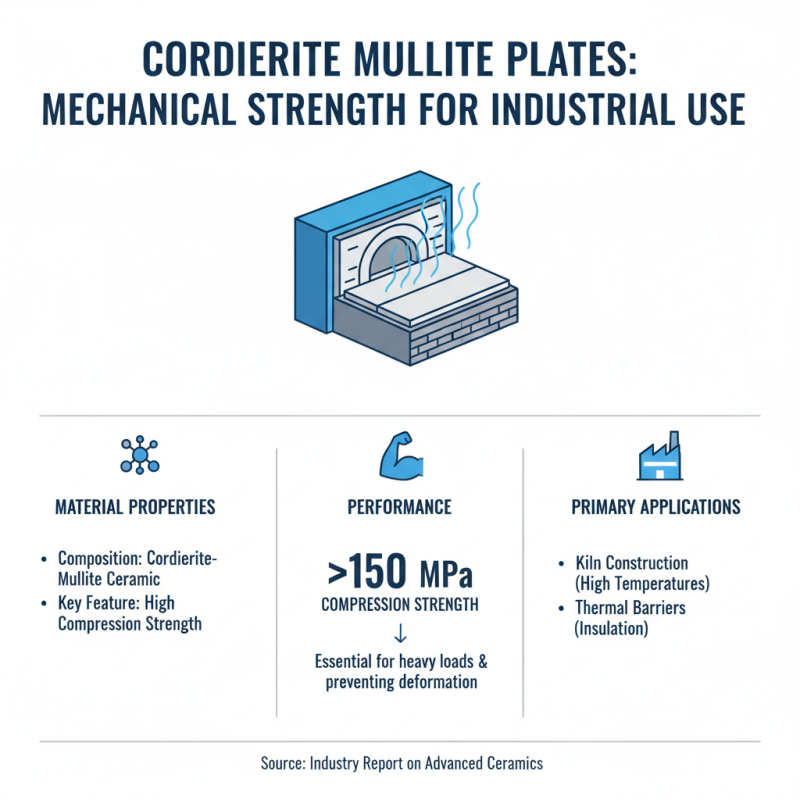
When selecting cordierite mullite plates for industrial applications, understanding mechanical strength is crucial. According to a recent industry report, these plates exhibit impressive compression strength, typically exceeding 150 MPa. This strength is essential for handling heavy loads without deformation. Applications in kiln construction and thermal barriers often rely on this resilience.
Manufacturers emphasize the balance between durability and weight. Some plates can weigh significantly less than traditional materials, which aids in installation. However, it’s vital to consider potential trade-offs. Thinner plates offer weight savings but may compromise strength under specific conditions. A careful assessment of the operating environment is needed.
Testing methods for mechanical strength vary widely. Flexural strength tests can reveal weaknesses that may not show in compression testing. The variation in results can lead to unexpected material failures. As industry standards continue to evolve, staying informed is essential for reliable performance in demanding applications.
Comparing Thermal Conductivity of Different Cordierite Mullite Grades
When selecting a cordierite mullite plate,
thermal conductivity plays a crucial role.
Different grades offer varying levels of this property. Higher thermal conductivity means better heat distribution.
This is vital for applications like kilns or furnaces. Lower grades may suffice for less intense conditions.
When comparing grades, consider your specific needs. For higher temperatures,
a grade with superior thermal conductivity is critical. Think about your application and the environment.
Not every task requires the highest grade.
Sometimes, a moderate option balances performance and cost. You can also explore the plate's durability.
Not all materials react the same under stress.
Tips: Always check product specifications.
Even slight differences can impact performance. Consider your budget but don’t compromise on quality.
It’s better to invest in a reliable grade.
Reflect on your application’s future needs as well.
What works today might not suit tomorrow’s demands.
Choosing wisely can save you time and effort later.
Selecting the Right Size and Thickness for Specific Uses
Choosing the right size and thickness for cordierite mullite plates is crucial. Begin by considering the specific application. For high-temperature environments, thicker plates often provide better durability. They resist warping and cracking more effectively. However, they can be heavier and more difficult to handle.
Consider your workspace limitations. If space is tight, a thinner plate might be more practical. Thinner options are often lighter and easier to maneuver. But, they may wear out faster in demanding conditions. Make sure to balance durability with practicality. Testing different sizes in your setup can be beneficial.
Placement is another key aspect. Where will the plate be used? Direct heat applications require careful sizing. Ensure the dimensions match the heating element and surrounding materials. You might find that an inch difference can affect the outcome. Rethink your choices if you encounter unexpected results. It’s essential to evaluate your needs closely.