Leave Your Message

How to Choose a Cordierite Mullite Plate?

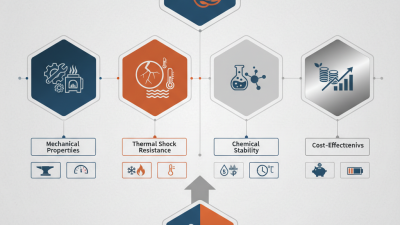
Choosing a Cordierite Mullite Plate is a process decision, not merely a catalog purchase. In kiln furniture, small material differences affect firing stability, service life, and total cost. The European Commission’s JRC Best Available Techniques Reference Document for the Ceramics Industry identifies energy efficiency, durability, and process control as important production concerns. Grand View Research’s Advanced Ceramics Market Size, Share and Trends Report also describes advanced ceramics as a growing sector, supported by industrial, energy, and electronics applications. These reports provide useful context. They do not replace application testing.

A suitable plate must match peak temperature, heating rate, kiln atmosphere, load, and support spacing. Cordierite usually provides low thermal expansion and strong thermal-shock resistance. Mullite contributes high-temperature strength and structural stability. The balance matters. A thick plate may resist bending, yet it can slow heat transfer and increase kiln weight. A thin plate may heat quickly, but repeated cycles can cause visible deflection. Picture a 400-millimeter shelf carrying setters, glazed ware, and uneven weight. That detail changes the recommendation.

This guide considers manufacturer datasheets, laboratory results, and practical kiln experience. It compares dimensions, porosity, flexural strength, thermal expansion, and maximum working temperature. ASTM C20 and ASTM C133 offer useful refractory testing references, although test conditions differ between laboratories. Published figures can sound precise while lacking important context. That weakness deserves attention. No plate is universally best. Verify samples under your firing schedule, inspect warpage, and record service cycles before approving a larger order. This disciplined step protects product quality, energy use, and production continuity.
How to Choose a Cordierite Mullite Plate?

Cordierite Mullite Plate Composition and Key Performance Features

How to Choose a Cordierite Mullite Plate?

Cordierite Mullite Plate Composition and Key Performance Features

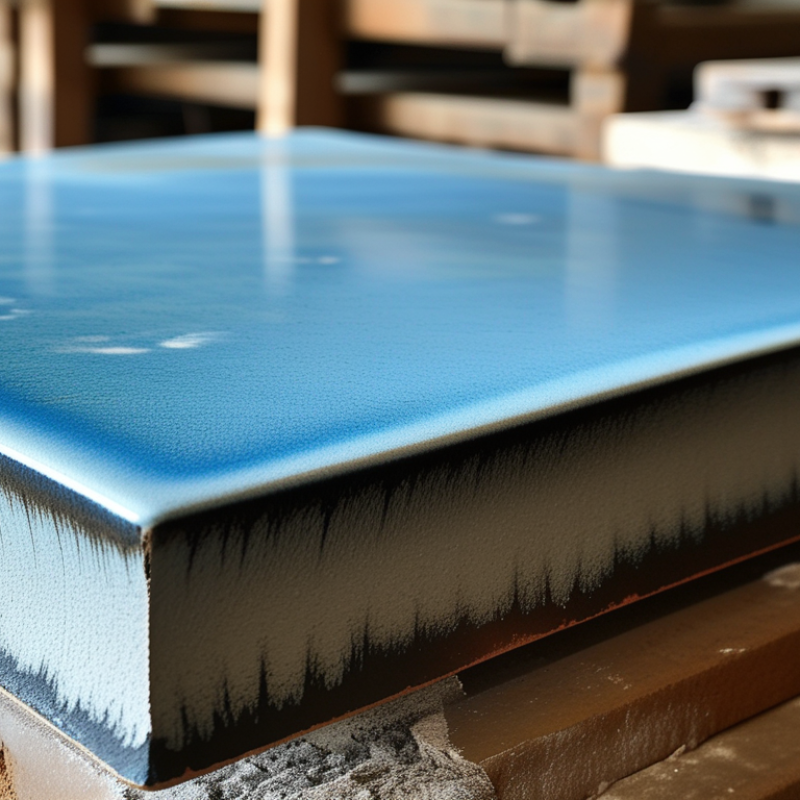
A cordierite mullite plate combines two ceramic phases with different strengths. Cordierite is commonly expressed as 2MgO·2Al2O3·5SiO2. Mullite mainly contains 3Al2O3·2SiO2. This composition creates low thermal expansion and useful thermal shock resistance. The plate can tolerate repeated heating and cooling more safely than many ordinary ceramic supports. Still, no plate is completely immune to cracking.

For kiln use, examine the firing temperature, load weight, and heating rate. A dense plate usually offers better mechanical support and lower gas penetration. A more porous structure may reduce weight, but it can absorb moisture and weaken under heavy loads. Check thickness carefully. Thin plates heat faster, while thick plates resist bending more effectively. In practical kiln evaluations, uneven loading often causes failure before the material reaches its temperature limit.

Ask for test data covering bulk density, porosity, flexural strength, thermal expansion, and maximum service temperature. These figures should match your real firing cycle, not only laboratory conditions. Inspect the surface for chips, warping, and visible cracks before installation. Small defects matter. I have seen users focus on chemical composition while overlooking support spacing. That choice can create unnecessary sagging. Atmosphere, glaze residue, and cleaning methods also deserve attention, because repeated contamination may change long-term performance.
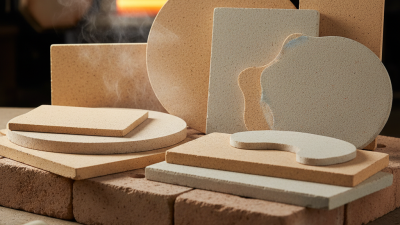
Identify the Intended Kiln Process and Operating Conditions

How to Choose a Cordierite Mullite Plate?

Identify the Intended Kiln Process and Operating Conditions

Start by defining the kiln process, not just the maximum temperature. A plate used for ceramic bisque firing may face different stresses than one used for glaze firing, sintering, or repeated heat treatment. Record the peak temperature, heating rate, cooling rate, atmosphere, and cycle frequency. These details reveal the plate’s real working environment.

Check the load carefully. Heavy ware can create uneven pressure, especially when pieces touch only small areas. Measure the plate length, width, thickness, and support spacing inside the kiln. A thin plate may heat quickly, but it can sag under repeated loads. A thicker plate offers greater rigidity, though it may respond more slowly to temperature changes. Allow space for expansion.

Cordierite mullite combines thermal shock resistance with useful mechanical strength, but no plate fits every process. Ask for test data, maximum recommended service conditions, and dimensional tolerance. I have seen plates fail early when users considered temperature alone. That was an incomplete judgment. Fast cooling, crowded shelves, and poor support often mattered more. Examine cracks after each cycle. Small edge chips can grow during handling. A controlled trial with the actual kiln schedule remains more reliable than a catalogue value. Be cautious here. Your process may be less stable than expected.

How to Choose a Cordierite Mullite Plate?

Identify the intended kiln process and operating conditions before selecting plate material, thickness, and load capacity.

The chart shows typical firing-temperature ranges used in ceramic kiln processes. Cordierite-mullite plates are commonly selected for repeated heating and cooling because they combine low thermal expansion with high-temperature strength. For porcelain and high-temperature stoneware, confirm the plate’s rated continuous-use temperature, thermal-shock resistance, thickness, span, and load before use.

Typical industry reference ranges: actual kiln schedules vary with body composition, atmosphere, heating rate, cooling rate, load arrangement, and kiln design.

Match Plate Dimensions, Thickness, and Load Requirements

How to Choose a Cordierite Mullite Plate?

Selecting a cordierite mullite plate starts with its working dimensions. Measure the usable chamber space, not only the outer frame. Leave clearance around each edge for thermal expansion and easy removal. A plate that fits cold may bind when heated. I have seen this small oversight cause cracked corners during routine firing. Check the length, width, and support points together. Unsupported overhang can create bending stress, especially near the center.

Thickness should match the load and firing temperature. Thin plates heat quickly and reduce thermal mass. However, they may sag under heavy ware or uneven loading. Thicker plates offer better rigidity, but they heat more slowly and add weight. Estimate the total load, including shelves, setters, and products. Then consider the distance between supports. A modest load can still deform a plate across a wide span. Manufacturer data should confirm the recommended working load at your actual temperature. Room-temperature strength alone is not enough. This is where many selections become optimistic.

Tips: Choose a slightly larger safety margin when firing repeatedly. Distribute heavy items evenly across the surface. Avoid concentrated loads near unsupported edges. Inspect for hairline cracks after cooling. Do not assume a thicker plate solves every problem; poor support can still lead to failure. Record plate dimensions, load weight, firing temperature, and cycle time. That record makes later adjustments more reliable.

Evaluate Thermal Shock Resistance, Porosity, and Surface Finish

Choosing a cordierite mullite plate starts with thermal shock resistance, not appearance.

The plate must tolerate rapid temperature changes without cracking or warping. Ask for test conditions, including heating rate, cooling method, and cycle count. Data without test conditions has limited value.

Inspect the edges carefully. Small edge chips can become cracks during firing.

A thin plate may heat quickly, but it can also deform under load.

Porosity affects weight, strength, glaze release, and chemical penetration.

Higher porosity can reduce thermal mass, yet excessive open pores may absorb molten glaze. This can make cleaning difficult.

Compare water absorption, apparent porosity, and bulk density between samples. A simple water-absorption check is useful, but it is not a complete qualification.

Do not judge porosity by color alone. Looks can mislead.

Surface finish matters when ware sits directly on the shelf.

A flat, even surface supports uniform loading and reduces sticking points. Check with a straightedge, and feel for ridges, pits, and loose grains.

A polished surface is not always better; slight texture may reduce contact adhesion. However, rough patches can mark delicate ceramic bottoms.

Request flatness tolerances and inspection records.

Test one plate through representative firing cycles before buying a large batch. That step is easy to skip.

I would not skip it.

Inconsistent results may reflect kiln airflow, loading, or plate thickness rather than material failure.

Compare Suppliers, Quality Standards, Service Life, and Total Cost

How to Choose a Cordierite Mullite Plate?

When comparing suppliers, request test reports for chemical composition, apparent porosity, strength, and thermal shock resistance. A reliable supplier should explain testing methods and provide batch traceability. Check dimensional tolerance carefully. A plate that rocks inside a kiln may fail early. Ask for samples before placing a large order. Supplier advice matters, but verify it against your firing temperature, load weight, and atmosphere.

Quality standards are only useful when they match real operating conditions. Review the maximum service temperature, repeated heating cycles, and recommended support spacing. Cordierite mullite plates often perform well under thermal shock, but careless loading can still cause cracks. Service life depends on more than material grade. Uneven heating, glaze leaks, and sudden cooling can shorten it. A longer-lasting plate may cost more initially. It can reduce replacements, damaged products, labor, and kiln downtime.

Tips: Compare total cost, not unit price. Include shipping, inspection, installation, replacement frequency, and production losses. Ask how failures are handled and whether technical support is available. A supplier who avoids clear answers deserves caution. My own comparison would not rely on one certificate alone. Certificates can be outdated, and operating data may be incomplete. Measure used plates after several cycles, record crack patterns, and revise your purchasing decision. Sometimes the cheaper option wins. Sometimes it only appears cheaper.