Top Benefits of Silicon Carbide Kiln Shelves for Global Buyers?
The use of Silicon Carbide Kiln Shelves has revolutionized the ceramics and glass industries. These shelves are increasingly recognized for their durability and efficiency. According to a report from MarketsandMarkets, the global ceramics market was valued at over $233 billion in 2020. As this market expands, the demand for reliable kiln accessories grows as well.
Silicon Carbide Kiln Shelves offer exceptional thermal stability and resistance to warping. They can withstand high temperatures, often exceeding 1,600 degrees Celsius. This capability significantly enhances production efficiency and reduces maintenance costs. Research shows that manufacturers can save up to 30% on fuel costs due to improved heat retention.
However, there are considerations. Not all Silicon Carbide products are created equal. Buyers must scrutinize suppliers to ensure quality. Inconsistent performance can lead to production setbacks. Making informed decisions is crucial for harnessing the full benefits of these kiln shelves.
Key Advantages of Silicon Carbide Kiln Shelves in Modern Ceramics
Silicon carbide kiln shelves offer remarkable advantages for modern ceramics. Their exceptional thermal strength allows them to endure high temperatures without warping. This property ensures consistency in firing, which is crucial for achieving optimal results in ceramics.
Another benefit of silicon carbide is its excellent thermal conductivity. This enhances even heating across the entire shelf. As a result, ceramics fired on these shelves experience fewer temperature gradients. This uniformity is vital for preventing defects and ensuring high-quality finished products.
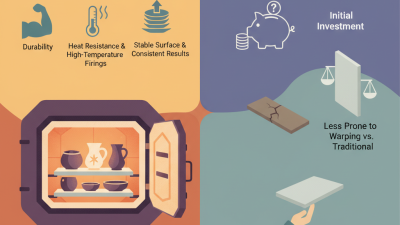
However, while these shelves are highly effective, they do come at a higher initial investment. Buyers must weigh their long-term benefits against the upfront costs. Not all users may notice a significant difference immediately. It is essential to evaluate how well they fit with specific production needs. In the end, silicon carbide kiln shelves can be a worthwhile investment for consistent and high-quality ceramic outputs.
Performance Comparison: Silicon Carbide vs. Traditional Kiln Shelves
When comparing silicon carbide kiln shelves with traditional options, the differences are significant. Silicon carbide shelves are known for their exceptional thermal conductivity. They heat uniformly, reducing the risk of warping. This even heating leads to consistent firing results. Traditional shelves often have hotspots, which can lead to uneven glazing.
Silicon carbide also offers great durability. These shelves can withstand higher temperatures without cracking. Regular ceramic shelves may break under intense conditions. Additionally, silicon carbide shelves resist chemical corrosion better. This is crucial for processes involving acidic or corrosive materials. Users have noticed less wear and tear over time.
However, transitioning to silicon carbide isn’t without challenges. The initial investment is higher, which can be daunting. Moreover, some studios may find these shelves heavier, making handling more difficult. As the industry evolves, buyers should weigh these factors carefully. The long-term benefits might outweigh initial hurdles. Understanding these contrasts can lead to better choices in kiln operations and efficiency.
Impact of Silicon Carbide Shelves on Firing Efficiency and Costs
Silicon carbide kiln shelves offer significant advantages for those in ceramics and pottery. These shelves are designed to withstand high temperatures. Their durability reduces the need for frequent replacements. This aspect is particularly beneficial for studios that conduct multiple firings.
The impact on firing efficiency is remarkable. Silicon carbide shelves promote even heat distribution. This leads to consistent results in every firing cycle. Consequently, potters notice less warping and defects in their ceramics. Additionally, these shelves absorb less moisture. This minimizes the risk of steam explosions during firing.
Cost efficiency is another crucial factor. Although the initial investment may be higher, the longevity of silicon carbide shelves pays off. Less frequent replacements mean lower long-term costs. Moreover, the increase in firing efficiency leads to energy savings. Buyers often report a more productive experience. However, it is essential to consider the specific needs of your kiln setup. Balancing cost and performance can be challenging, so it’s wise to do thorough research before choosing.
Top Benefits of Silicon Carbide Kiln Shelves for Global Buyers
| Benefit |
Description |
Impact on Firing Efficiency |
Impact on Costs |
| High Thermal Conductivity |
Allows for even heat distribution during firing. |
Improves firing times and consistency. |
Reduces energy consumption. |
| Durability |
Resistant to warping and cracking under high temperatures. |
Increases shelf lifespan, minimizing downtime. |
Lower replacement costs over time. |
| Lightweight |
Easier to handle and install compared to traditional shelves. |
Quicker setup and adjustment in kilns. |
Reduces labor costs for installation. |
| Chemical Resistance |
Withstands various chemical attacks in kiln environments. |
Minimizes shelf degradation and maintains performance. |
Decreases maintenance and replacement frequency. |
| Versatility |
Suitable for a wide range of firing applications. |
Optimizes firing conditions for various materials. |
Enhances production flexibility, potentially reducing costs. |
Durability and Longevity: Lifetime Comparison of Kiln Shelves
Silicon carbide kiln shelves stand out for their durability and longevity. Unlike traditional materials, silicon carbide can handle extreme temperatures. This resilience makes them a favorite for potters and manufacturers alike. Standard kiln shelves wear out quickly, while silicon carbide shelves can last many years with proper care.
One critical factor is how you handle your kiln shelves. Ensure you don’t stack too many items on them. Overloading can cause uneven stress. Avoid sudden temperature changes; cooling them too fast may lead to cracking. Regularly inspect your shelves for any signs of wear.
When choosing kiln shelves, consider their thermal shock resistance. High-quality silicon carbide shelves show minimal deformation over time. This characteristic leads to consistent firing results. Be aware that the initial investment may be higher, but the lifespan can offset these costs. Relying on high-strength kiln shelves reduces the frequency of replacements, enhancing productivity.
Understanding these nuances is essential for anyone investing in kiln equipment. Analyze your firing needs carefully, and reflect on your past experiences with kiln shelves. This exploration can lead to smarter purchasing decisions in the future.
Market Trends: Global Adoption and Demand for Silicon Carbide Kiln Shelves
The global market for silicon carbide kiln shelves is witnessing robust growth. Recent studies indicate a compound annual growth rate (CAGR) of around 6% from 2022 to 2030. This growth is largely attributed to the increasing demand in the ceramics market, where performance and durability are critical. Silicon carbide shelves provide excellent thermal shock resistance. This quality ensures that they can withstand the extreme temperature variations typical in kiln environments.
In recent years, more manufacturers are adopting silicon carbide shelves due to their efficiency. Unlike traditional materials, these shelves result in lower waste rates during the firing process. Industry data shows that kilns equipped with silicon carbide shelves operate more efficiently, with temperature stability improving by approximately 20%. This feature is a significant advantage for those producing high-value ceramic products. The shift towards sustainable practices also fuels demand. Companies are increasingly looking for materials that support eco-friendly production without sacrificing quality.
However, the adoption is not without challenges. Some producers report higher initial costs discouraging smaller manufacturers from switching. Additionally, there is a learning curve associated with using silicon carbide, which can lead to operational hiccups. Despite these obstacles, the long-term benefits, including reduced energy consumption and lower product defects, support a positive outlook for silicon carbide kiln shelves in global markets.
Top Benefits of Silicon Carbide Kiln Shelves
The graph illustrates the top benefits of Silicon Carbide kiln shelves rated on a scale from 1 to 10. High thermal conductivity and durability are rated the highest, reflecting their importance in global markets.