How to Source High Quality Zirconia Ceramic for Your Business?
In recent years, Zirconia Ceramic has gained remarkable traction in various industries, from dental applications to advanced engineering. According to a report from MarketsandMarkets, the global market for zirconia ceramic is expected to reach $2.3 billion by 2025, driven by its unique properties, such as high strength and corrosion resistance. These characteristics make it an essential material for businesses aiming to enhance product durability and performance.
Despite its benefits, sourcing high-quality Zirconia Ceramic remains a complex challenge. Many suppliers claim superior quality, but inconsistencies often arise in manufacturing processes and material sourcing. Businesses must carefully evaluate potential suppliers, focusing on industry certifications and their track record in quality control. Relying on user reviews and expert recommendations is crucial in navigating this crowded market.
Finding the right Zirconia Ceramic can significantly impact production efficiency and customer satisfaction. Therefore, a thorough investigation into supplier reliability and product specifications is paramount. It’s an ongoing journey that requires diligence and a recognition of the potential pitfalls in sourcing practices. Engaging with industry experts and leveraging data-driven insights can make a considerable difference in securing the best materials for your business needs.

Identifying the Different Grades of Zirconia Ceramic Available
When sourcing high-quality zirconia ceramic, it’s crucial to understand the different grades available. Zirconia ceramics are available in several grades, each with unique properties. These grades are defined by their composition, density, and intended applications. Common grades include fully stabilized zirconia, partially stabilized zirconia, and zirconia toughened alumina.
Fully stabilized zirconia is known for its high strength and resistance to wear. It is often used in dental applications and cutting tools. Partially stabilized zirconia tends to be more flexible, making it ideal for areas requiring shock absorption. Zirconia toughened alumina combines strength with added durability, suitable for industrial components. Understanding these distinctions can guide procurement decisions and ensure the material fits your business needs.
Choosing the right grade requires careful consideration. Not all zirconia ceramics perform the same under varying conditions. For example, a cheaper, lower-grade option may save costs upfront, but may result in failure during critical applications. It is important to weigh performance against budget. Quality control measures during production are also vital. Some manufacturers may not adhere to stringent quality checks, leading to inconsistencies. Reflecting on these elements can help in making informed procurement choices.
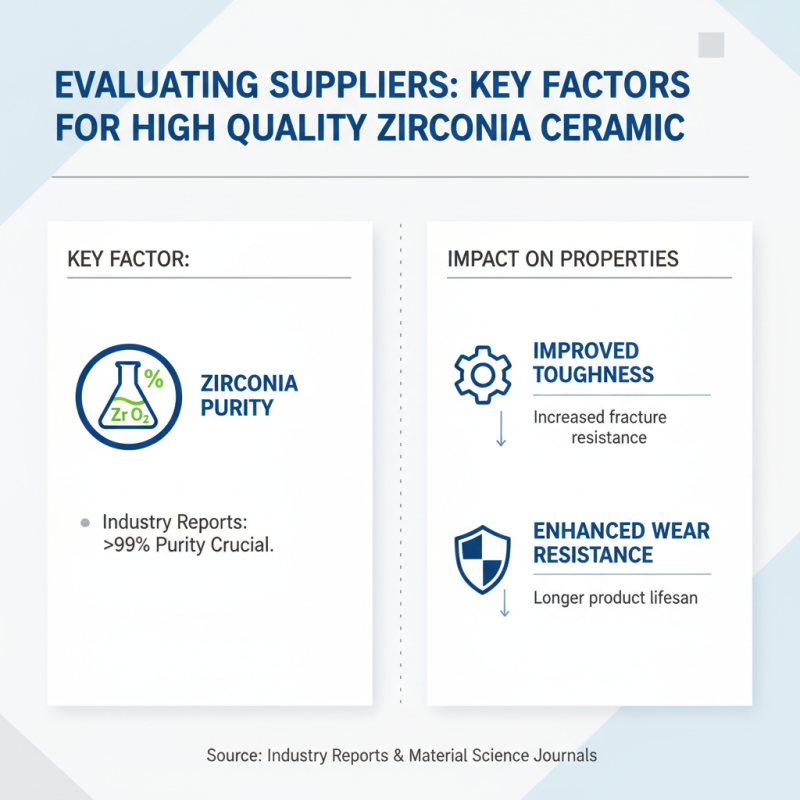
Evaluating Suppliers: Key Factors for High Quality Zirconia Ceramic
When selecting suppliers of zirconia ceramic, key factors determine product quality. The industry reports indicate that the purity of zirconia affects its mechanical properties significantly. For instance, zirconia with over 99% purity shows improved toughness and wear resistance.
Evaluating supplier qualifications is crucial. Look for suppliers with relevant certifications, such as ISO 9001 or equivalent. These certifications suggest a commitment to quality management processes. Furthermore, organizations like the International Ceramic Federation provide insight into industry standards, highlighting the importance of reliable sourcing practices.
Another factor is the supplier's production capabilities. High-quality zirconia ceramic often means advanced manufacturing techniques. Suppliers should use controlled atmospheres during sintering to prevent contamination. Engaging suppliers in dialogue about their processes can reveal their commitment to quality. Always consider potential challenges in sourcing. Not every supplier will meet the stringent quality criteria. Regular audits can help maintain standards and ensure continued reliability.
Understanding Manufacturing Processes Impacting Zirconia Quality
When sourcing high-quality zirconia ceramic, understanding the manufacturing processes is key. Different production techniques can significantly influence the end product's durability and performance. Key methods include additive manufacturing, sintering, and milling. Each method has unique traits affecting the microstructure and, ultimately, the quality of the zirconia.
**Tip:** Observe the sintering temperatures. Higher temperatures often lead to denser materials, enhancing strength. However, overheating may cause grain growth, weakening the ceramic. It's a balancing act.
Another factor to consider is the purity of raw materials. Impurities can introduce defects, negatively impacting strength and aesthetics. Using high-grade powders ensures superior outcomes.
**Tip:** Request material certificates from suppliers. This information confirms the quality and composition of the zirconia. Transparency here builds trust and reliability in your sourcing process. Sourcing high-quality zirconia might be challenging, but evaluating these manufacturing processes will guide better decisions.
Quality Comparison of Zirconia Ceramics by Manufacturing Process
Assessing Certifications and Standards for Zirconia Products
When sourcing high-quality zirconia ceramic, assessing certifications and standards is crucial. Certifications ensure that products meet specific quality benchmarks. Look for internationally recognized certifications like ISO 9001 and ASTM standards. These indicate that the manufacturer follows stringent quality control processes. Without these, it can be challenging to gauge a product's reliability.
Not all zirconia ceramics are created equal. Some may claim high quality but lack the necessary certifications. This inconsistency can lead to unexpected results in your applications. Engaging with suppliers directly can help clarify their compliance with industry standards. Ask for documentation and check their history with regulatory bodies. These steps can ensure that you receive genuine, high-quality materials.
Be cautious when evaluating certifications. Some may be outdated or not applicable to your specific needs. It’s essential to conduct thorough research on your suppliers. Reach out to industry experts for insights. Their experiences can guide you in making informed decisions that enhance your business reputation and product quality.
Strategies for Cost-Effective Sourcing of Zirconia Ceramic
Sourcing high-quality zirconia ceramic can be a challenge for many businesses. According to a recent market report, the zirconia ceramic market is projected to grow at a CAGR of approximately 6.7% from 2022 to 2027. This growth highlights the increasing demand for durable and versatile materials across industries. To navigate this market effectively, businesses must implement cost-effective sourcing strategies.
One effective tactic is to identify reliable suppliers through industry networks or trade fairs. Building relationships with suppliers can lead to better pricing and quality assurance. Additionally, consider collaborating with suppliers who offer transparency in their manufacturing processes. This not only enhances quality control but also fosters trust.
Tip: Always request samples before making bulk purchases. This ensures that the material meets your specifications and quality standards.
Moreover, leveraging technology can streamline the sourcing process. Use platforms that connect manufacturers and suppliers globally. These platforms often provide valuable insights, such as market trends and pricing analytics, aiding informed decision-making. However, businesses should be cautious about relying solely on technology. Direct communication with suppliers can uncover hidden costs or issues.
Tip: Regularly assess your supplier’s performance. This practice helps maintain quality and mitigates risks associated with sourcing.
How to Source High Quality Zirconia Ceramic for Your Business? - Strategies for Cost-Effective Sourcing of Zirconia Ceramic
| Supplier Location |
Material Quality Rating |
Cost per kg (USD) |
Lead Time (weeks) |
Minimum Order Quantity (kg) |
| China |
A+ |
25 |
4 |
100 |
| Germany |
A |
30 |
6 |
50 |
| Japan |
A+ |
35 |
5 |
70 |
| USA |
B+ |
28 |
3 |
100 |
| India |
B |
22 |
8 |
200 |