Leave Your Message
Zirconia Ceramic is no longer a niche material for dental, medical, industrial, and electronic applications. Demand is rising because manufacturers value its strength, chemical stability, wear resistance, and white appearance. Fortune Business Insights reported that the global dental zirconia market reached approximately USD 513 million in 2023. The report also projects continued growth through 2032. Meanwhile, Grand View Research identifies advanced ceramics as a steadily expanding materials sector. These figures show opportunity, but they do not guarantee supplier quality.
“Zirconia is not one material; its performance depends on composition, processing, and clinical use,” says Dr. Mutlu Özcan, a widely cited researcher in dental materials and restorative dentistry. This practical observation matters during supplier evaluation. A product may look identical under showroom lighting, yet perform differently after sintering, machining, or thermal cycling. Grain size, yttria content, powder purity, shrinkage control, and batch consistency can change the final result.
A reliable supplier should provide traceable certificates, technical data, dimensional tolerances, test methods, and realistic production lead times. Ask for samples from different batches. Inspect their surfaces closely. Check whether the supplier explains failures honestly. No supplier is perfect, and no report replaces verification. Even published market forecasts contain assumptions that may change. These seven tips will help buyers compare suppliers with greater confidence, reduce avoidable production risks, and choose Zirconia Ceramic that matches the actual application rather than the loudest sales promise.
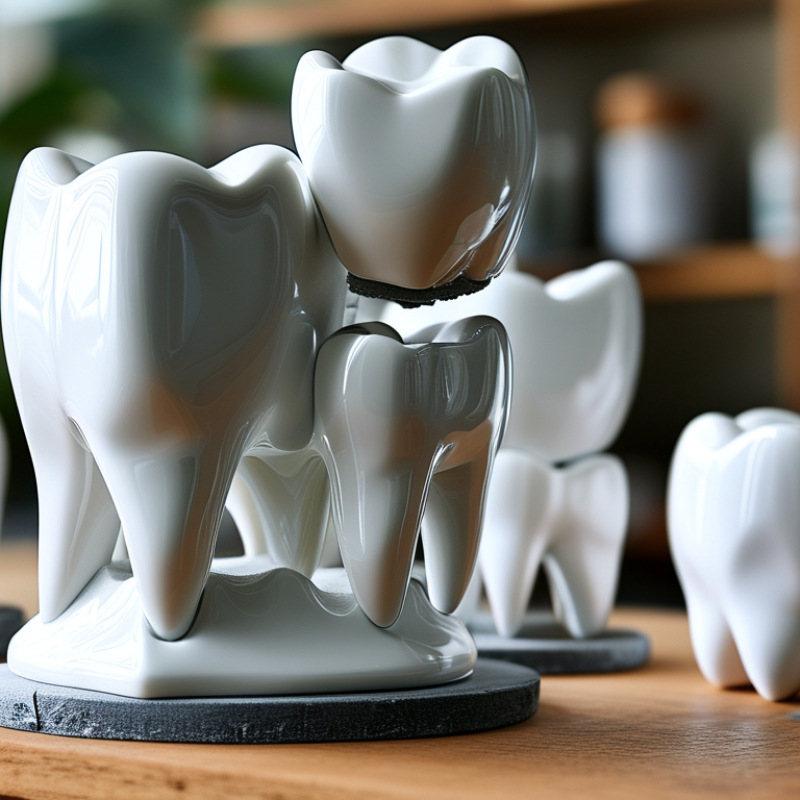
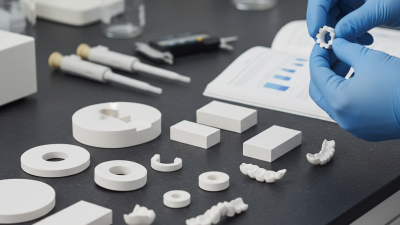
Zirconia ceramic is a high-performance oxide ceramic made from zirconium dioxide. After shaping and sintering, it becomes dense, strong, and resistant to wear. Its pale appearance and adjustable translucency support dental, industrial, and engineering applications. The material is not simply “strong ceramic.” Its performance depends on composition, grain structure, sintering temperature, and processing accuracy.
Supplier choice matters because small production differences can create expensive problems. A reliable supplier should provide clear data on flexural strength, density, translucency, chemical stability, and dimensional tolerance. Ask for batch records and independent test reports. Check whether the material is suitable for your machining and sintering equipment. A sample should be tested under real conditions, not only admired on a specification sheet. It may look perfect.
Experience also matters. During technical evaluations, teams often discover that poor surface finish comes from processing settings, not the raw material alone. A capable supplier should explain these risks and offer practical guidance. Review traceability, quality-control procedures, storage instructions, and response times for technical questions. Certificates are useful, but they do not replace consistent batches. I would also question unusually low prices. They may reflect efficient production, or they may hide weaker inspection standards. The honest answer requires testing.
What Zirconia Ceramic Is and Why Supplier Choice Matters
| Tip | What to Evaluate | Useful Technical Reference | Why It Matters | Evidence to Request |
|---|---|---|---|---|
| 1. Confirm the Zirconia Grade | Check the stabilizer system and crystal structure, such as yttria-stabilized zirconia and the 3Y-TZP grade. | 3Y-TZP generally contains about 3 mol% yttria and is known for high strength through transformation toughening. | Different zirconia grades offer different combinations of strength, translucency, thermal stability, and aging resistance. | Material data sheet, chemical composition, phase information, and grade-specific application guidance. |
| 2. Compare Mechanical Performance | Review flexural strength, fracture toughness, hardness, elastic modulus, and reliability data. | Depending on grade and test method, zirconia may show flexural strength around 800–1,500 MPa and fracture toughness commonly around 4–10 MPa·m1/2. | The values indicate how well the material can withstand bending, cracking, impact, and repeated service loads. | Test reports identifying the standard used, specimen geometry, test direction, sample size, and statistical results. |
| 3. Check Purity and Consistency | Assess zirconia purity, stabilizer uniformity, contamination control, particle-size distribution, and batch-to-batch variation. | High-purity technical zirconia commonly uses tightly controlled levels of zirconium oxide, stabilizer oxides, and trace impurities. | Small changes in composition or powder quality can affect density, color, strength, shrinkage, and dimensional accuracy. | Certificate of analysis, chemical analysis, particle-size report, batch records, and incoming inspection procedure. |
| 4. Verify Density and Dimensional Control | Evaluate sintered density, porosity, shrinkage control, tolerances, surface finish, and geometric repeatability. | Fully dense zirconia commonly has a theoretical density close to 6.0 g/cm3; actual values depend on grade and processing. | Higher density and controlled porosity generally support better strength, wear resistance, sealing performance, and dimensional stability. | Density test results, dimensional inspection reports, coordinate-measuring data, and sample parts made to the target drawing. |
| 5. Assess Manufacturing and Finishing Capability | Review forming, green machining, sintering, diamond grinding, polishing, and quality-control capabilities. | Zirconia parts may shrink substantially during sintering, so shrinkage compensation and furnace uniformity are critical. | Process capability affects cracks, warpage, chipping, surface roughness, fit, and final performance. | Process flow chart, equipment list, capability studies, sample inspection results, and defect-prevention records. |
| 6. Review Testing, Traceability, and Compliance | Confirm inspection plans, lot traceability, calibration, nonconformance handling, and standards relevant to the application. | Applicable requirements may include ISO 9001, ISO 13485 for medical applications, and material or test standards specified by the customer. | Documented quality systems reduce variation and make it easier to identify, contain, and correct problems. | Valid certificates, inspection plans, calibration records, lot labels, corrective-action examples, and audit documentation. |
| 7. Evaluate Technical Support and Total Cost | Compare lead time, minimum order quantity, tooling costs, engineering support, packaging, warranty terms, and delivery reliability. | Zirconia performance depends on material grade, design, machining, sintering, and operating conditions—not price alone. | A technically capable supplier can reduce redesigns, scrap, delays, premature failure, and hidden lifecycle costs. | Written quotation, production schedule, sample-development plan, application support process, and references for comparable parts. |