Leave Your Message

China Top 10 Alumina Ceramic Manufacturers?

Alumina Ceramic is valued for its hardness, wear resistance, electrical insulation, and ability to perform in demanding environments. In China, manufacturers supply components such as tubes, plates, seals, and precision-machined parts for industrial equipment. Product quality, however, can differ. A polished catalog does not tell the whole story.

This guide introduces ten Chinese alumina ceramic manufacturers for buyers comparing potential suppliers. It considers practical factors, including product range, manufacturing capabilities, customization, quality controls, and experience serving industrial markets. These details can help narrow a search, but they are not a substitute for technical verification. Ask for material specifications, dimensional tolerances, inspection records, and samples where appropriate. Small differences matter. A component used in a pump may need different properties from one used as an electrical insulator.

The list should be treated as a starting point, not a universal ranking. Company information and production capabilities may change, and a supplier that suits one application may not suit another. That is easy to overlook. Buyers should confirm current details directly with each manufacturer and assess performance against their own operating conditions. Clear documentation and responsive technical communication are useful signs, though neither alone guarantees a successful result. This overview aims to make the comparison more concrete while leaving room for careful, application-specific judgment.
China Top 10 Alumina Ceramic Manufacturers?

Alumina Ceramics Explained: 95%, 99%, and 99.5% Purity Grades

Alumina ceramics are often grouped by purity: 95%, 99%, and 99.5%. These figures describe the approximate alumina content, not a complete performance rating. The remaining material and the firing process can influence strength, porosity, and electrical behavior. A 95% grade is commonly chosen for wear parts, insulating components, and general industrial use. It can offer a practical balance between performance and cost. For tougher chemical or high-temperature conditions, 99% and 99.5% grades may be more suitable. Higher purity can reduce glassy phases between grains, but it does not guarantee better results in every design.

Small details matter. A thin-walled tube, for example, may fail from thermal shock even when made from high-purity alumina. Component shape, surface finish, grain size, and operating temperature all affect service life. Engineers should compare supplier data under relevant test conditions, rather than relying on the purity number alone. I have seen grade selection treated as a shortcut; that can miss the actual failure mechanism.

Tips: Match the grade to the job. Check temperature, chemical exposure, electrical needs, and mechanical load. Ask for porosity and strength data, too. If the application is uncertain, test a sample part under real operating conditions.
Key Properties: 9 Mohs Hardness and 15–20 GPa Vickers Hardness

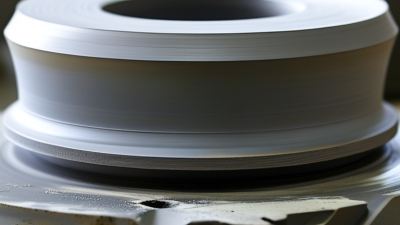
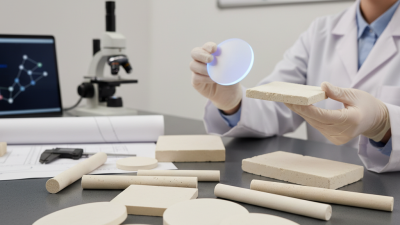
China’s alumina ceramic manufacturers often highlight hardness because it helps explain how these materials resist scratching and abrasion. On the Mohs scale, alumina is commonly rated around 9, just below diamond. Vickers hardness is often reported near 15–20 GPa, though results depend on purity, grain structure, porosity, and test conditions. Numbers need context.

In practical use, a polished alumina tile can resist fine scratches from grit, while a ceramic liner may slow wear where powder or particles slide across its surface. The material is hard, but not indestructible. A sharp impact can still cause chipping or fracture, especially at edges and mounting points. That distinction is easy to overlook. Hardness measures resistance to indentation; it does not directly measure toughness or service life. Buyers comparing suppliers should ask for test methods, sample conditions, and application-specific data. A hardness figure alone cannot predict how a component will perform in a vibrating chute or under repeated impacts. Even a carefully selected grade may need a better mounting design. That part deserves more attention.

Alumina Ceramic: Key Hardness Properties

Alumina ceramic has a Mohs hardness of approximately 9. Its Vickers hardness is commonly reported in the range of 15–20 GPa, depending on composition, microstructure, and test conditions.

How Manufacturers Form and Sinter Alumina Ceramic Components

China Top 10 Alumina Ceramic Manufacturers? How Manufacturers Form and Sinter Alumina Ceramic Components

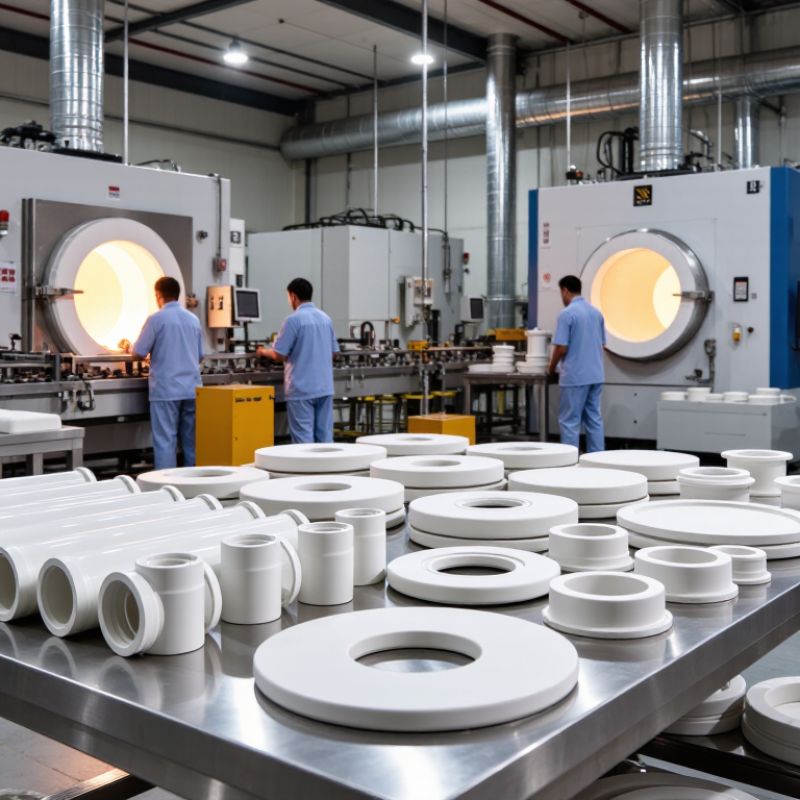
Alumina components begin as fine powder, not solid parts. Manufacturers mix the powder with binders and additives, then press, cast, or extrude it into shape. The method depends on geometry. A thin tube may be extruded, while a flat electrical insulator is often dry-pressed. Granule size, moisture, and binder distribution all matter. Small variations can leave weak spots.

After forming, parts are dried and debound to remove moisture and organic binders. They are then sintered in a controlled furnace, commonly at about 1,600–1,700°C, to fuse particles and reduce porosity. The NIST ceramics processing literature describes densification as a key control on strength and reliability; higher density is not automatic. Heating too quickly can cause cracking. A slow cycle can be costly, yet rushing it may cost more. This is one point manufacturers still need to check against the actual part.

During sintering, shrinkage must be anticipated in the mold or tooling design. The amount varies with powder, forming pressure, and firing conditions, so trial batches and dimensional inspection remain important. USGS Mineral Commodity Summaries 2024 estimated global alumina production at roughly 140 million metric tons in 2023, but that figure covers alumina broadly, not ceramic-grade powder alone. The distinction matters. A large supply number does not guarantee consistent feedstock for precision components.

China Top 10 Alumina Ceramic Manufacturers? - How Manufacturers Form and Sinter Alumina Ceramic Components
Process Stage Common Method or Material Typical Parameters How It Affects the Component Practical Considerations
Powder selection Alumina powder grades commonly specified by purity, particle size, and additive system Commercial grades often include approximately 92%, 96%, and 99.5% Al₂O₃ Purity and formulation influence electrical insulation, chemical resistance, strength, and sintering behavior. Properties vary by formulation and test method; purity alone does not determine final performance.
Powder preparation Mixing or milling with a binder, dispersant, and—in some processes—a liquid medium Mixing conditions are selected to achieve consistent dispersion and a feedstock suited to the forming method. Uniform feedstock helps reduce agglomerates, density variation, and defects in the fired part. Binder and moisture content must be controlled for repeatable forming and debinding.
Uniaxial pressing Powder compacted in a rigid die Often used for relatively simple shapes such as plates, disks, and tiles; pressing pressure is product- and tooling-dependent. Offers high production rates and straightforward tooling for components with simple geometry. Density gradients and die-wall friction can affect dimensional consistency, especially in taller parts.
Cold isostatic pressing Powder compacted uniformly by fluid pressure in a flexible mold Suitable for larger or more complex preforms; pressure and cycle are selected for the powder and component. Can produce more uniform green density than one-direction pressing. The pressed preform may require subsequent machining or another forming step.
Injection molding Granulated ceramic powder compounded with a thermoplastic binder Used for small, intricate components; feedstock and mold settings depend on geometry and material system. Enables repeatable production of complex shapes, including features that are difficult to press. Binder removal and shrinkage control are important; tooling and process development can be substantial.
Slip casting or tape casting Powder dispersed in a liquid slip or slurry; tape casting produces thin sheets Slip casting suits hollow or shaped forms; tape thickness depends on slurry, casting gap, and drying conditions. Useful for shapes or thin sections that are not readily made by conventional die pressing. Drying rate and slurry stability need careful control to limit cracking and warping.
Green machining Machining the unfired, binder-containing compact Operations are generally performed before sintering, while the body is comparatively easy to cut. Can create holes, grooves, and profiles with less tool wear than machining fully sintered alumina. Green parts are fragile; machining allowances must account for firing shrinkage.
Debinding Controlled thermal or solvent removal of organic binder Time and temperature depend on binder chemistry, part thickness, and furnace atmosphere. Creates pathways for gases to escape before densification and reduces the risk of internal defects. Rapid or incomplete binder removal may cause cracks, blisters, or residual carbon.
Sintering High-temperature firing in a controlled furnace, typically without melting the alumina Many alumina compositions are sintered in the approximate range of 1,600–1,800 °C; the cycle depends on composition and part design. Promotes densification and develops the ceramic’s final microstructure and properties. Furnace atmosphere, heating rate, peak temperature, and hold time are formulation-specific.
Sintering shrinkage Dimensional contraction as pores are removed during densification Linear shrinkage is commonly in the order of 15–20%, but varies with powder, forming method, and green density. Determines the oversize allowance required in the green component or tooling. Actual shrinkage should be measured for the selected production process rather than assumed from a general range.
Fired density Bulk density measured after sintering The theoretical density of α-alumina is approximately 3.98 g/cm³; dense grades approach their formulation-dependent theoretical value. Density and porosity influence strength, wear behavior, and insulation performance. Reported density depends on composition and measurement method; it is not identical for every alumina grade.
Finishing and inspection Diamond grinding, lapping, dimensional inspection, and visual or nondestructive checks as specified Applied when tolerances, surface finish, flatness, or fit requirements demand it. Can improve dimensional accuracy and surface quality after firing. Sintered alumina is hard and brittle, so finishing requires appropriate tooling and careful handling.

China’s Top 10 Alumina Ceramic Manufacturers: Products and Capabilities

China’s Top 10 Alumina Ceramic Manufacturers: Products and Capabilities

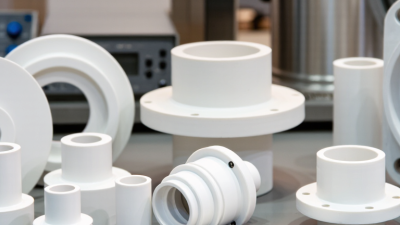
China’s leading alumina ceramic manufacturers serve industries that need hardness, insulation, and wear resistance. Their product ranges commonly include tubes, plates, rods, crucibles, rings, and custom-machined components. Alumina content varies by grade, often from roughly 92% to 99.7%, affecting strength, corrosion resistance, and cost. Higher purity is not automatically better. The operating conditions decide.

Capabilities differ beyond the catalogue. Some factories press simple shapes in volume, while others offer injection molding, isostatic pressing, precision grinding, and tight dimensional inspection. A small ceramic tube may need a smooth bore and consistent wall thickness; a pump liner may require close control of fit and surface finish. Ask how tolerances are measured, and request data tied to the intended application. Details matter.

Manufacturers may also support prototype sampling, drawing review, and custom packaging for fragile parts. Compare lead times, batch consistency, and inspection records—not just quoted price. Test samples under realistic temperature, load, and chemical exposure where possible. A polished specification sheet can still leave questions. Confirm them before production.

How to Compare Suppliers by Grade, Tolerance, and Industry Standards

China’s Top 10 Alumina Ceramic Manufacturers: Compare Grade, Tolerance, and Standards

A supplier’s “99% alumina” label is only a starting point. Ask for the exact grade, measured density, water absorption, and lot-specific inspection records. The USGS Mineral Commodity Summaries 2024 estimates global alumina production at about 140 million metric tons in 2023. That scale reflects a broad materials supply chain, not uniform component quality. For a machined tube or seal, confirm whether the quoted tolerance applies before or after firing. A 0.1 mm deviation can matter greatly in a close-fitting assembly.

Compare test methods as carefully as headline values. ASTM C20 covers apparent porosity, water absorption, and bulk density; ASTM C773 addresses compressive strength of fired whiteware materials. Ask suppliers to identify their test method, sample size, and acceptance limits. For a brittle ceramic, one strength figure without test conditions tells little. Review dimensional inspection reports, surface-finish requirements, and traceability from powder batch to finished part. Requirements should match the component’s temperature, load, and chemical exposure—not just a catalog grade.

Tips: Send the same drawing and operating conditions to every candidate. Request a sample inspection report, tolerance capability data, and written confirmation of applicable standards. Check whether tolerances refer to individual dimensions or the whole assembly. Small inconsistency: supplier reports may use different sampling plans, so compare the methods before ranking results. A polished certificate is not proof of process stability. Ask what happens when a batch falls outside specification.