China Top 10 Cordierite Mullite Sagger Manufacturers?
Choosing among China’s top Cordierite Mullite Sagger manufacturers requires more than comparing prices or polished product photos. These ceramic setters support repeated firing, protect shaped products, and influence loading efficiency inside demanding kilns. Their performance depends on cordierite-mullite composition, forming accuracy, firing control, thermal expansion, and surface finish.
This guide introduces ten Chinese manufacturers with experience in producing kiln furniture for ceramics, refractories, electronic components, and related industries. The evaluation considers product consistency, technical documentation, customization ability, production capacity, and after-sales communication. It also examines practical details, such as wall thickness, corner strength, stacking stability, and resistance to rapid temperature changes. These details matter.
A reliable manufacturer should provide measurable data, not only general claims. Buyers should request sample testing, dimensional tolerances, firing-temperature ranges, water absorption results, and inspection records before placing large orders. Factory visits, video audits, and independent laboratory testing can add confidence when the application is costly or sensitive. Still, no ranking is permanently perfect. Production lines change, raw materials vary, and one supplier may suit porcelain firing while another performs better in battery-material processing. That limitation deserves attention.
The following overview is designed to support careful comparison rather than promote one universal choice. It highlights manufacturers that appear suitable for different purchasing priorities, including export experience, engineering support, custom sizes, and stable batch production. Verify every specification before commitment. Small tests prevent expensive surprises.
Cordierite Mullite Saggers: Composition, Properties, and Applications
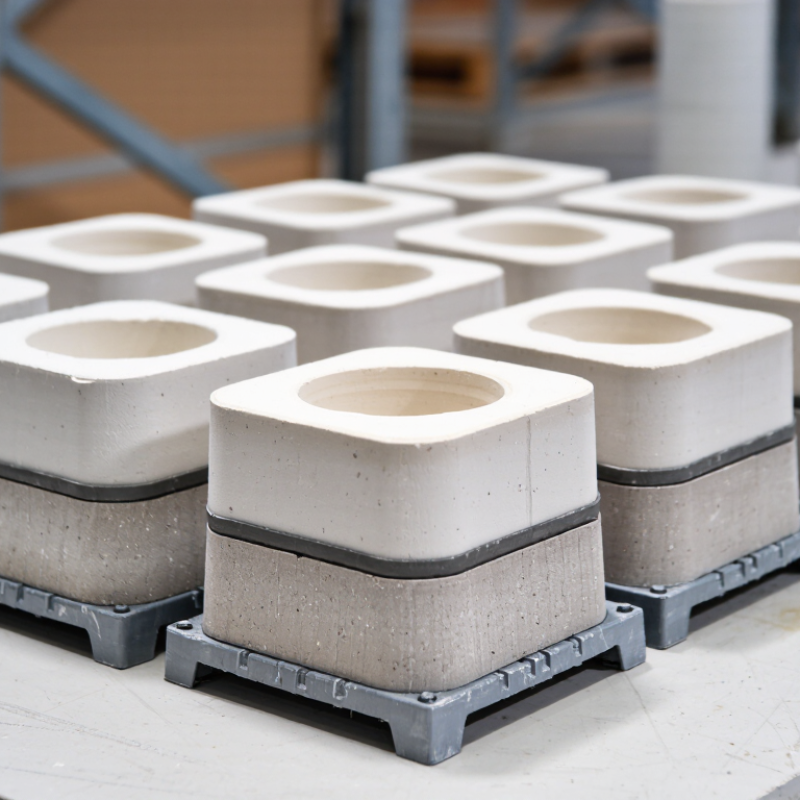
Cordierite mullite saggers combine low thermal expansion with useful high-temperature strength. Cordierite commonly contains magnesium aluminosilicate phases, while mullite adds alumina-rich stability. Typical thermal expansion values range from about 1.5 to 6.0 × 10⁻⁶/K, depending on composition and firing history. That difference matters during rapid heating and cooling.
According to the 2024 MarketsandMarkets advanced ceramics report, the global advanced ceramics market is projected to grow at roughly 5% annually through the decade. This growth reflects demand from battery materials, electronic ceramics, and powder processing. Saggers support these processes by containing powders during calcination, sintering, and controlled atmosphere firing. Their ribbed walls improve mechanical handling. Their smooth inner surfaces also reduce powder retention.
Real factory performance depends on more than a laboratory recipe. Water absorption, apparent porosity, wall thickness, and firing temperature must be checked for every production batch. ASTM C373 testing can measure absorption and density, while thermal cycling reveals hidden cracking. A sagger may survive 1,000°C but fail after repeated cycles near 1,300°C. Small furnace differences matter. Industry reports provide useful market direction, not guaranteed service life. This is where technical judgment remains imperfect. Engineers should record warpage, edge chipping, and contamination after each cycle, then adjust the composition or firing schedule.
How to Evaluate Chinese Cordierite Mullite Sagger Manufacturers
How to Evaluate Chinese Cordierite Mullite Sagger Manufacturers
Choosing among China’s top cordierite mullite sagger manufacturers requires more than comparing prices. A reliable evaluation begins with material data, production experience, and evidence from real applications. Ask for the cordierite and mullite ratio, maximum service temperature, apparent porosity, bulk density, and thermal expansion data. These figures should match your firing cycle, kiln atmosphere, and product weight.
Request sample saggers with the same dimensions used in production. Check wall thickness, corner accuracy, surface smoothness, and visible cracks after repeated heating. A good supplier should explain forming methods, sintering temperatures, inspection points, and batch traceability. Review test reports carefully. Some reports look complete but omit thermal-shock cycles or dimensional changes. That omission matters.
Tips: Visit the workshop when possible. Observe raw-material storage, drying areas, kiln loading, and final inspection. Ask how rejected pieces are recorded. Confirm packaging with corner protection and moisture control, especially for long-distance shipping. Independent testing can verify chemical composition and thermal performance. Customer references are useful, but they should include similar kiln temperatures and firing schedules. A low quotation may reflect thinner walls, weaker inspection, or inconsistent raw materials. I have seen attractive samples fail after several cycles, so one successful test is not enough. Your scorecard may still be imperfect; revise it after pilot production.
China Top 10 Cordierite Mullite Sagger Manufacturers? - How to Evaluate Chinese Cordierite Mullite Sagger Manufacturers
Anonymized supplier-evaluation benchmark based on commonly specified technical, quality, production, and export criteria. Verify all values with current supplier documentation before purchasing.
| Rank |
Anonymous Supplier Profile |
Typical Al₂O₃ Content |
Recommended Maximum Service Temperature |
Apparent Porosity |
Bulk Density |
Dimensional Tolerance |
Standard Production Lead Time |
Customization Capability |
Quality Evidence to Request |
Evaluation Score |
| 1 |
Profile A — Export-oriented technical ceramics producer |
Approx. 45–55% |
1,300–1,400°C |
15–22% |
2.0–2.3 g/cm³ |
±0.5–1.0% |
25–40 days |
High |
Batch test reports, dimensional inspection records, export references |
92/100 |
| 2 |
Profile B — Large-volume kiln-furniture manufacturer |
Approx. 42–52% |
1,300–1,380°C |
17–25% |
1.9–2.2 g/cm³ |
±0.8–1.2% |
20–35 days |
Medium to high |
Raw-material certificates, process-control plan, sample inspection |
90/100 |
| 3 |
Profile C — High-temperature ceramic specialist |
Approx. 48–58% |
1,350–1,400°C |
14–21% |
2.1–2.4 g/cm³ |
±0.5–0.8% |
30–50 days |
High |
Thermal-shock test method, firing curve, laboratory analysis |
89/100 |
| 4 |
Profile D — Precision-forming ceramic workshop |
Approx. 44–54% |
1,280–1,380°C |
16–23% |
2.0–2.3 g/cm³ |
±0.3–0.8% |
30–45 days |
Very high |
CMM inspection data, drawing approval, first-article report |
87/100 |
| 5 |
Profile E — Integrated raw-material and firing producer |
Approx. 43–53% |
1,280–1,350°C |
18–26% |
1.9–2.2 g/cm³ |
±0.8–1.2% |
25–40 days |
Medium |
Chemical analysis, traceability records, kiln-monitoring data |
85/100 |
| 6 |
Profile F — Small-batch custom sagger producer |
Approx. 45–55% |
1,300–1,380°C |
15–24% |
2.0–2.3 g/cm³ |
±0.5–1.0% |
35–55 days |
Very high |
Prototype records, sample approval, corrective-action procedure |
84/100 |
| 7 |
Profile G — Cost-focused industrial ceramics factory |
Approx. 40–50% |
1,250–1,330°C |
19–28% |
1.8–2.1 g/cm³ |
±1.0–1.5% |
20–35 days |
Medium |
Pre-shipment inspection, composition report, packaging specification |
81/100 |
| 8 |
Profile H — Regional kiln-accessories supplier |
Approx. 42–52% |
1,260–1,340°C |
18–27% |
1.9–2.2 g/cm³ |
±0.8–1.5% |
25–45 days |
Medium |
Factory audit, production photos, dimensional sampling plan |
79/100 |
| 9 |
Profile I — General refractory-products manufacturer |
Approx. 38–48% |
1,220–1,300°C |
20–30% |
1.8–2.1 g/cm³ |
±1.0–1.8% |
30–50 days |
Low to medium |
Material certificate, sample test, production-capacity confirmation |
76/100 |
| 10 |
Profile J — Trading and outsourced-production model |
Must be verified by batch |
Supplier-declared; verify by test |
Must be verified by batch |
Must be verified by batch |
±1.5–2.0% typical target |
25–45 days |
Medium |
Factory identification, independent inspection, traceability and warranty terms |
72/100 |
Recommended Supplier-Evaluation Weighting
Technical performance: 30% · Quality-system evidence: 20% · Dimensional consistency: 15% · Thermal-shock and service life: 15% · Customization capability: 10% · Lead time and delivery reliability: 5% · Commercial transparency: 5%.
Important verification note:
Cordierite-mullite sagger performance depends on formulation, forming method, firing schedule, wall thickness, kiln atmosphere, loading pattern, and application temperature. Request a current technical data sheet, certificate of analysis, sample approval, third-party inspection, and application-specific trial before confirming a ranking or purchase order.
China’s Top 10 Cordierite Mullite Sagger Manufacturers
China’s Top 10 Cordierite Mullite Sagger Manufacturers deserve careful comparison, not a quick online ranking. These manufacturers serve ceramic, powder, and high-temperature firing industries. Their saggers are valued for low thermal expansion, strong thermal-shock resistance, and stable performance during repeated kiln cycles.
From practical purchasing experience, I would examine more than catalogue photographs. A reliable manufacturer should provide cordierite-mullite composition data, firing temperature records, water absorption results, and dimensional tolerances. Wall thickness matters. A slightly uneven base can disturb airflow and create uneven heating. Ask for sample saggers before placing a large order. Inspect the rim, corners, inner surface, and flatness after several heating cycles.
The strongest candidates usually maintain controlled forming, high-temperature sintering, and documented quality inspections. They should also explain how they handle custom sizes, kiln compatibility, packaging, and replacement claims. Some suppliers offer attractive prices, but weak edges may crack during loading. That cost appears later.
No ranking is perfect. Production quality can change between batches. This is easy to overlook. Buyers should compare test reports with actual samples and discuss service response with technical staff. A manufacturer that answers specific questions clearly often inspires more confidence than one offering only broad performance claims. The final choice should reflect operating temperature, load weight, firing frequency, and acceptable service life.
Pricing, Export Services, and Tips for Choosing a Reliable Supplier
China Top 10 Cordierite Mullite Sagger Manufacturers: Pricing, Export Services, and Tips for Choosing a Reliable Supplier
Comparing China’s top ten cordierite mullite sagger manufacturers requires more than checking unit prices. A quote depends on size, wall thickness, porosity, firing temperature, order quantity, and custom tooling. Ask each supplier for a detailed cost sheet. It should separate product prices, molds, packaging, inland transport, and export charges. The cheapest offer may hide weaker thermal cycling performance. That mistake becomes expensive after repeated kiln use.
Request test data from recent production batches. Useful figures include bulk density, water absorption, dimensional tolerance, and maximum recommended temperature. Ask for a sample before approving a large order. Inspect its flatness, edge finish, and surface cracking after heating. Small defects matter. A dependable manufacturer should explain its inspection process clearly, not only send attractive photographs. Independent pre-shipment inspection can add cost, but it may protect a larger investment.
Export service also deserves close attention. Confirm the trade term, production lead time, loading port, carton design, pallet treatment, and replacement policy for transit damage. Reliable suppliers usually provide commercial invoices, packing lists, and shipping documents without repeated reminders. Check whether they can handle your destination’s import requirements. Communication is practical evidence of reliability. If answers change between sales staff, engineers, and shipping teams, pause before paying. Some buyers focus too heavily on certificates. Certificates help, but consistent samples and transparent records often reveal more. There is no perfect supplier, and even careful purchasing can miss a problem; record every specification in the purchase contract.
China Top 10 Cordierite Mullite Sagger Manufacturers: Supplier Evaluation Priorities
This chart presents a practical, non-brand weighting model for screening a shortlist of Chinese cordierite mullite sagger suppliers. Technical fit receives the highest weighting because service temperature, thermal-shock resistance, dimensions, and kiln compatibility directly affect production reliability. Pricing should be assessed together with quality consistency, export documentation, packaging, lead time, and after-sales support rather than used as the only selection factor.