Leave Your Message

What Are the Best Alumina Ceramic Suppliers in 2026?

Choosing an Alumina Ceramic supplier in 2026 takes more than comparing prices or browsing polished product photos. Buyers need material data that matches the job: alumina purity, density, hardness, operating temperature, and resistance to wear or corrosion. A component for an electrical insulator may need different properties from a kiln setter or a pump seal. Small details matter.

A useful supplier comparison should examine more than catalog range. Check whether drawings can be reviewed, dimensions and tolerances are clearly stated, and sample parts are available before a large order. Ask how the supplier verifies each batch, handles defects, and protects components during packing and shipping. Request current test reports and quality documentation, then confirm that they apply to the exact grade and product being quoted. That is not enough. Communication matters too. A technically capable vendor can still be a poor fit if lead times are vague or design questions go unanswered.

This guide looks at suppliers through practical criteria, including product consistency, engineering support, customization, delivery performance, and value over the component’s service life. Availability and capabilities can change, so treat rankings as a starting point, not a guarantee. One honest complication: supplier claims may look similar on paper, while the parts differ under real operating conditions. A careful shortlist, supported by samples and verified specifications, gives buyers a firmer basis for choosing.

What Are the Best Alumina Ceramic Suppliers in 2026?

Define Alumina Grades: 95%, 96%, 99.5%, and 99.9% Purity

Alumina grades describe nominal purity, but the number alone does not predict how a component will perform. A 95% grade often suits wear plates, guides, and electrical insulators where cost and toughness matter. It may contain more glassy phase, which can affect high-temperature behavior. The 96% grade is a common general-purpose choice, balancing strength, insulation, and machinability. Check the actual datasheet; grade definitions can vary.

At 99.5%, lower impurity levels can support better chemical resistance and performance at elevated temperatures. This grade is often considered for demanding process equipment. The 99.9% grade offers very high purity for specialized laboratory, electronic, or high-temperature components. But purity is not a guarantee. Grain size, porosity, finishing, and firing control also shape the result. Tiny pores matter. Ask suppliers for density, flexural strength, dielectric data, and test conditions, then compare like with like.

In practice, I would not choose a grade from a purity figure alone; it is an easy shortcut, and sometimes the wrong one. A lower grade may perform better when its design fits the load, temperature, and wear conditions.
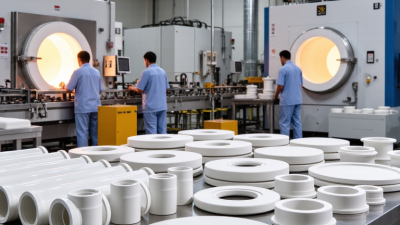
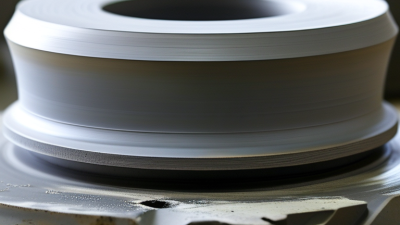
Compare Supplier Portfolios for Industrial, Medical, and Semiconductor Uses

An alumina supplier’s portfolio should match the operating environment, not just list available grades. For industrial equipment, compare wear-resistant parts, kiln furniture, insulating components, and machinable shapes. Ask for density, hardness, thermal-shock data, and batch consistency. Details matter. A low unit price can lose value when a seal or liner wears early.

Medical applications demand a different evidence trail. Review material composition, surface finish, cleaning compatibility, and documented biocompatibility testing for the intended device. Confirm whether the supplier controls machining residues and can trace production lots. A polished sample is not enough. Avoid assuming every “medical-grade” label means the same thing; definitions and validation needs vary by use.

For semiconductor tools, purity and dimensional control often outweigh broad catalog size. Compare trace-metal limits, flatness, particle-control practices, and packaging cleanliness. Ask how measurements are recorded and how deviations are handled. A supplier may excel at standard tubes yet struggle with custom wafer-handling parts. Portfolio breadth helps, but process capability is the harder question. I would still request a trial lot; paper specifications can miss edge chips or fit issues.

What Are the Best Alumina Ceramic Suppliers in 2026? — Compare Supplier Portfolios for Industrial, Medical, and Semiconductor Uses
Comparison of anonymized supplier capability profiles. These are portfolio types, not named or ranked companies; actual grades, tolerances, certifications, and availability vary by supplier and part.
Supplier profile Typical alumina portfolio Industrial fit Medical fit Semiconductor fit Key checks before selection
Wear-component specialist Common engineering grades, often including approximately 92–96% alumina; formed and machined wear parts. Strong fit for abrasion-resistant liners, guides, nozzles, seals, and pump components. Usually limited to non-implant components unless medical-grade material and documentation are specifically offered. Possible fit for general fixtures; confirm purity, contamination controls, and cleanroom handling for process-critical parts. Ask for wear data under relevant conditions, dimensional capability, surface finish, and batch traceability.
High-purity technical-ceramics specialist Typically offers high-purity grades such as 99–99.8% alumina, subject to the supplier’s grade system and specification. Suitable for electrical insulators, precision fixtures, and parts needing high hardness and chemical resistance. Potential fit for custom components; implant use requires a qualified material, applicable documentation, and device-specific validation. Strong potential for wafer-handling parts, insulators, and selected plasma-process components, depending on process conditions. Verify purity test method, trace impurities, porosity, surface finish, and contamination-control procedures.
Precision machining and custom-part provider Multiple alumina grades paired with grinding, lapping, drilling, and custom geometry production. Good fit for small-batch or complex parts, including precision spacers, tubes, and instrument components. Can support custom non-implant components; confirm cleaning, packaging, and quality records for the intended use. Useful for tight-tolerance fixtures and custom chamber parts when cleanliness and material controls meet the application. Review tolerances by feature, inspection methods, drawing control, finishing capability, and scrap/rework policy.
Medical-ceramic-focused provider May offer high-purity alumina materials intended for medical or implant-related applications; scope varies by product. May supply precision components, but broad industrial wear portfolios should be confirmed separately. Most relevant when material qualification, traceability, and medical-device documentation are central requirements. May be suitable for selected precision parts; semiconductor contamination controls are not implied by medical credentials. Confirm applicable standards, material lot records, change control, sterilization compatibility, and finished-device validation responsibilities.
Volume-production component supplier Standardized shapes and repeat-order grades, commonly selected for stable production and cost-efficient supply. Good fit for repeatable, established parts such as tubes, rods, plates, and standard insulators. Potential fit for non-implant parts; confirm whether medical documentation and controlled production are available. Can suit standard components if grade, cleanliness, and lot consistency satisfy the process specification. Check minimum order quantities, lead times, lot-to-lot consistency, certificate content, and continuity of supply.

Selection note: Alumina grade names and purity percentages are not fully interchangeable between manufacturers. Compare the supplier’s datasheet and test methods against the actual operating environment, drawing, cleanliness level, and regulatory requirements.

Verify Performance Claims: 15–20 GPa Hardness and 10–15 kV/mm Dielectric Strength

For a 2026 alumina supplier shortlist, treat 15–20 GPa hardness and 10–15 kV/mm dielectric strength as claims to verify, not guaranteed properties. The ASM Handbook, Volume 4A, describes hardness values that vary with alumina grade and test conditions; dense, high-purity grades may approach the upper end of common supplier ranges. Ask which composition, surface finish, and indentation load produced the reported figure. ASTM C1327 provides a method for measuring Vickers hardness in advanced ceramics. A number without its test method is incomplete.

Dielectric strength needs the same scrutiny. ASTM D149 describes testing solid insulating materials, but a result depends on specimen thickness, electrode shape, temperature, and test procedure. Request the raw report, sample dimensions, and breakdown results across multiple specimens. Look for consistent results, not one impressive peak. Thin, polished coupons can behave differently from a thick machined component. That detail matters.

Compare like with like. Ask whether the supplier tests finished parts or laboratory coupons, and whether the stated values are typical or minimums. A supplier’s technical datasheet is useful, but independent testing adds confidence. I would also question any claim that omits test conditions; even good suppliers can leave that detail out. That is worth noticing.

Alumina Ceramic Performance Benchmarks

Reference claim ranges: 15–20 GPa Vickers hardness and 10–15 kV/mm dielectric strength.

These ranges reflect the benchmarks stated in the title, not independently verified supplier test results. Actual properties depend on ceramic grade, processing, and test method; check grade-specific datasheets and standardized test conditions.

Screen Quality Systems: ISO 9001, Traceability, and Dimensional Tolerances

What Are the Best Alumina Ceramic Suppliers in 2026?

Screen Quality Systems: ISO 9001, Traceability, and Dimensional Tolerances

A supplier’s ISO 9001 certificate shows a quality management system, not automatic control of every ceramic part. The ISO Survey 2022 reported 1,265,216 valid ISO 9001 certificates worldwide. That scale shows broad adoption, but it cannot confirm a supplier’s alumina expertise. Ask to see recent inspection records for parts made to comparable drawings.

Traceability should connect each finished component to its material batch and key processing steps. Check whether records identify the powder lot, forming route, sintering cycle, and any grinding operation. Ask how nonconforming parts are contained and how corrective actions are verified. Paper trails matter. Yet paperwork can look complete while leaving gaps between a batch record and the part in your hand.

Dimensional control needs equally concrete evidence. Request a sample inspection report showing actual measurements against drawing tolerances, plus the gauge or coordinate-measuring equipment used. NIST Technical Note 1297 provides guidance on evaluating and expressing measurement uncertainty; this matters when tolerances are tight. Compare uncertainty with the allowed tolerance, not just the instrument’s displayed resolution. One limitation: a single sample report may not represent routine production, so ask how often checks occur and whether results are retained by lot.

Rank 2026 Suppliers by Capacity, Customization, Lead Time, and Total Cost

What Are the Best Alumina Ceramic Suppliers in 2026?

The strongest supplier is not automatically the one with the largest kiln. Rank candidates by verified capacity, customization, lead time, and landed cost. The USGS Mineral Commodity Summaries 2025 estimates global alumina output at roughly 140 million metric tons in 2024. That figure describes upstream material, not finished technical-ceramic capacity. Ask suppliers for monthly good-part output, recent delivery performance, and backup production plans. Capacity is not output.

A practical 100-point screen might assign 30 points to capacity, 25 to customization, 20 to lead time, and 25 to total cost. For customization, compare achievable tolerances, prototype support, machining options, and inspection records. Request sample data for the actual part geometry, not a polished brochure example. Lead time should include tooling, kiln queues, quality checks, and freight. Small details matter.

The World Bank’s Logistics Performance Index 2023 compares 139 economies and includes timeliness among its dimensions. Use it as context, not a substitute for supplier-specific delivery records. Total cost should include tooling amortization, minimum order quantities, packaging, freight, testing, and expected scrap. Cheap quotes can age badly. I would rerank suppliers after a pilot order; this adds time, but paper capacity can be misleading.