Why Choose Technical Ceramic for Industrial Applications?
Why Choose Technical Ceramic for Industrial Applications?
Technical Ceramic has moved beyond laboratory use into pumps, bearings, semiconductor equipment, medical devices, and power systems. Its value is practical: alumina resists electrical breakdown, zirconia tolerates fracture, and silicon carbide handles heat and abrasion. In a slurry pump, for example, a ceramic seal can face abrasive particles that quickly damage conventional metal surfaces.
Market evidence supports this shift. Grand View Research estimated the global advanced ceramics market at approximately USD 11.8 billion in 2022, with growth projected through 2030. Its report links demand to electronics, energy, transportation, and medical manufacturing. Definitions vary across reports, however. That difference deserves attention before comparing market figures.
Professor C. Barry Carter, a widely cited ceramic materials expert, has stated, “The properties of ceramics are controlled by their microstructure.” This principle explains why composition, porosity, grain size, and sintering quality matter so much. Two parts may share the same ceramic label yet perform very differently.
Performance is not automatic.
Technical Ceramic offers high hardness, corrosion resistance, dimensional stability, and reliable operation at elevated temperatures. Yet it can fail under impact, poor alignment, or sudden thermal shock. The right choice therefore requires more than a datasheet. Engineers should examine load cycles, surface finish, joining methods, operating temperature, and failure history.
Reports from MarketsandMarkets and Grand View Research indicate strong industrial growth, but specifications remain application-specific. A sound decision combines published data with supplier testing, independent validation, and real operating experience. That is where ceramic’s promise becomes measurable.
What Technical Ceramics Are and How They Differ from Traditional Ceramics
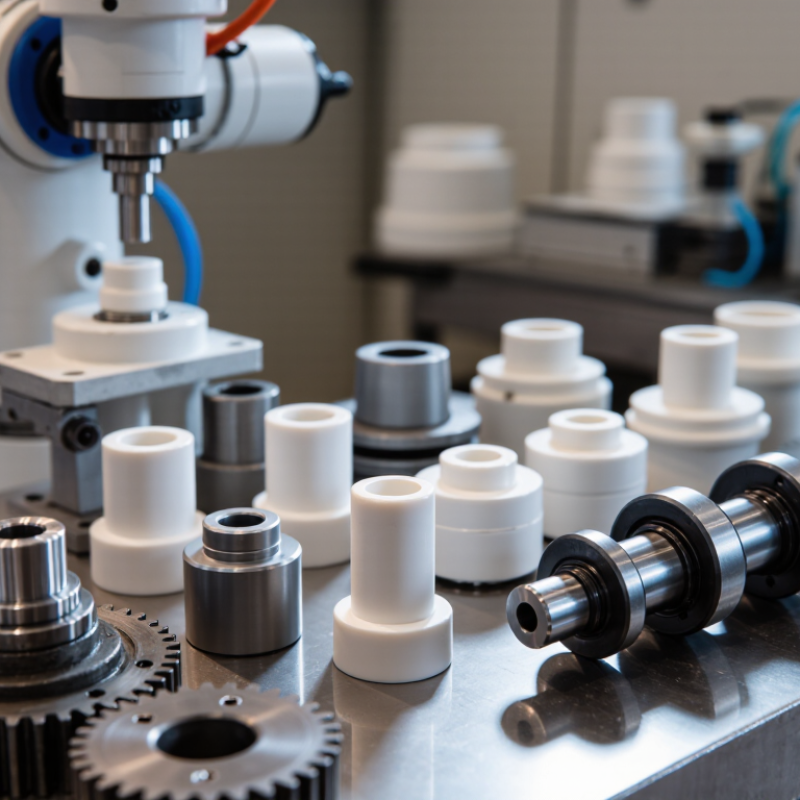
Technical ceramics are engineered from refined powders, then shaped, fired, and finished to meet specific performance needs. Common materials include alumina, zirconia, silicon carbide, and silicon nitride. Their composition and processing are controlled more closely than those of traditional pottery or household ceramics. The difference is practical. A kiln component may need to resist thermal shock; a pump seal may need to withstand abrasion and corrosive fluids. Engineers select the material for the operating conditions, not simply its appearance.
Traditional ceramics often use natural clay and serve structural or decorative purposes. Technical ceramics rely on carefully specified raw materials and tighter control of grain size, porosity, and firing conditions. This can deliver high hardness, electrical insulation, heat resistance, or chemical stability. But “ceramic” does not mean indestructible. A part can still crack under impact, and machining it may require specialized tools. Small design details matter.
Demand reflects these industrial uses. Grand View Research estimated the global advanced ceramics market at about USD 11.7 billion in 2023. That figure describes a market, not proof that every ceramic component outperforms metal or polymer. In practice, engineers compare temperature, load, wear, and failure costs before choosing a material. A seal that handles abrasive slurry may benefit from silicon carbide, while another application may favor a tougher, less brittle option. The best choice is not always obvious.
Why Choose Technical Ceramics for Industrial Applications?
Technical ceramics are engineered for specific performance requirements, while traditional ceramics are commonly made for building, household, or decorative uses. This chart compares representative flexural-strength ranges for alumina and porcelain; actual values vary by composition, grade, and test method.
What this means: Higher flexural strength can help a ceramic component withstand greater bending loads. Technical alumina is often selected for demanding industrial parts, while porcelain serves many traditional applications.
Key Material Properties That Support Industrial Performance
Technical ceramics earn their place where metal parts wear, oxidize, or soften. Alumina commonly has a Vickers hardness around 15–20 GPa, while silicon carbide is often near 22–28 GPa; actual values depend on purity and test method. That hardness helps resist abrasion from grit moving through pump seals or powder-handling equipment. It can also make machining and impact damage more demanding. Hard is not the same as unbreakable.
Heat resistance is another practical advantage. The NIST Chemistry WebBook lists alumina’s melting point at about 2,327 K, or 2,054°C. A melting point is not a safe continuous-use temperature: load, thermal gradients, joints, and atmosphere all matter. Silicon carbide also combines high-temperature capability with useful thermal conductivity, helping components spread heat rather than trap it locally. ASTM C1161 provides a standard method for measuring ceramic flexural strength, a reminder that strength should be checked under defined conditions, not treated as a single universal number. Engineers should match the grade to the duty cycle and test the finished component. Real installations can be less tidy than the lab.
How Technical Ceramics Are Manufactured and Processed
Technical ceramic production begins with powder selection, not with the kiln. Alumina, zirconia, silicon carbide, and silicon nitride each require specific purity, particle size, and forming conditions. Powders are milled, blended with temporary binders, then shaped by pressing, extrusion, slip casting, or injection molding. Green parts are fragile. Drying must remove moisture evenly, or cracks can appear before firing.
The European Commission Joint Research Centre’s 2007 Reference Document on Best Available Techniques in the Ceramic Manufacturing Industry gives a broad firing range of about 800–2,000°C across ceramic product groups. This range is not a recipe for every technical ceramic. Sintering fuses particles into dense parts; temperature, atmosphere, and hold time affect shrinkage and final properties. After firing, diamond grinding can bring bores, flatness, and tolerances into specification, though it adds time and cost. Metrology checks dimensions, while density and strength tests can reveal defects hidden by a polished surface. Small flaws matter. Inspect powder batches and furnace records, not only finished parts. Even disciplined production lines can drift, and that limitation deserves honest tracking.
Industrial Applications Across Different Sectors
Why Choose Technical Ceramic for Industrial Applications?
Industrial Applications Across Different Sectors
Technical ceramics support demanding work where metals may corrode, deform, or conduct unwanted heat. Alumina insulates electrical assemblies, while silicon carbide tolerates high temperatures and abrasive particles. In semiconductor equipment, ceramic components help control contamination around wafer-processing areas. Their low wear can also protect precision surfaces during repeated movement. Small differences matter. Surface finish, porosity, and dimensional tolerance can influence production stability.
Chemical processing plants use ceramic linings, tubes, seals, and pump parts against acids, solvents, and aggressive slurries. In energy systems, ceramic insulators and heat-resistant supports operate near furnaces, batteries, and power-conversion equipment. Medical devices may use zirconia for strong, wear-resistant components that contact the human body. Aerospace and automotive systems apply ceramics in sensors, brake components, thermal barriers, and engine-related assemblies. Each sector demands different testing.
No material is perfect. Technical ceramic can resist heat yet remain vulnerable to sudden impact or poor mounting. A rushed design may create stress at sharp corners. Engineers should review thermal cycling, vibration, chemical exposure, and maintenance access before specifying a grade. In one factory, replacing a metal guide with ceramic reduced wear, but alignment became more demanding. That trade-off was easy to overlook. Reliable selection depends on measured operating conditions, documented testing, and honest review of field failures.
Factors to Consider When Selecting Technical Ceramics
Choosing technical ceramic for industrial applications requires more than comparing hardness or temperature ratings. The right material must match the working environment, production method, and expected service life. Start with operating temperature, mechanical load, and chemical exposure. Thermal shock also matters when components move quickly between hot and cold zones. A ceramic may tolerate extreme heat but crack during sudden cooling.
Alumina suits many wear-resistant and electrically insulating parts. Zirconia offers higher fracture toughness for components facing impact or vibration. Silicon carbide performs well under high temperatures, abrasive particles, and corrosive gases. However, these general advantages can become misleading without application data.
Small details matter. Check porosity, surface finish, dimensional tolerance, and joining requirements. A dense material may still fail if its edge design creates stress.
In production trials, I would test the ceramic under realistic cycles instead of relying only on catalogue figures. Measure temperature changes, contact pressure, cleaning chemicals, and maintenance frequency. I once underestimated how a small bore could collect powder and alter airflow. That experience changed the design review process. Cost should include machining, installation, inspection, and replacement time. The cheapest option may create more downtime. Engineers should also confirm traceability, batch consistency, and available quality documentation. Some selections remain uncertain until field testing exposes an overlooked weakness. Allowing room for that uncertainty makes the final decision more reliable.