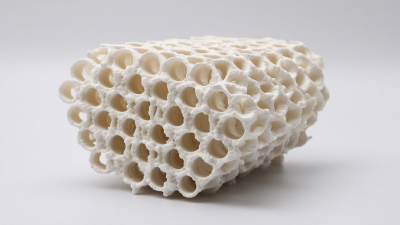
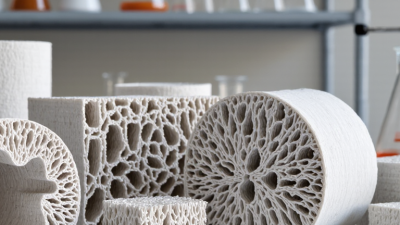
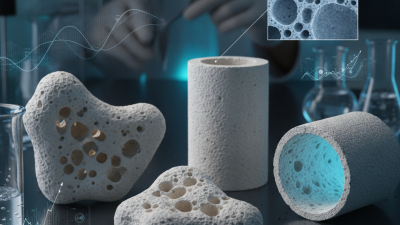
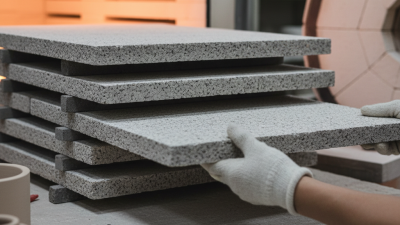
Porous Alumina Ceramics serve demanding roles in filtration, chemical processing, thermal management, and laboratory equipment. Their open pores can support fluid flow, while alumina provides heat resistance and mechanical strength. Yet “porous alumina” is not one uniform specification. Pore size, porosity, permeability, strength, and surface finish can vary sharply between products.
Grand View Research estimated the global advanced ceramics market at about $11.9 billion in 2023, with projected growth through 2030. That figure covers advanced ceramics broadly, not porous alumina alone. It is useful context, but not proof of demand for any particular supplier. Richard E. Mistler, a recognized ceramics-processing author, offers a relevant technical perspective in his published work: processing choices influence the finished ceramic’s properties. In practical terms, forming and firing can affect whether a filter holds its shape or a support withstands repeated heating. This is a paraphrase, not a direct quotation.
This guide compares seven suppliers through product range, technical documentation, customization, quality controls, and customer support. Ask for measurable data, including pore-size distribution, permeability, and compressive strength. Request samples where performance matters. A polished datasheet is helpful. It is not enough. Supplier claims can be difficult to compare when test methods differ, and some public specifications leave gaps. The ranking therefore needs judgment, not just a spreadsheet.
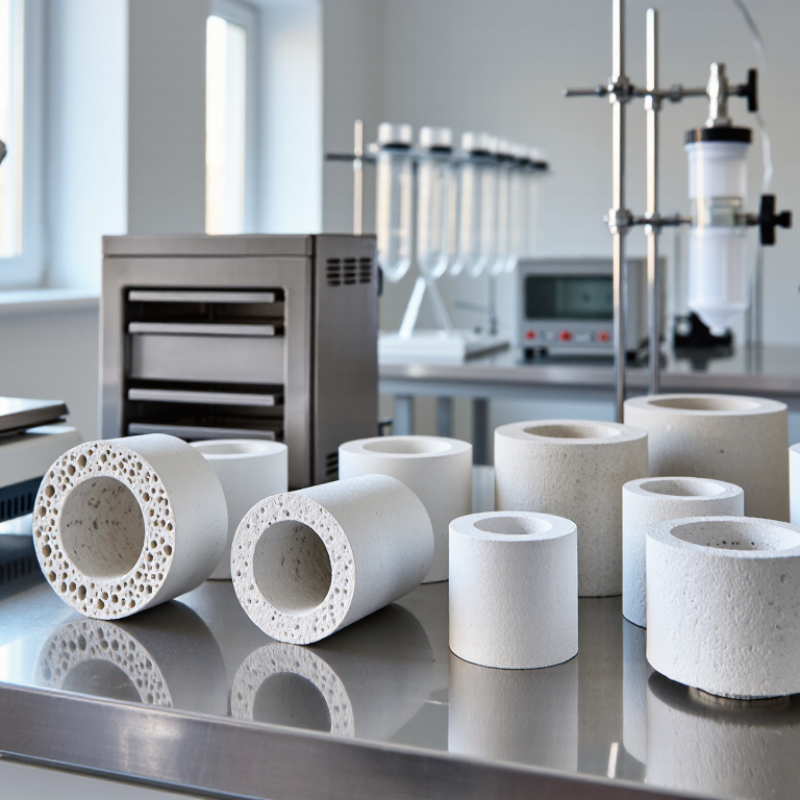
Porous alumina ceramics combine a rigid aluminum oxide framework with a network of tiny voids. Their pores may connect or remain isolated, and that difference affects how air, liquid, or heat moves through a part. Small pores matter. A component designed for filtration may need consistent pore openings and dependable flow, while a catalyst support needs accessible surface area. Porous alumina is also used in gas diffusion, thermal insulation, and specialized laboratory equipment.
Performance depends on more than a headline porosity value. Pore size, wall thickness, permeability, and mechanical strength all shape how a ceramic performs in service. For example, a thin filter disc may pass fluid efficiently but need careful handling. A thicker support can withstand more stress, yet restrict flow. Temperature changes and repeated cleaning may also affect a part’s useful life. A tidy specification sheet is not the whole story; real operating conditions can expose trade-offs that are easy to miss.
Tips: When comparing suppliers, ask for pore-size ranges, permeability data, and the test conditions behind each result. Request a sample if the part must fit a specific housing or process. Check whether the supplier can explain how manufacturing variation affects performance. One useful question: how consistent are batches? The answer may be less precise than expected, so verify critical measurements before choosing a design.
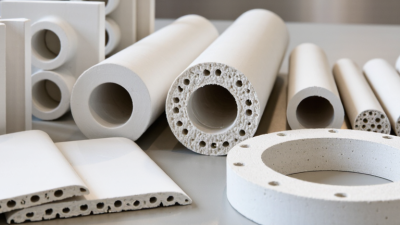
What Are the 7 Best Porous Alumina Ceramics Suppliers?
Criteria for Evaluating Porous Alumina Ceramic Suppliers
A supplier’s datasheet is only a starting point. Compare open porosity, pore-size distribution, permeability, strength, and dimensional tolerances against your operating conditions. Ask how each value was measured and whether test results represent production batches, not just a laboratory sample. ASTM C20 can help assess apparent porosity, water absorption, and bulk density when its scope fits the product. For filters, request flow data using your intended fluid; a pore-size number alone cannot predict performance.
MarketsandMarkets’ Porous Ceramics Market report projected growth from US$11.1 billion in 2022 to US$14.4 billion by 2027. That expanding market makes qualification worth the effort, but market growth does not prove a supplier’s consistency. Review lot traceability, certificates of analysis, lead times, and change-control procedures. Request samples, then test them under realistic temperature, pressure, and chemical exposure. A polished sample may conceal batch variation. That matters.
Tips: Ask for three recent lot records, not one. Check whether the supplier can explain failed results and corrective actions. If the answers feel vague, pause. A small pilot order can reveal handling, packaging, and delivery issues before scale-up.
The profiles below are anonymous supplier archetypes for building a shortlist, not verified companies or a vendor ranking. Confirm all capabilities, specifications, certifications, and commercial terms directly with prospective suppliers.
| Shortlist profile | Potential application fit | Key evaluation criteria | Evidence to request | Important checks before selection |
|---|---|---|---|---|
| 1. Porous ceramic membrane specialist | Filtration or separation applications where pore characteristics and flow performance are central. | Pore-size distribution, permeability, filtration performance, surface quality, and operating conditions. | Product datasheets, test methods, representative test results, and sample availability. | Check that pore-size values are defined by a stated measurement method and that performance data match the intended fluid and test conditions. |
| 2. Custom porous-ceramic fabricator | Components requiring non-standard shapes, dimensions, mounting features, or small design iterations. | Design-for-manufacture support, dimensional tolerances, achievable geometry, and repeatability. | Written capability limits, drawings or sample parts, tolerance definitions, and a prototype plan. | Confirm how shrinkage, machining, edge finishing, and inspection are handled for the requested geometry. |
| 3. Porous filtration-media producer | Applications needing porous parts or media evaluated for flow, particle retention, or cleaning requirements. | Porosity, pressure drop, flow rate, particle-retention data, and cleanability under relevant conditions. | Test protocols, application-specific performance reports, and guidance on operating limits. | Compare results only when test fluid, temperature, pressure, area, and measurement methods are comparable. |
| 4. Catalyst-support ceramics supplier | Catalyst-support or process-development work where surface area, thermal behavior, and chemical compatibility matter. | Alumina composition, porosity characteristics, surface-area data where relevant, and thermal and chemical stability. | Material specifications, characterization methods, and compatibility information for the intended process. | Verify that reported properties apply to the finished porous component, not only to the starting powder or a different product grade. |
| 5. Research and prototype supplier | Laboratory trials, early-stage development, and low-volume evaluation before production specifications are fixed. | Sample access, technical communication, material traceability, and ability to support iterative testing. | Sample quotation, available test documentation, material identification, and prototype lead-time estimate. | Clarify whether prototype properties and process controls can be maintained when moving to larger order quantities. |
| 6. High-purity alumina ceramics producer | Uses with specified chemical composition or impurity limits, subject to the supplier’s porous-product capability. | Composition, impurity limits, batch consistency, porosity specification, and relevant service environment. | Material certificate, analytical methods, batch documentation, and confirmation of porous-product availability. | Do not assume a high-purity dense-alumina capability also covers porous parts or the required pore structure. |
| 7. Integrated component manufacturer | Projects needing a finished component, potentially including machining, assembly, or quality documentation. | End-to-end process control, inspection capability, traceability, packaging, and production repeatability. | Process-flow overview, inspection plan, quality records, sample approval procedure, and commercial quotation. | Identify which operations are performed in-house and which are subcontracted; agree on acceptance criteria in writing. |
Suggested comparison method: Request the same drawing, operating conditions, target pore characteristics, quantity, and inspection requirements from each candidate. Compare documented evidence rather than relying on general capability statements; no single pore size, porosity, strength, or purity target is appropriate for every application.
Seven notable porous alumina ceramic suppliers are best compared by capability, not catalogue size. A practical shortlist can cover seven needs: custom-shaped parts, filtration tubes, membrane supports, catalyst carriers, laboratory prototypes, high-temperature components, and volume production. These are useful supplier profiles, not interchangeable products. USGS Mineral Commodity Summaries 2024 estimates global alumina output at about 140 million metric tons in 2023. That figure describes bulk alumina, not porous ceramic grades, so it cannot show how many qualified suppliers exist. Still, it highlights why buyers should verify feedstock and processing details. Ask each supplier for pore-size distribution, open porosity, strength, and batch-to-batch variation. A clean datasheet matters. But test conditions matter too.
Tips: Request a sample with the same dimensions as your part. Check its pores under magnification, then compare measurements using the same test method.
A supplier may quote high porosity, yet the finished component can have weak edges or uneven flow. Request test records for multiple production lots, plus the method used to measure porosity; ISO 5017 offers relevant guidance for porosity testing of refractory products. Compare lead time, machining allowance, and response to design changes across all seven profiles. One detail is easy to miss: a low unit price may exclude inspection or custom tooling. I would treat supplier rankings as provisional until samples survive your actual temperature, pressure, and cleaning cycle.
Comparing Supplier Products, Capabilities, and Services
Choosing among seven suppliers starts with matching their materials to your operating conditions. Compare pore size, porosity, permeability, alumina purity, available shapes, dimensional tolerances, and production capacity. A supplier should explain how these values are measured, not just list them. Ask for sample test data and check whether it reflects the finished component. Small differences matter.
Capabilities and service can separate similar product catalogs. Look for custom forming or machining, inspection records, repeatable batch quality, realistic lead times, and responsive engineering support. Discuss temperature, fluid exposure, pressure, and cleaning needs before requesting a quote. A useful supplier will clarify trade-offs rather than promise every specification at once. A polished datasheet is helpful, but it cannot replace testing under your actual conditions. I would compare samples from more than one supplier; that takes time, but it may reveal uneven flow or fragile edges.
Tips: Send the same drawing and test conditions to each supplier. Request tolerances, sample quantities, and inspection details in writing. Check carefully. Some requirements may need adjustment after trials.
Choosing a porous alumina supplier starts with your operating conditions, not a catalog. Define the required pore-size range, flow rate, temperature, chemical exposure, and mechanical load. Ask for test data from production batches, not just a typical sample. Small details matter. A filter handling abrasive slurry needs different pore structure and strength from a diffuser used in clean water.
Request measured porosity, permeability, dimensions, and strength, with test methods stated. ASTM C20 provides methods for apparent porosity and bulk density in refractory shapes; confirm that its scope fits your component, or request a validated equivalent. The USGS Mineral Commodity Summaries 2024 estimated global alumina production at about 140 million metric tons in 2023. That figure describes raw-material scale, not the quality or availability of finished porous ceramics. Treat it as context, not a supplier score.
Check whether the supplier can hold tolerances across the part, especially around thin walls and drilled connections. Ask for a sample, inspection records, and a clear response to rejected parts. A large catalog proves little. I would also question unusually precise performance claims without test conditions; flow changes with pore structure, fluid, and pressure. One weakness in supplier comparisons is that quoted data may come from different test setups, making direct rankings unreliable. Request comparable measurements before committing to tooling or volume orders.