Leave Your Message

What Is Porous Alumina Ceramics and How Is It Used?

Porous Alumina Ceramics are engineered alumina bodies containing controlled, interconnected pores. Unlike dense alumina, they combine chemical stability with lower weight, permeability, and thermal resistance. The pore network may resemble fine ceramic foam, with channels that guide gases or liquids through a rigid structure.

This material matters because performance depends on more than alumina purity. Pore size, open porosity, wall thickness, firing temperature, and surface finish all influence filtration, insulation, and catalyst-support behavior. The ASM Handbook reports alumina’s high hardness, electrical insulation, and resistance to many corrosive environments. Its melting point is approximately 2,050°C, although porous components usually operate below this limit because pores reduce mechanical strength. That distinction is easy to overlook.

Industrial demand is also expanding across several application areas. Grand View Research’s ceramic materials analyses identify filtration, thermal management, electronics, and medical technologies as important growth sectors. MarketsandMarkets reports continued investment in advanced ceramics for energy, environmental, and process industries. However, market figures vary because researchers classify porous ceramics differently. The comparison is imperfect.

In practice, Porous Alumina Ceramics can filter molten metals, diffuse gases, support catalysts, or insulate high-temperature assemblies. A laboratory filter may use micrometer-scale pores, while a furnace component may require larger voids for thermal shock control. Manufacturers commonly evaluate porosity and permeability through standardized testing, including methods aligned with ASTM and ISO practices. Product selection should therefore connect test data with actual service conditions, not rely on a catalogue label alone. This article examines the material’s structure, manufacturing methods, major uses, and practical limitations.
What Is Porous Alumina Ceramics and How Is It Used?

Definition and Basic Structure of Porous Alumina Ceramics

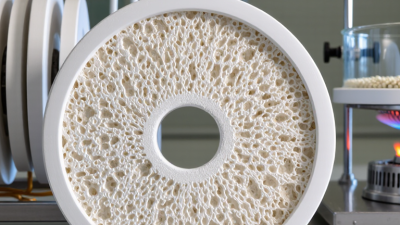
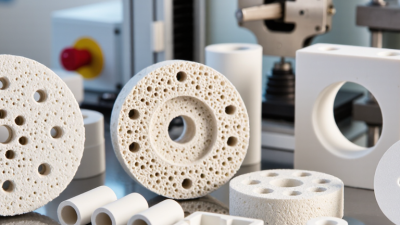
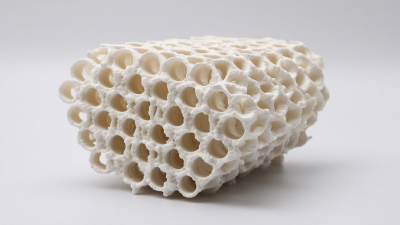
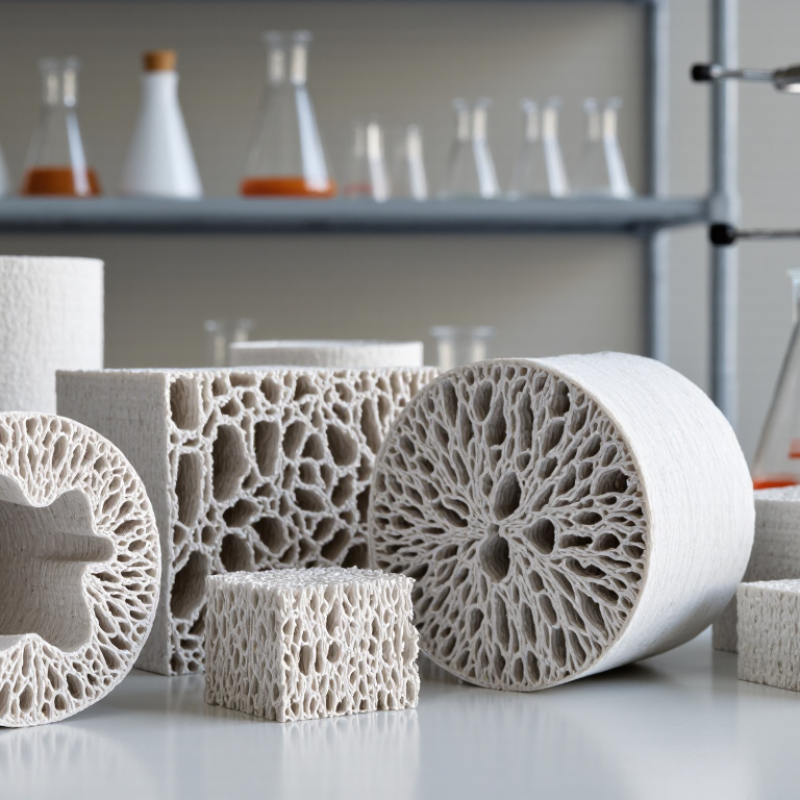
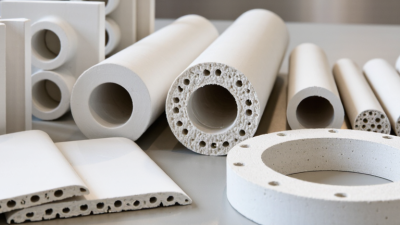
Porous alumina ceramics are engineered bodies made mainly from aluminum oxide, or Al2O3. Their structure contains solid alumina grains and controlled voids. Some pores connect across the body, while others remain sealed inside it. Open pores support filtration and fluid movement. Closed pores mainly reduce weight and thermal conductivity. A typical part may look like a white disk, tube, or honeycomb, with pore sizes ranging from submicron channels to hundreds of micrometers. The exact structure depends on powder size, pore-forming additives, forming pressure, and sintering temperature.

This material is not simply “alumina with holes.” Sintering creates ceramic necks between particles, giving the skeleton strength while preserving selected porosity. ASTM C20 evaluates apparent porosity, water absorption, bulk density, and related properties. These measurements matter more than appearance. The U.S. Geological Survey reported about 140 million metric tons of global alumina production in 2023, showing the scale of the raw-material supply behind advanced ceramic manufacturing. Yet supply volume does not guarantee consistent pores. Real components often contain uneven channels, weak edges, or small cracks. That is an important limitation. Engineers commonly use porous alumina in molten-metal filters, catalyst supports, gas diffusers, furnace insulation, and biomedical research. Performance changes sharply when pores become blocked or moisture enters them.
Key Properties and Performance Characteristics

Porous alumina ceramics contain a controlled network of open or closed pores within an aluminum oxide body. Their key advantage is tunable porosity, which reduces weight and supports filtration, insulation, and controlled fluid flow. Pore size, shape, and distribution strongly affect performance. Small, uniform pores improve filtration precision, while larger pores reduce pressure drop.

These ceramics remain stable at high temperatures and resist many corrosive chemicals. They also provide electrical insulation and maintain dimensional stability better than many polymeric materials. However, porosity lowers mechanical strength. A highly porous part may crack under impact, vibration, or uneven loading. Thermal shock can also be difficult. It is not flawless. Careful testing is necessary.

Tips: Match pore size to the working fluid and contaminant size. Check permeability, compressive strength, thermal cycling, and moisture behavior before installation. In practical designs, avoid sudden pressure changes and unsupported edges. Surface glazing may improve handling, but it can reduce permeability. Processing details matter, too. Sintering temperature, pore-forming agents, and wall thickness can change results significantly. A component that performs well in a dry laboratory may behave differently after repeated wetting, heating, and cleaning. Engineers should validate the ceramic under actual service conditions, not only catalog values.

Manufacturing Processes and Porosity Control

What Is Porous Alumina Ceramics and How Is It Used?

Manufacturing Processes and Porosity Control

Porous alumina ceramics contain connected or isolated voids within an alumina framework. These pores reduce weight and improve filtration, insulation, and fluid transport. Their performance depends on pore size, shape, distribution, and connectivity.

Manufacturers create porosity through several routes. Sacrificial pore formers burn away during firing, leaving designed cavities. Partial sintering keeps particles bonded without fully closing the pore network. Foaming and freeze casting can produce larger, directional pores. Each method demands careful slurry mixing, drying, binder removal, and temperature control.

Pore control starts with raw material selection. Particle size affects packing and final shrinkage. The amount and size of the pore former also matter. A small change can alter permeability significantly. Firing temperature must be high enough for strength, but excessive heat may close critical pores. That target is not always realistic.

Practical evaluation combines Archimedes density testing, microscopy, and gas or liquid permeability measurements. Industrial teams may also use three-dimensional imaging to inspect hidden defects. In my experience, drying often causes more trouble than expected. Uneven moisture can create cracks, warped edges, or local porosity changes. Slow drying helps, although it increases production time. Engineers must balance strength against permeability, because increasing one often reduces the other. Small deviations matter.

Major Applications Across Industrial and Technical Fields

What Is Porous Alumina Ceramics and How Is It Used?

Porous alumina ceramics contain connected or isolated pores within an alumina framework. Their controlled porosity combines low weight with strong thermal and chemical resistance. Unlike dense alumina, porous grades allow gases or liquids to pass through selected pathways. Pore size, shape, and distribution determine performance. Engineers usually balance permeability against mechanical strength because increasing porosity can weaken the component.

Major Applications Across Industrial and Technical Fields

In industrial filtration, porous alumina separates particles from hot gases, corrosive liquids, and molten materials. A filter near a casting line may capture inclusions before they enter a metal component. Porous plates also support catalyst particles in chemical processing. Their open structure improves contact between reactants and active surfaces. However, fouling remains a practical concern. Cleaning methods must match the pore geometry and chemical environment.

Technical systems use porous alumina for gas diffusion, burner components, thermal insulation, and high-temperature supports. Laboratory instruments may rely on it to distribute gases evenly across a reaction chamber. Its electrical insulating properties also suit sensors and heated assemblies. Medical research has explored porous alumina for controlled interfaces, although biological compatibility requires careful testing. It is not a universal solution. Thermal shock, clogging, brittle fracture, and manufacturing variation can limit service life. Reliable design requires permeability tests, strength measurements, and exposure trials under real operating conditions.

What Is Porous Alumina Ceramics and How Is It Used? - Major Applications Across Industrial and Technical Fields

Application Field Typical Component or Form Relevant Material Characteristics Typical Operating Considerations Primary Function
Industrial Filtration Porous tubes, discs, candles, and plates Controlled pore-size distribution, chemical stability, and high-temperature capability Pore size and permeability must be matched to particle size, pressure drop, and fluid chemistry Separates suspended solids from liquids or gases
Ceramic Membrane Supports Macroporous support with a finer ceramic membrane layer Mechanical rigidity, thermal-shock resistance, and compatibility with oxide membrane coatings Support porosity affects flux, while surface layers determine separation selectivity Provides structural support for microfiltration, ultrafiltration, or gas-separation membranes
Catalyst and Adsorbent Supports Pellets, honeycombs, foams, and coated porous bodies High surface area relative to dense alumina, thermal stability, and inert support chemistry Pore accessibility and resistance to thermal cycling influence catalyst effectiveness Disperses active catalytic or adsorptive phases and promotes gas or liquid contact
Thermal Insulation Porous boards, blocks, tubes, and shaped insulating parts Low thermal conductivity compared with dense alumina, non-combustibility, and high-temperature stability Insulation performance depends on porosity, pore connectivity, temperature, and mechanical load Reduces heat transfer in furnaces, kiln systems, and high-temperature equipment
Molten-Metal Processing Foam filters, filter plates, and ceramic elements Refractoriness, resistance to many molten materials, and interconnected pore structure Thermal shock, wetting behavior, and chemical compatibility must be evaluated for each alloy Removes non-metallic inclusions and improves melt cleanliness before casting
Gas Diffusion and Burner Systems Porous diffusers, burner plates, and sparging elements Uniform gas distribution, temperature resistance, and resistance to oxidation Flow uniformity depends on thickness, permeability, pore geometry, and pressure differential Distributes air or process gas and supports stable combustion or gas-liquid contact
Biomedical and Dental Materials Porous alumina research substrates and specialized implant-related components Hardness, wear resistance, chemical inertness, and tunable surface morphology Biocompatibility, pore interconnectivity, sterilization, and regulatory validation are essential Provides a stable ceramic surface for research, tissue-interface studies, and selected medical uses
Sensor and Analytical Devices Porous sensing substrates, sampling filters, and gas-permeable supports Large accessible surface area, electrical insulation, and thermal or chemical stability Response time is influenced by diffusion distance, pore size, humidity, and analyte concentration Facilitates analyte transport and provides a stable platform for sensing layers
Wicking and Fluid Management Porous plates, capillary structures, and liquid-distribution elements Capillary action, dimensional stability, and resistance to many solvents Liquid uptake depends on pore radius, surface energy, viscosity, and pore connectivity Moves and distributes liquids without pumps in selected technical systems
General Material Notes: Porous alumina ceramics are aluminum-oxide bodies containing intentionally engineered open or closed pores. Their performance is controlled by total porosity, pore-size distribution, pore connectivity, wall thickness, strength, and surface chemistry. Actual values vary according to composition and manufacturing method; application-specific testing is required before final design selection.

Selection Considerations and Practical Limitations

Porous alumina ceramics contain controlled voids within an alumina matrix. These pores reduce weight and improve gas or liquid flow. Their performance depends on porosity, pore size, and pore connectivity. Open pores support filtration and catalyst applications. Closed pores provide better insulation but allow little fluid movement. The choice is not interchangeable.

Selection should begin with operating conditions, not catalog values. Check temperature, pressure, chemical exposure, and expected flow rate. A fine pore structure can improve filtration accuracy, yet it may clog quickly with dusty or oily fluids. Larger pores reduce pressure loss but may lower separation efficiency. Strength also decreases as porosity rises. Handle parts carefully.

Thermal cycling deserves special attention. Alumina tolerates high temperatures, but sudden heating or cooling can create cracks. Seals and joints may fail before the ceramic does. Machining is difficult after firing, so holes, edges, and tolerances should be specified early. Surface roughness can affect sealing and contamination control. Moisture may also change insulation performance.

Test it under real conditions.

Laboratory data can mislead. A sample tested with clean air may perform differently in a humid production line. Chemical compatibility should be verified with the actual fluid, concentration, and exposure time. In practical installations, support screens, cleaning access, and replacement costs often matter as much as pore size. Engineers sometimes choose maximum porosity too quickly, then discover that vibration or pressure causes premature damage.