China Top 10 Porous Alumina Ceramics Suppliers
China’s porous ceramics sector has moved beyond simple filtration components. Today, manufacturers produce Porous Alumina Ceramics for thermal insulation, molten-metal filtration, catalyst support, laboratory equipment, and biomedical research. Their value comes from controlled pores, chemical stability, low thermal conductivity, and resistance to sudden temperature changes.
Professor Paolo Colombo, a widely recognized researcher in porous ceramics, has stated, “Porosity is not a defect; it is a design parameter.” This idea guides the comparison behind China’s top ten suppliers. A reliable supplier should explain pore size, open porosity, bulk density, compressive strength, thermal-shock behavior, and operating temperature. Clear test methods matter. So does traceability.
The best companies often show more than polished product photographs. They provide drawings, sample data, machining tolerances, and application records. Some can tailor pore channels for gas flow or create dense surfaces around a porous core. Others focus on standard plates, tubes, discs, and custom kiln furniture.
Yet supplier rankings are never completely objective. Prices change. Lead times shift. Published specifications may not match field performance. That is why buyers should test samples under real conditions, including heat, pressure, chemical exposure, and repeated cleaning.
Small differences matter.
This introduction examines ten Chinese suppliers through product capability, manufacturing experience, quality control, customization, export service, and technical communication. The goal is practical guidance, not exaggerated promotion. A strong supplier should answer difficult questions clearly, even when the answer is not convenient.
What Porous Alumina Ceramics Are and Why They Matter
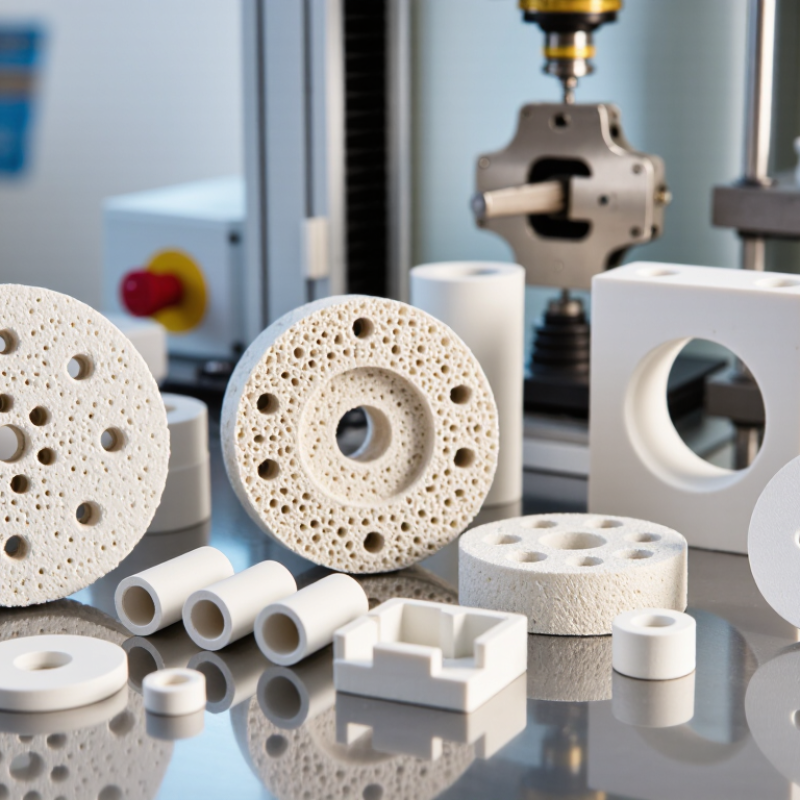
Porous alumina ceramics are engineered bodies filled with controlled microscopic channels. Unlike dense alumina, they allow gases, liquids, or heat to move through selected pathways. Their pores may be open, connected, and measured by size, volume, and distribution. These details decide whether the ceramic supports filtration, insulation, diffusion, or high-temperature processing.
The material is not magic. A pore structure that works for hot gas may fail under liquid pressure. Engineers should check permeability, strength, thermal shock resistance, surface chemistry, and contamination risks. In practical testing, a small sample can reveal uneven pores or fragile edges before full-scale production begins. That step saves time.
Porous alumina remains useful because it combines chemical stability with resistance to heat and wear. It can support catalyst structures, protect sensors, and separate particles in demanding environments. However, performance depends on manufacturing control, not only alumina purity.
Firing temperature, pore-forming methods, and machining can change the final structure. A reliable supplier should provide traceable test data, dimensional records, and clear sample specifications. Ask for repeated results, not one impressive chart. Even then, real operating conditions may expose weaknesses that laboratory tests miss. That is where careful review matters.
China’s Top 10 Porous Alumina Ceramics Suppliers
China’s top 10 porous alumina ceramics suppliers serve filtration, thermal, and laboratory equipment markets. Their products typically use high-purity alumina powder, controlled pore formers, and precision sintering. In practical sourcing, pore size matters more than a polished catalog photograph. Open-cell structures can support gas flow, while closed pores improve insulation. Ask for measured porosity, permeability, bulk density, and compressive strength. Numbers should come from batch records, not promises.
Experienced buyers compare shaping methods, including extrusion, pressing, and slip casting. Each method affects wall thickness and dimensional tolerance. A supplier with pilot-scale testing can reveal shrinkage before mass production. Request sample plates or tubes, then inspect them after thermal cycling. Small chips around drilled holes are revealing. They may indicate weak green bodies or careless machining. This step feels slow, but it prevents expensive tooling changes.
The strongest candidates among China’s top 10 suppliers should explain traceability from powder receipt to final inspection. Reliable documentation includes certificates, process limits, inspection frequency, and corrective-action records. Ask how moisture, pore-former burnout, and firing atmosphere are controlled. Some suppliers provide excellent samples but struggle with repeatability. That uncomfortable gap deserves attention. Evaluation should also include packaging, communication speed, and responses to failed tests. Technical confidence is useful, yet a supplier willing to admit process limits is often more credible.
China Top 10 Porous Alumina Ceramics Suppliers - China’s Top 10 Porous Alumina Ceramics Suppliers
| Rank |
Anonymous Supplier |
Primary Product Format |
Alumina Content |
Apparent Porosity |
Typical Pore Size |
Maximum Service Temperature |
Manufacturing Capability |
Typical Documentation |
| 1 |
Supplier 01 |
Porous tubes and filter elements |
90–99.5% |
30–50% |
5–100 μm |
1,400–1,600°C |
Extrusion, slip casting, precision machining |
COA, dimensional report, material datasheet |
| 2 |
Supplier 02 |
Porous plates and discs |
92–99% |
35–55% |
10–150 μm |
1,400–1,600°C |
Cold isostatic pressing, sintering, grinding |
COA, inspection record, sample approval report |
| 3 |
Supplier 03 |
Porous ceramic membranes |
95–99.8% |
25–45% |
0.1–10 μm |
1,200–1,500°C |
Tape casting, coating, controlled sintering |
Pore-size report, permeability data, COA |
| 4 |
Supplier 04 |
Porous catalyst carriers |
85–99% |
40–65% |
20–300 μm |
1,300–1,600°C |
Pressing, granulation, open-cell forming |
Bulk-density report, porosity report, COA |
| 5 |
Supplier 05 |
Porous setter plates and kiln furniture |
90–99.5% |
20–40% |
10–100 μm |
1,500–1,700°C |
Large-format pressing, CNC cutting, lapping |
Thermal-property sheet, dimensional report, COA |
| 6 |
Supplier 06 |
Porous rods and injection components |
92–99% |
25–50% |
3–80 μm |
1,300–1,600°C |
Injection molding, extrusion, centerless grinding |
Dimensional report, density data, COA |
| 7 |
Supplier 07 |
Porous ceramic spargers |
95–99.5% |
30–45% |
10–100 μm |
1,200–1,500°C |
Isostatic pressing, threaded machining, glazing |
Bubble-point data, flow-rate report, COA |
| 8 |
Supplier 08 |
Porous insulating shapes |
80–95% |
45–70% |
50–500 μm |
1,200–1,500°C |
Foam replication, casting, custom cutting |
Thermal-conductivity report, density report, COA |
| 9 |
Supplier 09 |
Porous ceramic nozzles and burners |
90–99% |
25–50% |
20–200 μm |
1,400–1,600°C |
Slip casting, CNC machining, thermal-shock testing |
Thermal-shock report, dimensional report, COA |
| 10 |
Supplier 10 |
Custom porous alumina assemblies |
90–99.8% |
20–60% |
0.5–300 μm |
1,300–1,700°C |
Prototype development, CNC machining, assembly |
Engineering drawing, inspection plan, COA |
Note: The specifications shown are indicative capability ranges commonly associated with porous alumina ceramic production in China. Actual values depend on formulation, forming method, sintering schedule, geometry, and application requirements; confirm all specifications directly before purchase.
Supplier Comparison by Products, Technology, and Industries Served
China Top 10 Porous Alumina Ceramics Suppliers
A useful top-ten comparison should examine products, technology, and industries served. Product portfolios usually include porous tubes, plates, discs, filters, and custom membranes. Pore sizes commonly range from submicron grades to several hundred micrometres. That range affects flow rate, filtration precision, and mechanical strength.
Technology separates capable suppliers from ordinary traders. Key indicators include controlled sintering, pore-size distribution testing, surface finishing, and batch traceability. Suppliers using alumina above 95% purity often target chemical, pharmaceutical, semiconductor, and laboratory applications. MarketsandMarkets reported that the advanced ceramics market could grow from about USD 11.8 billion in 2023 to USD 16.7 billion by 2028, reflecting a 7.2% CAGR. This expansion supports stronger demand for engineered porous components.
Industry fit also matters. Ceramic membrane suppliers may provide testing for water treatment and gas separation. Other manufacturers focus on vacuum chucks, diffusion plates, burner components, or biomedical supports. Grand View Research identifies filtration and chemical processing as important porous ceramics applications. Buyers should request permeability data, porosity results, thermal-shock records, and dimensional tolerances. ISO 9001 certification helps, but it does not prove product performance. A factory visit can reveal uneven grinding, weak packaging, or limited inspection capacity. I would avoid ranking suppliers by catalogue size alone. That method looks convenient, yet it can misjudge custom-production expertise. Pricing comparisons should include tooling, sampling, testing, and delivery risk. Small details often decide the real cost.
China Top 10 Porous Alumina Ceramics Suppliers — Supplier Comparison Reference
Industry-level technical ranges commonly used to compare porous alumina ceramic product capabilities.
The chart summarizes representative specification ranges for porous alumina ceramics, including open porosity, pore diameter, alumina purity, and service temperature. These ranges are suitable for comparing product portfolios, processing technologies, and potential use in filtration, catalyst support, thermal insulation, molten-metal handling, and laboratory equipment. Actual specifications vary by formulation, forming method, sintering process, and application.
How to Select the Right Chinese Supplier for Your Application
Choosing from China’s top 10 porous alumina ceramics suppliers requires more than comparing prices. Your application defines the right supplier. A 2024 MarketsandMarkets report projects strong growth for advanced ceramics, driven by filtration, electronics, and medical equipment. Yet market growth does not guarantee consistent pore performance. Ask for alumina purity, pore-size distribution, permeability, strength, and thermal-shock data. These values should match your operating temperature and fluid conditions.
Request samples made with the same process as mass production. Inspect pore size using ISO 15901-1 methods, and verify apparent porosity through ASTM C20 testing where applicable. A reliable supplier should provide batch records, dimensional inspection results, and material traceability. During audits, check kiln uniformity, machining controls, and packaging. Small cracks around drilled holes can become serious failures. I learned this the hard way in early component evaluations.
Tips: Compare at least three technical quotations, not only unit prices. Require a written inspection plan and acceptance limits. Confirm annual capacity, lead time, and response procedures for nonconforming parts. Ask whether the supplier can support pilot quantities before signing a large order. A 2023 Grand View Research analysis also highlights industrial filtration and electronics as major advanced-ceramics applications, but each demands different porosity and strength compromises. Do not accept generic “high quality” claims. Test the actual part.