Leave Your Message

China Top 10 Porous Alumina Ceramics Manufacturers?

Porous Alumina Ceramics are becoming important in filtration, chemical processing, medical devices, electronics, and high-temperature insulation. Their value comes from controlled porosity, chemical stability, low density, and resistance to thermal shock. Grand View Research identifies advanced ceramics as a strong-growth materials sector, supported by demand from semiconductor, energy, and industrial filtration applications. MarketsandMarkets also reports continued expansion in technical ceramics, particularly where conventional metals and polymers cannot maintain performance.

China has developed a broad manufacturing base for these components. The country offers powder preparation, pressing, extrusion, slip casting, sintering, machining, and custom surface treatment. This supply-chain depth can shorten development cycles. It can also reduce production costs. However, low quotations do not always mean better value. Buyers should examine pore-size distribution, open porosity, permeability, alumina purity, compressive strength, dimensional tolerance, and batch consistency. Those details decide whether a ceramic filter survives real operating conditions.

This “Top 10” overview should therefore be read as a practical market guide, not an absolute ranking. Public company data is often incomplete. Some manufacturers publish impressive specifications without showing independent test results. That deserves caution. Relevant evidence may include ISO 9001 certification, ASTM or ISO test methods, inspection records, application references, and sample-testing capability. Reports from Research and Markets and Fortune Business Insights indicate continued demand for engineered ceramics, but market forecasts vary by scope and methodology. The right supplier is not simply the largest one. It is the manufacturer that can repeatedly match the required pore structure, strength, cleanliness, and delivery performance. That distinction matters.

China Top 10 Porous Alumina Ceramics Manufacturers?

What Are Porous Alumina Ceramics and How Are They Made?

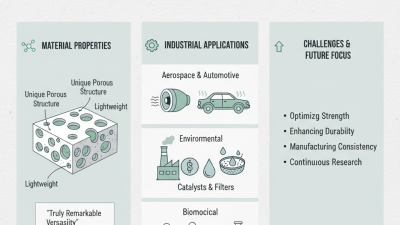
Porous alumina ceramics are lightweight, heat-resistant materials containing connected or isolated pores. They are made from aluminum oxide powder, a binder, and carefully selected pore-forming agents. Their open pores can filter gases, support catalysts, or distribute molten metal. Closed pores mainly reduce weight and thermal conductivity.

Manufacturing begins with powder preparation and particle-size control. The mixture is shaped by pressing, extrusion, or additive forming. Organic particles may burn away during heating, leaving designed cavities. Foaming methods create larger pores, while partial sintering preserves smaller channels. Firing usually occurs between 1,500 and 1,800°C, depending on purity and density. A 2023 review in the Journal of the European Ceramic Society reports typical open porosity ranges of roughly 30% to 80% for engineered porous ceramics. Pore size can vary from several micrometers to millimeters.

The final structure depends on heating rate, binder removal, and sintering time. Small process errors can cause cracks or blocked pores. This is often underestimated. The International Energy Agency’s 2024 clean-energy manufacturing analysis also highlights growing demand for durable filtration and thermal-management materials, supporting wider ceramic adoption. However, market forecasts should be read carefully because “porous ceramics” includes several compositions, not alumina alone. Manufacturers should verify porosity, permeability, compressive strength, and thermal-shock resistance through standardized laboratory testing before comparing suppliers.

Key Properties and Industrial Applications of Porous Alumina Ceramics

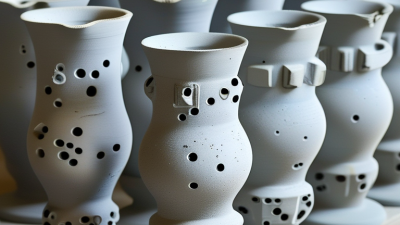
Porous alumina ceramics combine low density with strong thermal and chemical stability. Their interconnected pores allow gases and liquids to pass through controlled channels. Typical porosity ranges from 30% to 70%, while pore sizes can be adjusted from several micrometers to hundreds of micrometers. Smaller pores improve filtration precision. Larger pores reduce pressure loss.

Chinese manufacturers commonly produce these ceramics through foaming, extrusion, or sacrificial-pore methods. Each process changes strength, permeability, and surface structure. In high-temperature furnaces, porous alumina can support heating elements and reduce heat transfer. It remains stable in many oxidizing environments. However, sudden temperature changes may still create cracks. This detail is often underestimated during equipment design.

Industrial users also apply porous alumina as molten-metal filters, catalyst supports, burner components, and gas-distribution plates. Its high surface area helps disperse active materials across a stable framework. In filtration systems, engineers must balance flow rate against particle retention. A denser structure may capture finer particles, but it can raise operating pressure. Practical testing matters more than catalogue figures. Samples should be checked for pore distribution, compressive strength, thermal shock resistance, and chemical compatibility. In pilot testing, uneven pores sometimes cause unexpected flow paths. That result can challenge an otherwise reasonable design. Cost, machining tolerance, and cleaning requirements also deserve attention before volume purchasing.

How to Evaluate China’s Porous Alumina Ceramics Manufacturers

China’s large alumina supply base supports many porous ceramic producers. USGS Mineral Commodity Summaries 2024 reported about 82 million metric tons of alumina output in China during 2023. Scale helps, but it does not prove manufacturing quality. Evaluate each supplier through measurable evidence, not catalog language.

Ask for open porosity, bulk density, pore-size distribution, compressive strength, and thermal-shock results. ASTM C20 testing can verify apparent porosity, water absorption, and density. For filtration or catalyst supports, request SEM images and mercury porosimetry data from the same production batch. MarketsandMarkets’ 2024 advanced ceramics report projects continued market growth through 2029, increasing pressure for faster delivery. That pressure can weaken process control. I would inspect kiln records, raw-material certificates, dimensional tolerances, and nonconformance reports. A beautiful sample may hide uneven pores. Request at least three batches.

Tips: Compare test methods before comparing numbers. Confirm whether results come from finished parts or laboratory coupons. Audit machining, firing, packaging, and traceability. Ask for a small pilot order with acceptance criteria written in advance. Also check how the manufacturer handles failed samples; honest answers reveal more than polished brochures. Factory experience matters, yet my own evaluation would remain cautious when data lacks independent verification. A supplier should explain variation, not merely promise perfection.

China Top 10 Porous Alumina Ceramics Manufacturers? - How to Evaluate China’s Porous Alumina Ceramics Manufacturers
Shortlist Position Anonymized Manufacturer Profile Typical Alumina Purity Typical Open Porosity Typical Pore-Size Capability Available Product Forms Typical Use Temperature Key Manufacturing Process Quality Verification to Request Customization Capability Evaluation Score
1 Supplier Profile A
Industrial scale
95–99.8% Al₂O₃ 30–55% 10–500 μm Plates, tubes, discs, blocks, custom shapes 1,500–1,700°C, application dependent Foam replication, pore-forming additives, sintering Bulk density, apparent porosity, water absorption, dimensional inspection High; drawings, prototypes, and batch production ★★★★☆ 88/100
2 Supplier Profile B
Fine-pore specialist
96–99.5% Al₂O₃ 25–50% 1–100 μm Membrane supports, filter discs, tubes, porous plates 1,300–1,600°C, atmosphere dependent Powder pressing, extrusion, controlled pore-forming Pore-size distribution, permeability, strength, microstructure analysis High; pore-size and wall-thickness control ★★★★☆ 86/100
3 Supplier Profile C
Technical ceramics
90–99.8% Al₂O₃ 35–65% 50–2,000 μm Burner tiles, kiln furniture, thermal insulation parts 1,400–1,700°C, design dependent Foam ceramics, slip casting, high-temperature firing Thermal shock, compressive strength, thermal conductivity, porosity Medium to high; suitable for larger components ★★★★☆ 84/100
4 Supplier Profile D
Filter component producer
95–99% Al₂O₃ 30–55% 20–800 μm Gas filters, liquid filters, spargers, porous tubes 1,200–1,600°C, media dependent Extrusion, isostatic pressing, sintering Flow rate, pressure drop, filtration rating, cleanability testing High; connections, lengths, diameters, and end fittings ★★★★☆ 83/100
5 Supplier Profile E
Small-batch engineering
92–99.5% Al₂O₃ 30–60% 30–1,500 μm Custom blocks, rings, trays, nozzles, laboratory parts 1,300–1,650°C, geometry dependent Reaction-bonded or sintered porous alumina Dimensional tolerance, density mapping, microscopy, compressive strength Very high for prototypes and low-volume orders ★★★★☆ 81/100
6 Supplier Profile F
High-throughput supplier
90–99% Al₂O₃ 35–60% 100–3,000 μm Large porous panels, kiln supports, thermal barriers 1,400–1,650°C, service environment dependent Foam replication and continuous or batch sintering Batch consistency, thermal conductivity, thermal cycling, visual inspection Medium; strongest for standard geometries ★★★★☆ 79/100
7 Supplier Profile G
Precision-machined ceramics
96–99.8% Al₂O₃ 25–50% 10–300 μm Precision discs, sensor bodies, laboratory fixtures, supports 1,300–1,600°C, application dependent Dry pressing, machining, and controlled sintering Flatness, concentricity, pore distribution, dimensional CPK data High; suitable for tight-tolerance components ★★★★☆ 78/100
8 Supplier Profile H
Catalyst-support producer
95–99.5% Al₂O₃ 35–60% 5–200 μm Honeycombs, catalyst supports, porous tubes, structured inserts 1,200–1,500°C, chemical atmosphere dependent Extrusion, binder removal, and controlled atmosphere firing Surface area, permeability, crush strength, chemical compatibility Medium to high; structure and channel design available ★★★☆☆ 76/100
9 Supplier Profile I
Cost-focused producer
85–99% Al₂O₃ 35–65% 100–2,000 μm Standard plates, tubes, discs, ceramic filter elements 1,200–1,500°C, product dependent Low-cost pore-forming and standard sintering Certificate of analysis, density, porosity, dimensions, visual defects Medium; best for standardized designs ★★★☆☆ 73/100
10 Supplier Profile J
Prototype-oriented supplier
90–99.5% Al₂O₃ 25–60% 20–1,000 μm Prototype filters, research parts, custom porous structures 1,200–1,600°C, design dependent 3D-printed or molded green bodies followed by sintering Prototype-to-production repeatability, CT scanning, strength, permeability Very high for complex geometries and development work ★★★☆☆ 71/100
Evaluation criteria are based on commonly specified technical parameters for porous alumina ceramics. Actual values should be confirmed through current technical datasheets, representative samples, inspection reports, and production audits before supplier selection.

China’s Top 10 Porous Alumina Ceramics Manufacturers

China’s Top 10 Porous Alumina Ceramics Manufacturers

China’s top ten porous alumina ceramics manufacturers are increasingly assessed by performance, not production volume alone. These suppliers typically serve filtration, molten-metal handling, catalyst supports, electronics, and laboratory equipment. Key indicators include alumina purity, open porosity, pore-size distribution, thermal shock resistance, and dimensional control.

The USGS 2024 Mineral Commodity Summaries reported China as the world’s largest alumina producer, with output exceeding 80 million metric tons in 2023. This strong raw-material base supports competitive ceramic processing. A 2024 advanced ceramics market report from MarketsandMarkets also identified electronics, energy, and industrial filtration as major demand areas. However, market rankings remain imperfect. Public data rarely separates porous alumina from general technical ceramics. A supplier with lower output may still offer better pore uniformity.

Tips: Request a recent test report before purchasing. Check apparent porosity, permeability, compressive strength, and maximum service temperature. Ask for samples with the same pore size and wall thickness as your application. Small differences matter. A microscope image can reveal blocked pores, cracks, or uneven sintering that a product brochure may miss.

Experienced buyers should also examine process consistency across batches. ISO 9001 certification helps, but it does not prove ceramic performance by itself. Independent testing, traceable raw materials, and clear inspection records provide stronger evidence. The best manufacturer is not always the cheapest or largest. Application fit deserves more weight.

China's Top 10 Porous Alumina Ceramics Manufacturers

Industry specification benchmark for comparing porous alumina ceramic suppliers without displaying company-specific data.

The index is based on typical porous alumina specification ranges: apparent porosity of 30–60%, mean pore size of 10–100 μm, compressive strength of 5–30 MPa, and service temperature of approximately 1,000–1,700°C. It is an industry reference, not a ranking of individual manufacturers.

How to Select the Right Porous Alumina Ceramics Supplier

Selecting a porous alumina ceramics supplier in China requires more than comparing prices. Start with the application. Filtration, thermal insulation, and molten-metal handling demand different pore structures and strength levels.

Ask for samples.

Request measured data for open porosity, pore-size distribution, bulk density, flexural strength, and thermal-shock resistance. These values should match your drawing, not only a general product sheet. A reliable manufacturer can explain testing methods and provide batch records. Check whether the laboratory uses calibrated equipment and recognized standards.

Details matter.

Review the supplier’s production controls, including powder purity, forming pressure, sintering temperature, and dimensional inspection. Ask how they prevent blocked pores, warping, and surface cracks. A factory visit can reveal practical details that brochures hide, such as dusty storage areas or inconsistent packing. Video evidence helps, but it is not equal to an audit. I have seen specifications change slightly between samples and mass production, so approve a pilot batch before placing a large order. This step costs time, but it exposes weak process control early.

Evaluate communication as part of quality. Engineers should answer technical questions directly and identify design limits instead of promising everything. Confirm lead times, packaging, traceability, replacement procedures, and export documentation in writing. Some suppliers offer attractive prototypes but struggle with repeatability. That weakness is easy to overlook. Recheck it. A dependable partner shares inspection reports, accepts reasonable verification, and responds clearly when a batch fails to meet agreed requirements.