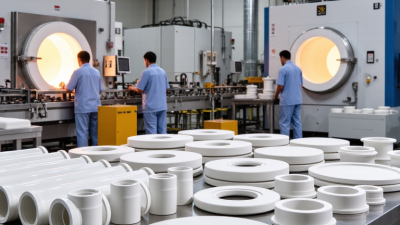
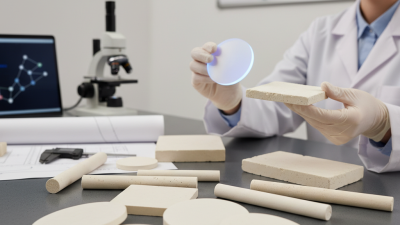
Alumina Ceramic components can look simple on a drawing, yet small differences in purity, dimensions, and finish may affect performance. A seal ring, wear plate, or electrical insulator each faces different operating conditions. Buyers should connect the part specification to its real use, including temperature, chemical exposure, mechanical load, and contact surfaces. Details matter.
For global purchasing, the challenge extends beyond choosing a material grade. Clear drawings, agreed tolerances, sample inspection, batch records, and protective packaging help reduce avoidable surprises. Ask suppliers how they measure critical dimensions and document material properties. Request evidence suited to the application, rather than relying on broad claims or a certificate without context. A sample may reveal a fit issue that a polished datasheet misses.
These seven buying tips offer a practical framework for comparing suppliers and preparing a more complete request for quotation. They also encourage buyers to check assumptions, especially when translating local requirements across teams and time zones. No checklist can replace application-specific engineering review. That is worth remembering. Even experienced buyers can focus too heavily on price or headline purity and overlook installation conditions. The guidance ahead helps make those trade-offs visible, so purchasing decisions are better informed, traceable, and aligned with the component’s intended service.

Before comparing alumina grades, define the part’s job and its real operating conditions. Will it face steady heat, rapid temperature changes, abrasive particles, or corrosive liquids? Record peak and continuous temperatures, load, contact points, and cleaning cycles. A seal ring in a hot pump needs different properties from a thin furnace support. Small details matter.
The ASM Handbook, Volume 4A, gives dense alumina a typical room-temperature thermal expansion near 8 × 10⁻⁶ per kelvin; composition and porosity affect the actual value. That matters when a ceramic part meets a metal housing: mismatched expansion can create stress during heating. The U.S. Geological Survey’s Mineral Commodity Summaries 2024 estimates global alumina output at about 140 million metric tons in 2023, but broad supply figures cannot identify a suitable grade. Ask suppliers for grade-specific test data, including strength, thermal conductivity, and chemical compatibility. Also specify whether loads are static or cyclic. A tidy specification can still miss the real failure mode. Test a representative part under the expected temperature ramp and contact conditions before ordering at scale.
| Buying Tip | Application or Condition to Define | Information to Specify | Why It Matters |
|---|---|---|---|
| 1. Identify the component’s function | Wear liner, electrical insulator, furnace part, seal, guide, or structural component | Describe what the part does, what it contacts, and the consequence of failure. | Different functions place different demands on wear resistance, electrical properties, strength, and dimensional stability. |
| 2. Define temperature and thermal cycling | Continuous and peak temperature; heating and cooling rate; number of cycles; temperature gradients | Provide the operating-temperature range, atmosphere, dwell time, and any rapid temperature changes. | Maximum service temperature depends on alumina grade, part design, load, atmosphere, and exposure time. Thermal shock can cause cracking even when the peak temperature is within the material’s capability. |
| 3. Describe chemical exposure | Liquids, gases, vapors, powders, cleaning agents, and process residues | List the chemicals, concentrations, temperatures, exposure duration, and whether contact is continuous or intermittent. | Alumina is resistant to many chemicals, but compatibility depends on the specific chemical and conditions. Strong alkalis and some high-temperature environments require particular evaluation. |
| 4. Quantify wear and mechanical loading | Abrasive particles, sliding or impact wear, compression, bending, vibration, and mounting loads | Specify the type and size of particles, contact speed, load, impact frequency, support method, and expected service life. | Alumina is hard and wear resistant, but ceramic parts are brittle and can be damaged by impact, tensile stress, or uneven support. |
| 5. Set the required electrical properties | Insulation, dielectric use, or exposure to electrical fields | State voltage, frequency, operating temperature, humidity, and required dielectric or insulation performance. | Electrical performance varies with material composition, temperature, geometry, and test conditions. A general material description is not a substitute for application-specific requirements. |
| 6. Specify grade and purity requirements | General industrial use versus applications requiring higher chemical purity or specialized performance | Request the alumina content or grade, relevant material properties, test methods, and any required certificates. | Commercial alumina ceramics are available in different compositions, commonly including grades around 92%, 95%, and 99% alumina. Higher purity may improve some properties, but the best choice depends on the application and must be confirmed against the specification. |
| 7. Provide geometry, tolerances, and installation details | Part dimensions, holes, slots, edges, joints, clearances, and assembly method | Share a dimensioned drawing, critical tolerances, surface requirements, mating materials, and installation constraints. | Ceramics are hard and dimensionally stable but can chip or crack under concentrated stress. Geometry, tolerances, and mounting design affect manufacturability and service performance. |
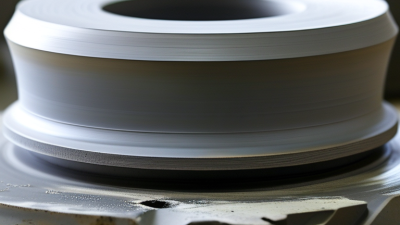
Alumina purity is a starting point, not a complete grade specification.
Common options include 92%, 95%, and 99.5% Al₂O₃. Higher-purity material can offer better chemical stability and wear resistance, but it may cost more and still fail if the design needs thermal-shock resistance or electrical insulation. Match purity to the working conditions. A valve seat facing hot, abrasive slurry has different needs from an insulating spacer in a dry assembly. Small details matter.
The USGS Mineral Commodity Summaries 2024 estimates global alumina production at about 140 million metric tons in 2023. That figure describes industry supply, not the quality of any finished ceramic part.
Ask suppliers for the actual composition, density, water absorption, hardness, and test methods for the proposed grade. Check grain size and porosity, too; two parts with the same stated purity may behave differently. This is easy to overlook. For corrosive service, request compatibility data for the specific chemical and temperature. For tight tolerances, review the drawing and firing shrinkage before ordering. Certificates help, but they do not replace testing under your operating conditions. Al₂O₃ percentages may be nominal, and secondary oxides can affect performance. That uncertainty deserves a question, not an assumption.
A ceramic part can look simple on a drawing and still be difficult to fit. Compare shapes first: a flat washer, a thin tube, and a block may use the same alumina grade, but their firing shrinkage and machining needs differ. The USGS Mineral Commodity Summaries 2025 estimates global alumina production at about 146 million metric tons in 2024. That scale describes raw material, not precision parts; finished dimensions depend on forming, firing, and finishing. A large production figure is no guarantee of a close fit.
Tips: Send a dimensioned drawing with the part’s intended use. Mark critical dimensions, hole locations, flatness, and surface finish. State units and measurement temperature. Ask suppliers to identify whether tolerances apply before or after firing, and request inspection data for the features that mate with other parts. A shaft entering a ceramic bore needs more than a nominal diameter; clearance must account for both parts and assembly conditions.
Avoid specifying the tightest possible tolerance everywhere. It can raise cost and reduce yield without improving performance. For example, a mounting face may need tighter flatness than a non-contact outer edge. I have seen drawings leave this unclear, and it is easy to overlook. Confirm datum references, measurement methods, and the supplier’s achievable range before release. The ISO GPS framework can help structure tolerancing, but it does not replace a part-specific capability review.
7 Alumina Ceramic Buying Tips for Global Buyers
Assess Manufacturing Quality and Supplier Capabilities
A reliable alumina ceramic part starts with controlled raw materials and a repeatable forming process. Ask how the supplier checks powder composition, dimensions, density, and firing conditions. Request inspection records for the specific production lot, not only a general quality certificate. Small details matter. A clean sample can still hide variation across a full production run.
Tips: Review recent inspection reports. Compare sample dimensions with your drawing. Ask how defects are recorded and handled. Check whether measurement tools are calibrated. Request clear answers about production capacity and lead times.
Supplier capability matters as much as the finished part. Ask who performs each production step and how process changes are approved. A technically capable supplier should explain tolerances, surface finish, and likely failure points in plain language. Visit the facility when practical, or arrange a live video walkthrough. Look for orderly work areas and traceable records, but do not treat appearance as proof. A limitation in any checklist is that it captures only what was checked that day. Keep questions specific, and record any unanswered details before placing an order.
A low unit price can hide costly gaps. Compare alumina ceramic quotes by grade, dimensions, tolerance, surface finish, and inspection scope. Ask whether machining, packaging, and export documents are included. Request a sample or inspection report for critical parts. A small difference in density or fit may matter more than a small price saving. I would not judge a supplier by one quote alone; specifications are easy to overlook.
Tip: Ask for a line-by-line quotation. Confirm minimum order quantities, tooling charges, payment terms, and how long the price remains valid. Keep the final drawing attached to your purchase order.
Logistics can affect both cost and product condition. Confirm production lead time, shipping method, crate dimensions, and who handles customs paperwork. Alumina is hard, but edges can chip during rough handling. Specify protective separators and sturdy packaging, especially for precision components. After-sales support matters too. Agree on how quickly the supplier will respond to a quality concern, and what evidence they need. Photos, batch numbers, and measurements can speed up review. Clarify replacement or rework procedures before ordering. The process may still feel uncertain, so record decisions in writing and leave time for a real inspection on arrival.
Suggested evaluation weight for comparing specifications, pricing, logistics, and after-sales support. These percentages are a planning framework, not market survey data.
Confirm the alumina grade and technical requirements first. Compare quotations on a like-for-like basis, including packaging, freight, duties, and delivery terms. Before ordering, verify inspection documents, production lead time, shipping arrangements, and the supplier’s process for handling defects or claims.