Leave Your Message

What Is the Best Corundum Mullite Sagger in 2026?

A Corundum Mullite Sagger earns its value inside the kiln, not on a product sheet. At peak temperature, the practical test is whether it resists thermal shock, chemical attack, and repeated loading without cracking or warping. Small details matter: wall thickness, corner radii, firing profile, and the fit between the sagger and its contents. A hairline crack can change the next firing. It may not show up in a catalog.

The U.S. Geological Survey’s Mineral Commodity Summaries 2025 estimates global bauxite mine production at about 430 million metric tons in 2024. That figure offers useful upstream context for alumina supply, but it does not measure sagger demand or prove that one composition performs better. For a fair comparison, buyers should examine batch consistency and test data, including apparent porosity and bulk density under ASTM C20, alongside cold strength under ASTM C133. Ask for results tied to the actual grade and firing conditions. A specification without test conditions is only part of the story.

One limitation deserves candor: no verifiable, attributable quotation from a named Corundum Mullite Sagger specialist was supplied or could be confirmed here. Inventing one would weaken the reliability of this guide. The sections ahead therefore focus on measurable criteria: service life, temperature range, dimensional stability, and cost per firing. There is no universal winner. The best choice depends on kiln atmosphere, load geometry, firing cycles, and the cost of a failed batch.
What Is the Best Corundum Mullite Sagger in 2026?

What Is a Corundum Mullite Sagger?

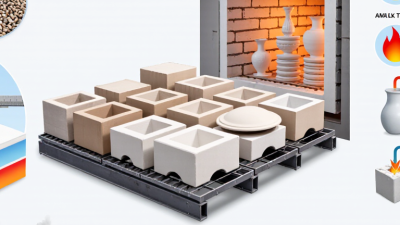
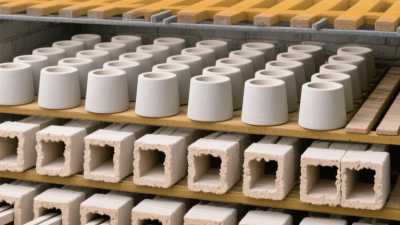
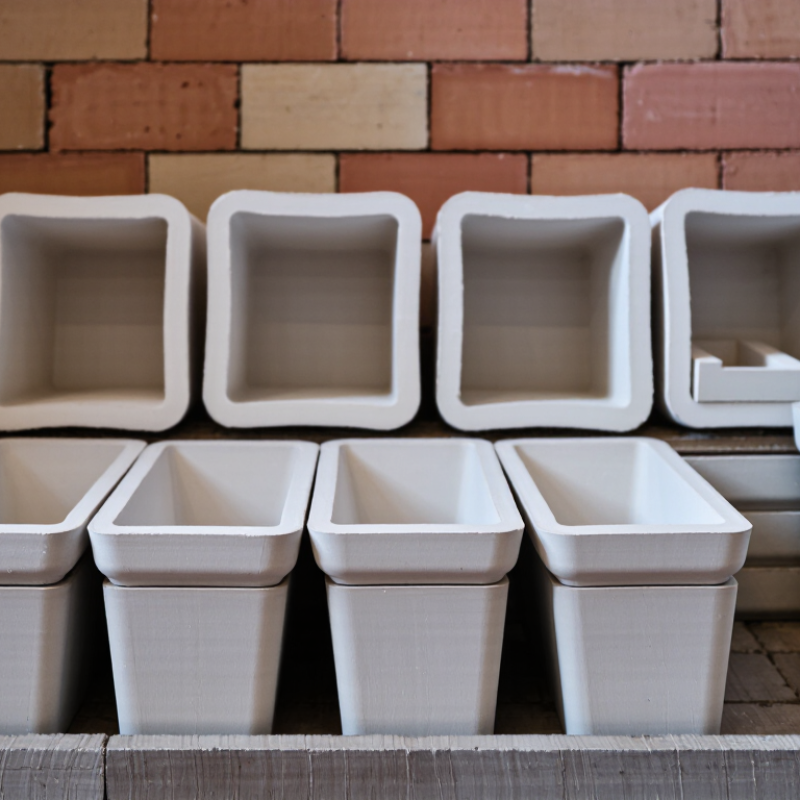
A corundum mullite sagger is a refractory ceramic container used to hold parts or powders during kiln firing. Its material combines corundum, an alumina-rich crystalline phase, with mullite, an aluminosilicate known for high-temperature stability. Together, these phases can provide strength, resistance to heat, and useful protection from direct flame or kiln debris. The sagger also helps keep a load organized. That matters. Its walls and base must handle repeated heating and cooling without cracking or deforming.

The best choice in 2026 depends on the firing cycle, not just the material name. Consider peak temperature, heating and cooling rates, load weight, kiln atmosphere, and the sagger’s dimensions. A thick base may support heavier ware, while narrower walls can leave more room for kiln capacity. But added thickness can affect heat transfer. Not always an advantage. Ask for the product’s stated service conditions and inspect samples for even walls, clean corners, and visible flaws. In practice, saggers wear gradually; chips or hairline cracks can be easy to overlook. Tracking firing cycles and checking the base before loading can help reveal when a container no longer suits the job.

What Is the Best Corundum Mullite Sagger in 2026? — What Is a Corundum Mullite Sagger?

Specification or Selection Factor Typical Information Why It Matters What to Check Before Buying
What it is A reusable refractory container made primarily from corundum (alumina) and mullite. It holds or separates ceramic and other heat-treated parts during firing. Confirm that the stated composition and intended use match your kiln process.
Typical service-temperature rating Some grades are rated in the approximate range of 1,600–1,700°C; the usable limit varies by product and conditions. A rating is not a guarantee of long-term performance under every load, atmosphere, or firing cycle. Ask for the recommended continuous-use temperature and the allowable peak temperature for the specific grade.
Bulk density Dense products commonly fall around 2.8–3.2 g/cm³, depending on formulation and manufacturing. Density can affect strength, heat storage, and the weight of the loaded kiln furniture. Compare the measured value and test method on the technical data sheet, rather than relying on material name alone.
Apparent porosity Values around 15–25% are often encountered in dense refractory products, but vary by grade. Porosity can influence slag or glaze penetration, thermal response, and durability. Consider the materials being fired and whether surface contamination or penetration is a concern.
Cold crushing strength Product-specific figures vary; dense refractory grades may report values from several tens of MPa upward. It provides a room-temperature strength indicator, but does not by itself predict performance at firing temperature. Check the reported value, test standard, and the sagger’s supported load and wall thickness.
Thermal-shock resistance There is no single universal cycle count for all corundum mullite saggers. Rapid heating and cooling can cause cracking; performance depends on design, temperature change, and handling. Ask for test conditions or service-life information from applications with a similar firing schedule.
Atmosphere and chemical compatibility Compatibility depends on the atmosphere and contact materials, including fluxes, slags, glazes, and vapors. Chemical attack can shorten service life even when the temperature is within the stated rating. Provide the supplier with the firing atmosphere and any materials that may contact or vaporize around the sagger.
Shape, wall thickness, and size Available dimensions and construction vary; larger or thicker designs may heat and cool differently. Fit, load distribution, and thermal gradients affect usability and the risk of damage. Check internal dimensions, wall and base thickness, flatness, and the loaded weight against kiln capacity.
Best choice for 2026 The best option is the grade whose documented temperature limit, chemistry, dimensions, and expected service life fit the actual firing process. There is no universally best sagger for every kiln, load, or firing schedule. Compare current technical data sheets and request a trial when operating conditions are demanding or variable.

How Are Corundum Mullite Saggers Made?

What Is the Best Corundum Mullite Sagger in 2026?

How Are Corundum Mullite Saggers Made?

A corundum-mullite sagger is made by combining alumina-rich corundum with mullite, then shaping and firing the mixture. Exact recipes vary with service temperature, load, and kiln atmosphere. Raw materials are screened and blended to limit large particles and uneven chemistry. Water and suitable binders help the powder hold together during forming.

The blend may be pressed in a rigid die or formed by casting, depending on the required size and production method. Workers check wall thickness and corners, since thin edges can crack under repeated heating. The shaped body must dry gradually before firing; trapped moisture can create defects. Firing develops the ceramic bond and strength, but the schedule needs control. Even careful production is not perfectly predictable. Kiln placement can reveal weak spots.

Tips: Ask for dimensional tolerances, firing-temperature guidance, and thermal-shock test details. Inspect the inner surface for chips and hairline cracks before use. A sagger that fits your kiln and loading cycle may serve better than one chosen by maximum temperature alone. Small details matter.

Which Properties Determine Sagger Performance?

What Is the Best Corundum Mullite Sagger in 2026? Its performance depends on the firing job, not a single headline specification. A useful sagger needs suitable high-temperature strength, low enough porosity, and resistance to repeated heating and cooling. Corundum supports hardness and wear resistance, while mullite helps maintain stability at elevated temperatures. The balance matters. A dense body may resist penetration, but poor thermal-shock resistance can still lead to cracking.

Check wall thickness, dimensions, and surface condition alongside material data. Uneven walls can heat at different rates, and small chips may grow during repeated firing. Consider the load, kiln atmosphere, peak temperature, and contact with powders or glaze. Chemical compatibility is easy to overlook. Ask suppliers for test data under comparable conditions, then verify performance with a controlled trial; published figures alone may not predict service life in your kiln.

Tips: Inspect saggers before each firing. Look for hairline cracks, warped bases, and residue buildup. Keep loading even, and avoid sudden temperature changes where the process allows. Record cycles and failures. The results may be imperfect, but they help identify which properties matter for your specific firing schedule.

Thermal-shock resistance, corrosion resistance, and hot strength are key considerations when selecting a corundum–mullite sagger. The ratings shown are qualitative engineering priorities, not measured test results or a ranking of products. Actual performance depends on composition, manufacturing quality, firing conditions, and the materials being processed; compare test data under your operating conditions.

Where Are Corundum Mullite Saggers Used?

Corundum mullite saggers are used to contain powders during high-temperature firing. Common applications include lithium-ion battery cathode materials, electronic ceramics, magnetic materials, and ceramic pigments. The sagger separates the batch from kiln shelves and helps limit contamination. It also supports handling between firing stages. Battery-material calcination can involve repeated heating, so thermal-shock resistance and chemical compatibility matter. Hot spots matter. The International Energy Agency’s Global EV Outlook 2025 reports that electric-car sales exceeded 17 million in 2024, representing more than 20% of new-car sales worldwide. This is demand context, not a measure of sagger sales, but it points to the scale of battery-material processing.

In practice, operators choose saggers according to powder chemistry, firing temperature, cycle time, and kiln atmosphere. A dense, well-made sagger may resist wear, yet no material is immune to cracking or reaction with every batch. Inspect corners and base surfaces for hairline cracks, sticking, or deposits after firing. These small signs can reveal a process mismatch. Saggers also serve in advanced technical-ceramic production, where clean handling and consistent firing help protect powder quality. Still, the best choice is process-specific; a sagger that performs well with one formulation may fail under another.

How to Choose the Best Corundum Mullite Sagger in 2026

What Is the Best Corundum Mullite Sagger in 2026?

The best corundum mullite sagger depends on your firing cycle, load, and kiln—not a single headline temperature. Start with the actual peak temperature, heating rate, soak time, and cooling pattern. Repeated rapid changes can stress a sagger, even when its stated service temperature looks suitable. Thermal cycling matters.

Ask suppliers for a technical data sheet showing composition, bulk density, porosity, recommended service conditions, and dimensional tolerances. Compare these details with your process. A dense body may resist penetration from powders or glazes, but the right balance depends on what you fire. Do not rely on temperature ratings alone; ask how they were determined.

Check the sagger’s length, width, height, wall thickness, and lid clearance against your kiln furniture. A few millimeters can affect loading or airflow. Consider the weight of the ware and whether the base stays adequately supported. Then test a sample under a representative firing schedule. Record visible cracking, warping, sticking, and changes after each cycle. One trial is not enough. I would not claim a universal winner from a specification sheet; real kiln conditions can expose details that the data misses.