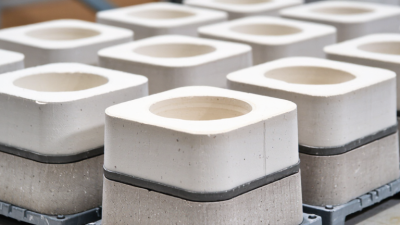
Choosing the right China-based Corundum Mullite Sagger manufacturer requires more than comparing prices or catalog photographs. These ceramic setters support repeated high-temperature firing, where dimensional stability, thermal shock resistance, and surface cleanliness directly affect production results. A reliable supplier should explain its raw material ratios, forming methods, sintering temperatures, and quality-control procedures clearly.
Real performance appears inside the kiln. Look for saggers with uniform walls, smooth inner surfaces, stable dimensions, and carefully controlled corners. During evaluation, inspect how the sagger handles loading, unloading, repeated heating, and sudden temperature changes. Ask for test data, sample records, and batch traceability. Useful documents may include chemical analysis, bulk density results, porosity data, and thermal shock testing. However, certificates alone do not prove long-term performance.
Experience also matters. Manufacturers serving battery materials, advanced ceramics, powder metallurgy, and electronic components often understand demanding firing conditions. They should recommend suitable grades for different kiln atmospheres and operating temperatures. Communication reveals much. Can the supplier discuss warpage after several cycles? Can it adjust size tolerances without hiding limitations?
No supplier is perfect. Even strong factories may face occasional cracking or uneven firing. That deserves honest discussion, not polished promises. A practical comparison should consider sample testing, production consistency, packaging, lead time, and after-sales support. The best choice is not always the lowest quotation. It is the manufacturer that connects material science with measurable results and accepts responsibility when performance needs improvement.
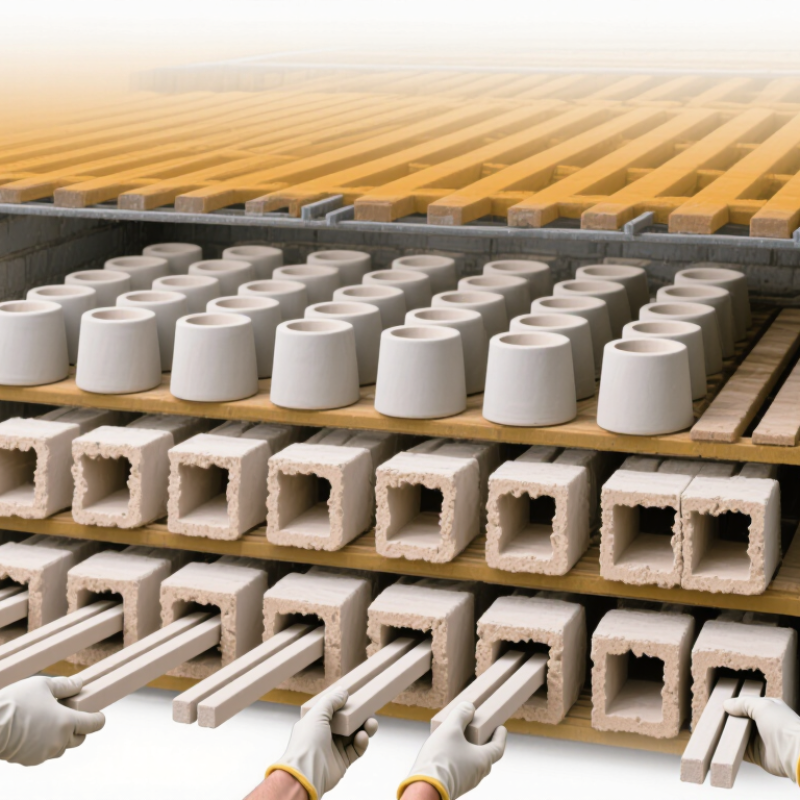
What Is a Corundum Mullite Sagger?
A corundum mullite sagger is a reusable ceramic setter for high-temperature firing. It combines corundum, mainly alpha-alumina, with mullite, a stable aluminosilicate phase. Corundum provides hardness and chemical resistance. Mullite improves thermal-shock performance and dimensional stability. Not ordinary pottery.
This sagger protects powders, ceramic parts, and cathode materials from furnace flames, dust, and direct contact. Its performance depends on purity, porosity, wall thickness, and firing cycles. The USGS Mineral Commodity Summaries 2025 estimated global alumina production at about 147 million metric tons in 2024. That scale reflects alumina’s continuing industrial importance, but raw material volume alone does not guarantee a reliable sagger. Poor mixing or uneven drying can create hidden cracks. A perfect recipe does not exist.
Experienced users inspect flatness, edge damage, water absorption, and mass changes after each cycle. They also compare thermal expansion with the fired product. Typical service temperatures may reach 1,400–1,600°C, depending on composition and furnace conditions. However, repeated cycling often matters more than one maximum-temperature test.
Tips: Ask for test data on thermal shock, apparent porosity, bulk density, and chemical compatibility. Preheat new saggers gradually. Avoid stacking them when they are still hot. Replacing a damaged sagger early is usually cheaper than losing an entire batch. Ceramic Industry’s technical guidance also emphasizes controlled drying and uniform kiln loading, yet factory practice can still vary. Check real samples before placing a large order.
| Data Dimension | Typical Information | Practical Significance |
|---|---|---|
| Product Type | Refractory firing container made primarily from corundum and mullite ceramics | Holds and protects ceramic, powder, electronic, and other products during high-temperature processing |
| Main Crystal Phases | Corundum, primarily α-alumina, combined with mullite, an aluminosilicate phase | Provides a balance of high refractoriness, mechanical strength, and resistance to thermal deformation |
| Typical Chemical Composition | Al2O3: approximately 70–90%; SiO2: approximately 8–25%; minor components may include alkaline-earth oxides and other process additives | Actual composition varies according to the grade, raw materials, forming method, and intended firing atmosphere |
| Recommended Service Temperature | Commonly used in high-temperature cycles around 1,400–1,600 °C; some specially formulated grades may be rated higher | The actual limit depends on load, atmosphere, heating rate, holding time, saggar geometry, and chemical exposure |
| Bulk Density | Typically about 2.5–3.0 g/cm3 for dense grades | Higher density generally improves load-bearing capability, while controlled porosity can help reduce thermal-shock damage |
| Apparent Porosity | Often approximately 15–25%, depending on the formulation and manufacturing process | Lower porosity can improve resistance to infiltration, while moderate porosity may support better thermal-shock behavior |
| Thermal Shock Resistance | Good when the sagger is correctly designed and preheated; performance varies with wall thickness, porosity, and temperature change rate | Helps reduce cracking during repeated loading, firing, cooling, and unloading cycles |
| Mechanical Strength | High compressive and flexural strength compared with many conventional refractory containers | Supports stacked loading and reduces deformation during prolonged high-temperature service |
| Chemical Resistance | Generally resistant to many ceramic powders, oxides, and high-temperature solid materials; compatibility must be checked for each formulation | Reduces contamination and limits reactions between the fired product, powder bed, and container |
| Common Applications | Advanced ceramics, electronic ceramic components, battery materials, magnetic materials, ceramic powders, and pigment calcination | Suitable where high temperature, dimensional stability, and low contamination are required |
| Common Manufacturing Methods | Press forming, slip casting, extrusion, or other ceramic forming processes followed by drying and high-temperature firing | The forming method affects dimensional accuracy, wall uniformity, porosity, strength, and production cost |
| Available Shapes | Rectangular boxes, square containers, round trays, lidded saggers, and customized shapes | Shape and internal volume should match the furnace space, product arrangement, and gas-flow requirements |
| Dimensional Considerations | Inside dimensions, outside dimensions, wall thickness, flatness, corner radius, and allowable dimensional tolerance | Proper tolerances help prevent interference with furnace furniture and maintain consistent product loading |
| Service-Life Factors | Firing temperature, thermal cycling, mechanical handling, stacking load, atmosphere, powder chemistry, and cleaning practice | Longer service life depends on matching the sagger grade to the complete firing process rather than temperature alone |
| Quality Checks | Chemical analysis, bulk density, apparent porosity, cold flexural strength, dimensional inspection, visual inspection, and thermal-cycle testing | These checks help verify consistency, load capacity, thermal performance, and suitability for repeated industrial use |
A high-quality corundum mullite sagger begins with stable raw materials and controlled forming.
In firing trials, I look for a clean, uniform body without dark spots or hidden laminations. High alumina content supports chemical resistance. Mullite adds thermal stability and helps limit deformation. Yet composition alone proves little. The sagger must survive repeated heating and cooling. That is where manufacturing discipline becomes visible. Tiny edge cracks can become serious failures.
Thermal-shock resistance is essential in kiln service. A reliable sagger should heat evenly and resist sudden temperature changes. Its open porosity needs balance. Too much porosity weakens the body and allows penetration. Too little may reduce thermal-shock tolerance. Mechanical strength matters during loading, stacking, and unloading. A level base also protects delicate ceramic products. Check it on a flat surface. Simple checks often reveal poor control.
Dimensional stability separates a dependable sagger from an attractive sample. Measure height, wall thickness, and diagonal distortion before and after firing. Surface finish should be smooth, but not excessively sealed. Chemical compatibility with the fired material must also be verified through actual tests. I would not judge quality from one successful cycle. Batch consistency, inspection records, and traceable testing build trust. Some failures remain unpredictable. That uncertainty deserves honest review, not optimistic claims.
Corundum mullite saggers begin with high-purity calcined alumina, fused corundum, and synthetic mullite. The USGS Mineral Commodity Summaries 2025 reports global alumina production of roughly 140 million metric tons in 2024. This large supply supports tighter ceramic-material selection, but purity alone does not guarantee durability. Particle grading matters. Coarse grains reduce shrinkage, while fine powders fill voids and improve strength.
Manufacturers usually weigh each fraction, dry-mix the batch, then add a controlled binder. The mixture is pressed, cast, or rammed into a shaped mold. Drying must be slow. A thick corner can retain moisture after the surface appears dry. Firing commonly reaches about 1,550–1,750°C, depending on composition and kiln design. During firing, mullite formation improves thermal stability, while excessive glassy phase may weaken repeated use. It is an easy detail to overlook.
Quality checks include bulk density, apparent porosity, dimensional change, and thermal-shock resistance. ISO 5017 provides a recognized method for testing apparent density and open porosity in dense shaped refractory products. The World Steel Association reported approximately 1.89 billion tonnes of crude steel production in 2023, reflecting the severe thermal environments faced by refractory components. However, ceramic kiln furniture needs different testing conditions. A sagger may survive one heating cycle yet crack after several uneven cool-downs. Practical production should therefore combine laboratory data with trial firing, visual inspection, and records from actual kiln use.
Evaluating a China-based corundum mullite sagger requires more than comparing prices. MarketsandMarkets estimated the advanced ceramics market at about USD 11.9 billion in 2023. Its 2024 study projects roughly USD 17.8 billion by 2028. Growing demand creates more suppliers, but quality can still vary sharply.
Request the chemical composition, alumina content, mullite ratio, apparent porosity, bulk density, and maximum service temperature. Ask for test methods, not only attractive figures. ASTM C20 provides recognized methods for apparent porosity, water absorption, and bulk density in refractory shapes. ISO 10081 also supports consistent refractory classification. These references make supplier claims easier to compare. Thermal-shock results matter greatly. A sagger may survive one firing yet crack after repeated cooling cycles.
Review at least three production batches. Measure wall thickness, flatness, weight, and visible pores on arrival. Ask for firing records, raw-material traceability, inspection frequency, and corrective-action reports. A factory audit should examine mixing, pressing, drying, firing, and packing areas. The International Energy Agency reports that industrial heat remains a major global energy user, so stable firing efficiency deserves attention. That point is often ignored.
I would test a small batch first. A cheap unit price can hide short service life, uneven shrinkage, or contamination losses. Certificates alone are insufficient. Independent laboratory verification is safer, although it adds time and cost. Even experienced buyers sometimes overvalue polished samples. That is worth reconsidering.
The chart presents a practical 100-point purchasing framework for evaluating corundum mullite sagger manufacturers. Technical compliance receives the highest weighting because service temperature, apparent porosity, bulk density, thermal-shock resistance, and dimensional accuracy directly affect firing performance and product life. Buyers should verify each result through material certificates, inspection records, sample testing, and documented quality-control procedures rather than relying only on supplier claims.
Corundum mullite saggers support demanding firing applications where heat, chemical stability, and repeated use matter. In advanced ceramics, manufacturers use them for alumina, zirconia, electronic ceramics, and technical porcelain. Their low reactivity helps protect powders from unwanted contamination during high-temperature firing.
Battery materials are another important application. The International Energy Agency reported that global electric car sales exceeded 17 million units in 2024. This growth increases demand for cathode-material processing, including calcination in controlled kiln systems. Corundum mullite saggers can carry nickel-rich and other active powders through repeated heating cycles. However, material compatibility still requires testing. A sagger that performs well with alumina may react differently with lithium-containing compounds.
These saggers also serve magnetic materials, phosphors, ceramic pigments, and selected powder-metallurgy processes. The USGS Mineral Commodity Summaries 2024 estimated global alumina production at about 140 million metric tons in 2023. This figure reflects the scale of alumina-related processing, not direct sagger demand. The distinction matters. Some applications need maximum thermal shock resistance, while others prioritize low iron content and surface smoothness.
Tips: Check the firing temperature, powder chemistry, loading weight, and cooling rate before selecting a sagger. Trial batches are essential. Inspect corners and the inner base after each cycle. Small cracks often appear before failure. Performance may vary between kilns, even with identical dimensions.