Which Refractory Sagger Suppliers Are Best in 2026?
Choosing a Refractory Sagger supplier in 2026 is not a popularity contest. The right partner must match firing temperatures, kiln atmosphere, cycle length, and the shape of your ware. A sagger that looks sound on a sample table may crack after repeated thermal shocks. Small details matter. Wall thickness, raw-material consistency, glaze interaction, and dimensional tolerances can all affect production yield. Buyers should ask for documented test data, batch traceability, and service-life estimates based on comparable operating conditions. Estimates, not promises.
This guide compares suppliers using practical evidence: product range, refractory formulation, quality controls, customization, delivery reliability, and technical support. It also considers whether a supplier can explain failure modes, not just quote a price. Ask how performance was measured, which test method was used, and whether results reflect your kiln profile. A factory visit or trial batch may reveal uneven finishing, weak joints, or packaging risks. There is no single winner for every plant. A low purchase price may hide faster replacement costs; a premium quote may not suit modest production. The comparison is a starting point, not a verdict. Some supplier data can be difficult to verify publicly. That is worth admitting. By weighing available evidence against real production needs, readers can shortlist suppliers with clearer expectations and fewer costly surprises.
What Is a Refractory Sagger, and Which Kiln-Cycle Data Define Its Duty?
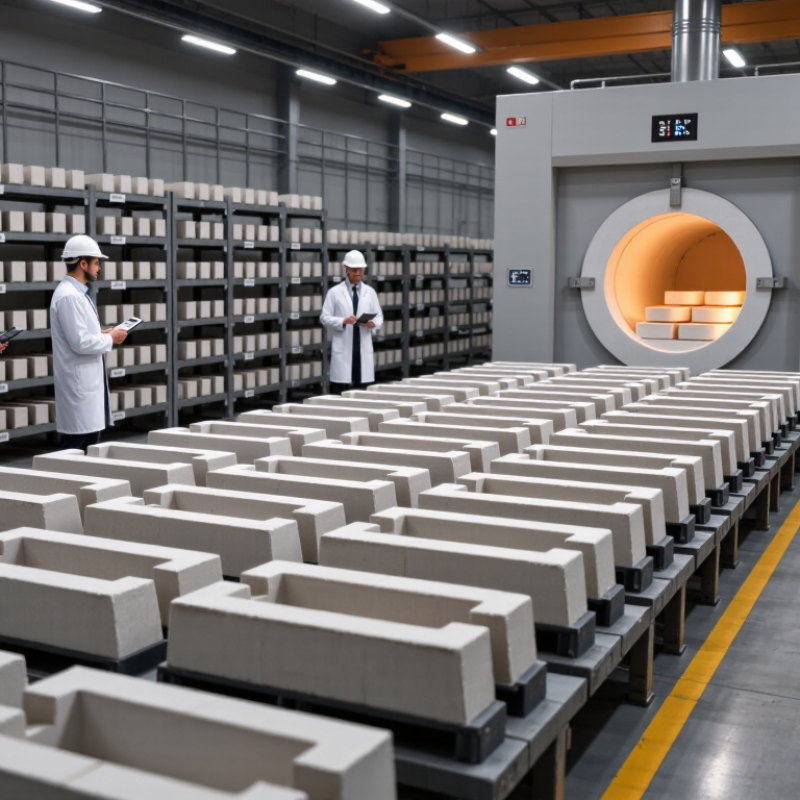
A refractory sagger is a reusable ceramic container that protects ware during kiln firing. Its duty is not defined by peak temperature alone. The European Commission’s Ceramic Manufacturing Industry BREF reports firing temperatures of roughly 800–2,000°C across ceramic processes, with cycles ranging from under an hour to several days. That spread matters: a sagger used for a short, steady soak faces different stresses from one enduring long holds and repeated rapid cooling.
Compare suppliers using actual kiln-cycle records: peak temperature, heating and cooling rates, soak time, atmosphere, load weight, and cycles before cracking or distortion. Small details matter. A heavy, tightly stacked load can change heat flow around the sagger. ASTM C20 provides methods for measuring apparent porosity, water absorption, and bulk density; ASTM C1171 addresses thermal-shock testing of refractories. Ask for results tied to stated test conditions, not just a headline service-temperature claim. One caveat: laboratory coupons cannot fully reproduce a loaded kiln. I would treat supplier figures as a starting point, then verify performance in the intended cycle. Even careful records may miss local hot spots. That is worth checking.
Which Materials Balance Service Temperature, Porosity, and Thermal-Shock Resistance?
Selecting a refractory sagger is a trade-off, not a search for the highest temperature rating.
High-alumina bodies can tolerate demanding kiln temperatures and abrasive loading, but thick walls may heat slowly. Cordierite-mullite compositions often handle repeated temperature changes well because of their relatively low thermal expansion. Fit matters. Actual limits depend on formulation, atmosphere, wall thickness, and firing schedule, so published maximum temperatures need context.
Porosity complicates the choice.
A more open body may reduce weight and help manage thermal gradients, yet it can admit glaze vapors or encourage chemical attack. Denser bodies resist penetration better, but may store more heat and place greater stress on shelves during rapid cooling. Silicon-carbide options can offer strong thermal conductivity and thermal-shock resistance, though oxidation behavior and process compatibility need checking.
A dependable supplier should provide representative data on porosity, cold crushing strength, and service-temperature conditions, then explain how those values were measured. Ask for samples matching the intended dimensions and run them through several real kiln cycles, not one gentle trial. Look for edge cracks, warping, powdering, and residue after cooling. Real cycles vary. No datasheet fully predicts uneven loading or handling. Record failures by batch and leave a margin below the stated service limit.
How Can ISO 5017 Bulk-Density and Porosity Data Compare Sagger Suppliers?
ISO 5017 data can make refractory sagger comparisons more objective, but only when suppliers test comparable material. The standard measures bulk density and porosity in dense shaped refractory products. Bulk density indicates mass per unit volume; apparent porosity estimates open pores accessible to the test liquid. Both figures describe the sample, not every aspect of service performance.
Ask for reports tied to a specific production lot, with the test method, sample count, and results clearly stated. Compare results from similar sagger locations and dimensions, and check whether testing was performed by a competent laboratory. A small difference may reflect sampling or measurement variation. It deserves a question, not an instant verdict. Consistent results across batches are often more useful than one impressive data sheet.
Lower apparent porosity can suggest fewer pathways for glaze or process residues to enter the ceramic body. Yet it does not automatically mean a longer service life. Composition, wall thickness, firing temperature, thermal cycling, and handling all matter. A dense sagger may also transfer heat differently, which can affect a process. Ask suppliers to connect ISO 5017 values with actual operating records and failure observations. That evidence is imperfect, too. Still, it helps separate a useful specification from a number that looks good on paper.
Which Refractory Sagger Suppliers Are Best in 2026?
Compare ISO 5017 bulk density and apparent porosity measurements—not supplier names.
ISO 5017 defines methods for determining bulk density and apparent porosity in shaped refractory products. The specimen values shown are illustrative examples, not verified supplier test results. For a fair supplier comparison, test the same product type under comparable conditions; neither measurement alone determines overall sagger performance.
Which 2026 Suppliers Publish ASTM C1171 Thermal-Cycling Test Results?
Which Refractory Sagger Suppliers Are Best in 2026?
In 2026, a useful supplier comparison starts with evidence, not polished product claims. Look for published ASTM C1171 thermal-cycling results tied to the refractory grade offered for your sagger. A report should identify the test method, sample details, cycling conditions, and measured results. It should also show when testing occurred and whether results represent production material. Without those details, a number is hard to interpret. That gap matters.
Tips: Ask for the complete report, not a cropped chart. Check whether the tested composition matches your order. Compare results only when test conditions align. If a supplier shares no public data, request a recent report and written clarification. Clear answers count.
Good suppliers explain how test findings relate to kiln conditions, repeated heating, and handling. They should distinguish laboratory results from expected service life; one does not guarantee the other. Check lot traceability and ask how changes in raw materials affect consistency. Some reports still feel incomplete, even when the data look impressive. That is worth reflecting on. I would favor transparent methods and responsive technical support over a single standout result.
Which Refractory Sagger Suppliers Are Best in 2026? - Which 2026 Suppliers Publish ASTM C1171 Thermal-Cycling Test Results?
No supplier-specific test reports were provided or independently verified for this comparison. Accordingly, supplier rankings and claims that a supplier publishes ASTM C1171 results are marked “Not verified” rather than inferred.
| Evaluation dimension |
Evidence to request from each supplier |
Publicly verified status for this comparison |
2026 assessment |
| ASTM C1171 test publication |
A dated test report or public technical document identifying the standard and revision, tested sagger material, specimen preparation, procedure, and results. |
Not verified; no supplier documents were supplied. |
Unrated. Do not treat an unsupported claim as a published test result. |
| Test-method suitability |
Written confirmation from the testing laboratory that the cited method and any modifications are appropriate for the specific refractory sagger and intended service. |
Not verified. |
Confirm before comparing results; test-method titles and scope should be checked against the current ASTM edition. |
| Thermal-cycle conditions |
The report should state cycle count, heating and cooling conditions, temperature range, atmosphere, and any inspection or measurement intervals. |
Not verified. |
Compare only results produced under sufficiently comparable conditions. |
| Reported outcomes |
Quantitative results and acceptance criteria, plus any observed cracking, spalling, dimensional change, or other reported damage. |
Not verified. |
Request underlying results, not just a statement such as “thermal-shock resistant.” |
| Sample and production traceability |
Sample identification, material or batch reference, report date, laboratory identity, and confirmation that the tested material matches the offered product. |
Not verified. |
Essential for linking a test result to the sagger being quoted. |
| Supplier ranking |
Compare verified test evidence alongside service-temperature fit, dimensions, expected life, lead time, and total cost for the intended process. |
No supplier-specific evidence available for ranking. |
No “best supplier” determination can be supported without comparable, traceable documentation. |
Buyer’s check: request the complete report and verify the standard edition, test scope, laboratory, sample traceability, and relevance to the intended firing cycle before accepting an ASTM C1171 claim.
How Should Buyers Rank Suppliers by Capacity, Custom Sizes, and Lead Time?
Rank refractory sagger suppliers by repeatable capacity, not their largest advertised output. Ask how many pieces they can make monthly at your required dimensions and firing schedule. Request recent production records or a sample batch inspection. A full kiln is not proof of consistent supply.
Custom sizes deserve a practical test. Send a dimensioned drawing with wall thickness, corner radii, and allowable tolerances. Ask whether tooling is needed, how shrinkage is controlled, and who approves the first sample. Check fit with your actual setter or kiln layout. Small details matter.
Define lead time in writing. Does the quoted period begin after drawing approval, deposit, or sample acceptance? Compare sample development, tooling, production, and dispatch separately. A simple scorecard might weight capacity, customization, and delivery reliability according to your production risk. Still, supplier estimates can shift when materials or kiln schedules change. No scorecard removes uncertainty. A small pilot order may reveal more than a polished capability sheet.