Leave Your Message

China Top Cordierite Mullite Sagger Manufacturer

China’s ceramic manufacturing base is expanding with advanced kiln furniture demand. Grand View Research valued the global advanced ceramics market at approximately USD 11.8 billion in 2023. It projects continued growth through 2030, driven by electronics, energy, automotive, and industrial applications. However, these reports usually combine several ceramic categories. They do not isolate Cordierite Mullite Sagger sales. That limitation matters when evaluating suppliers.

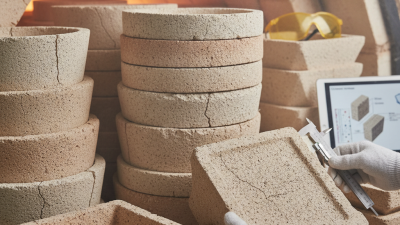
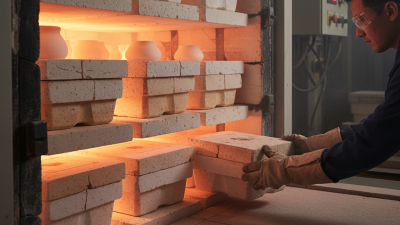
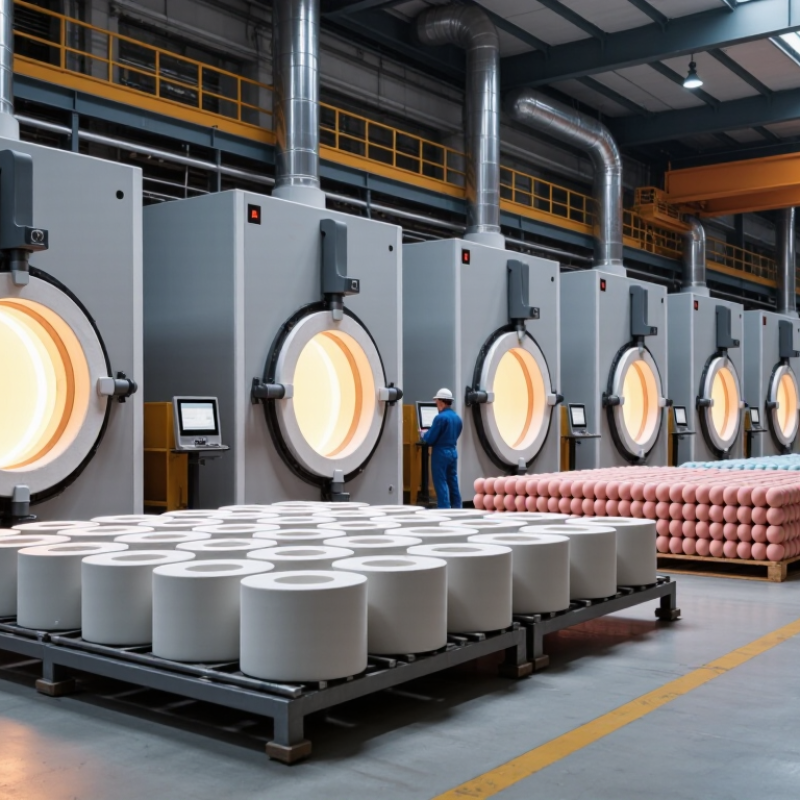
A reliable Chinese manufacturer must connect material science with actual firing conditions. Cordierite Mullite Sagger products are commonly selected for repeated high-temperature firing, thermal-shock resistance, and stable dimensional performance. In a production kiln, the details are visible: a loaded sagger supports ceramic components, absorbs heat, and faces rapid cooling after firing. Small warping can affect stacking accuracy. Poor porosity control can increase glaze contamination or product loss.

Performance comes from more than a laboratory formula. Raw-material purity, particle distribution, forming pressure, drying control, and firing consistency all influence service life. ASTM testing practices and ISO 9001-based quality systems can strengthen process reliability, although certification alone cannot guarantee performance. The MarketsandMarkets advanced ceramics report also identifies electronics and energy industries as important growth areas, supporting wider demand for engineered kiln furniture.

A strong supplier should provide test data, inspection records, and realistic operating guidance. Not every claim deserves acceptance. Buyers should compare thermal-shock results, apparent porosity, bulk density, load capacity, and cycle history. China’s manufacturing advantages are meaningful, but quality can vary between factories. The best partnership is built through samples, transparent communication, and measured results rather than impressive promises.
China Top Cordierite Mullite Sagger Manufacturer

Cordierite Mullite Saggers: Definition and Core Characteristics

China Top Cordierite Mullite Sagger Manufacturer

Cordierite mullite saggers are reusable kiln containers for firing ceramics, powders, and electronic components. Their body combines cordierite’s low thermal expansion with mullite’s strength and heat resistance. Typical cordierite thermal expansion remains near 1.5–2.5 × 10⁻⁶ K⁻¹, while mullite is commonly reported near 4.5–6.0 × 10⁻⁶ K⁻¹. These values help reduce cracking during rapid heating and cooling. Still, laboratory data can look cleaner than production reality.

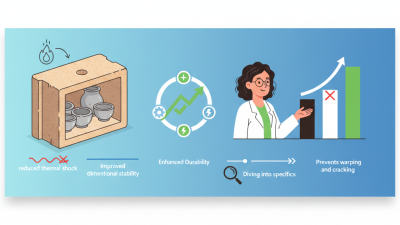
Their core characteristics include thermal-shock resistance, dimensional stability, chemical durability, and controlled porosity. The balance matters. Excessive porosity may weaken the sagger, while very low porosity can increase thermal stress.

A 2024 technical ceramics market report from Grand View Research estimated the global market at approximately US$11 billion in 2023. This growth reflects wider demand for reliable high-temperature ceramic components, although it does not measure sagger consumption directly.

In working kilns, wall thickness, glaze adhesion, loading weight, and cooling speed affect service life. Uneven loading can create local stress. Poorly controlled firing may cause warping or edge chipping. Experience shows that material selection alone is not enough. Sagger performance should be checked through repeated cycles, dimensional inspection, and post-firing surface review. Small defects often reveal process problems before major breakage occurs.
Material Composition and Performance of Cordierite Mullite Saggers

China Top Cordierite Mullite Sagger Manufacturer

Material Composition and Performance of Cordierite Mullite Saggers

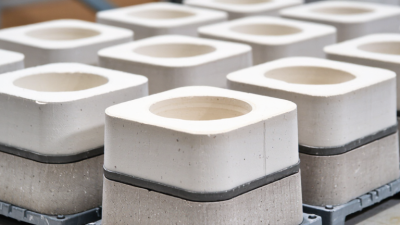
Cordierite mullite saggers combine cordierite, mullite, alumina, and silica-based phases. Typical formulations balance thermal shock resistance with mechanical strength. Cordierite contributes a low thermal expansion rate. Mullite improves rigidity at elevated temperatures. The exact ratio should match the kiln cycle, load weight, and firing atmosphere.

In practical production, a sagger with uniform particle distribution performs more consistently. Fine particles help close surface pores, while coarse grains support dimensional stability. However, excessive fines can increase shrinkage during firing. This detail is easy to overlook. A small variation in moisture or pressing pressure may create hidden cracks.

During inspection, manufacturers should check wall thickness, flatness, apparent porosity, and thermal shock behavior. A controlled heating and cooling test often reveals weaknesses before shipment. Saggers also need clean, smooth inner surfaces to reduce powder contamination and sticking. Their working life depends on more than chemical composition. Repeated loading, uneven kiln temperatures, and careless handling can shorten service life. No sagger is perfect. Better results come from matching the material design with actual operating conditions, then reviewing damaged units instead of ignoring them.

Manufacturing Process Used by Chinese Sagger Producers

China Top Cordierite Mullite Sagger Manufacturer

Manufacturing Process Used by Chinese Sagger Producers

Chinese cordierite mullite sagger producers usually begin with carefully screened alumina, kaolin, silica, and magnesia powders. USGS Mineral Commodity Summaries 2024 reports China produced about 93 million metric tons of bauxite in 2023. This strong raw-material base supports large-scale ceramic production, although ore availability does not guarantee consistent sagger quality.

The process normally includes batching, wet or dry milling, spray drying, pressing, green machining, and controlled firing. Many factories use hydraulic pressing for flat bases and reinforced corners. Skilled workers inspect edge density before firing. Small cracks often begin there.

Firing is commonly staged between roughly 1,350°C and 1,450°C, depending on composition and furnace design. The target is a stable cordierite-mullite structure with low thermal expansion and useful thermal-shock resistance. Producers test bulk density, apparent porosity, strength, and dimensional change. These checks matter in repeated kiln cycles.

World Steel Association data shows China produced approximately 1,019 million tonnes of crude steel in 2023, representing more than half of global output. That industrial scale encourages efficient refractory supply chains. However, sagger manufacturing still depends on firing uniformity, not only factory size. A larger kiln can create larger variations. This point is sometimes overlooked.

Reliable producers retain batch records and examine failed pieces after service. They should also confirm compatibility with ceramic powders, firing atmospheres, and loading weight. Some specifications remain too general. Real kiln trials are still necessary.

China Top Cordierite Mullite Sagger Manufacturer - Manufacturing Process Used by Chinese Sagger Producers

The chart presents representative peak-temperature ranges commonly used in cordierite–mullite sagger production. Actual settings vary according to raw-material formulation, wall thickness, forming method, and kiln design.

Cordierite–mullite saggers are typically produced through raw-material preparation, mixing, forming, drying, and high-temperature firing. Final firing is generally the highest-temperature stage because it develops the ceramic bond and required thermal-shock performance.

Key Applications Across Ceramic and Industrial Kilns

China Top Cordierite Mullite Sagger Manufacturer

Key Applications Across Ceramic and Industrial Kilns

Cordierite mullite saggers protect ceramic parts during repeated kiln firing. Their low thermal expansion helps reduce cracking during rapid temperature changes. Mullite strengthens the structure at high temperatures. This balance suits electronic ceramics, sanitaryware, technical ceramics, and laboratory components.

The European Commission’s Ceramics Best Available Techniques reference notes that firing is one of the sector’s most energy-intensive stages. A damaged sagger can increase handling time, kiln downtime, and material waste. Industry reports from Grand View Research also indicate continued growth in advanced ceramics, driven by electronics, energy systems, and medical equipment. These applications demand stable dimensions and clean firing surfaces. In industrial kilns, saggers must also tolerate alkaline vapors, abrasion, and repeated loading. Real conditions are less tidy than laboratory tests.

Tips: Check thermal shock resistance, wall thickness, open porosity, and maximum service temperature. Match the sagger to the firing curve, not only the peak temperature. Keep loading gaps consistent. Small alignment errors can create uneven heating. The calculation is not perfect. Firing atmosphere, kiln airflow, and stacking pressure may change service life. A trial batch remains valuable before large-scale purchasing. Experienced kiln teams should record cracks, warping, and glaze contamination after every cycle. This evidence supports better replacement planning and safer production decisions.

How to Evaluate a Leading Cordierite Mullite Sagger Manufacturer

China Top Cordierite Mullite Sagger Manufacturer

How to Evaluate a Leading Cordierite Mullite Sagger Manufacturer

Evaluating a leading cordierite mullite sagger manufacturer requires more than comparing prices. Start with material evidence. Ask for cordierite and mullite percentages, apparent porosity, bulk density, and maximum service temperature. A dependable producer should explain how these values affect thermal shock and firing stability. Request recent test records, not general promises. The factory should also show kiln loading, pressing, firing, and inspection practices. Real production details reveal more than polished photographs.

Experience appears in practical recommendations. A capable technical team asks about powder type, firing cycle, atmosphere, wall thickness, and cooling speed. It should recommend a sagger that matches your kiln, not simply the largest available model. Check dimensional tolerance and flatness after firing. Small warping can disturb stacking and damage valuable ceramic pieces. Ask for trial samples and inspect corners, inner surfaces, and glaze contact areas. They should remain smooth and free from visible cracks. That matters.

Reliability also depends on traceability. Each batch should carry production dates, inspection results, and raw material records. Clear packaging instructions can prevent chipped edges during transport. Response time matters when a sagger fails unexpectedly. However, no manufacturer is perfect. Question suppliers who promise zero breakage or unlimited service life. Compare sample performance under your actual cycle, including repeated heating and cooling. Written specifications, honest limitations, and consistent follow-up build stronger confidence than sales language.