Top Silicon Carbide Kiln Shelves Suppliers Worldwide?
Choosing reliable Silicon Carbide Kiln Shelves requires more than comparing prices or catalog photographs. These shelves support valuable ceramic work under repeated heating, cooling, and mechanical stress. A dependable supplier should explain material grade, maximum service temperature, shelf thickness, surface flatness, and expected thermal shock resistance. Buyers should also examine porosity, load capacity, firing atmosphere compatibility, and dimensional tolerances. Small details matter. A slightly warped shelf can affect glaze flow and create uneven firing results.
This guide reviews leading suppliers worldwide through practical and technical criteria. It considers manufacturing experience, quality control, testing methods, export packaging, customization, and after-sales support. Supplier documentation should include inspection records, product specifications, and clear recommendations for stacking or kiln loading. Experienced manufacturers may also advise on kiln furniture design, support spacing, and replacement schedules. However, no supplier is flawless, and published performance data may not reflect every firing environment. Our comparison therefore treats claims carefully and encourages buyers to request samples or test batches. Local duties, delivery times, and communication quality can also influence the real purchase value. The strongest option is not always the cheapest. It should provide consistent shelves, responsive technical guidance, and evidence that matches everyday kiln conditions. Expect some uncertainty. A thoughtful selection process reduces avoidable breakage and protects production quality.
Silicon Carbide Kiln Shelves: Structure, Types, and Core Properties
Silicon Carbide Kiln Shelves: Structure, Types, and Core Properties
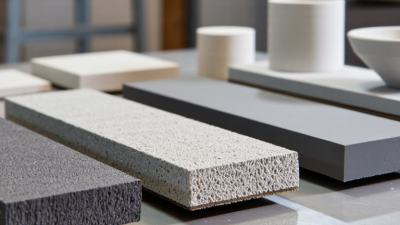
Silicon carbide kiln shelves are engineered platforms for repeated firing cycles. Their open structure combines silicon carbide grains with a bonded matrix. This design reduces weight while preserving stiffness at high temperatures. Some shelves use reaction-bonded silicon carbide, while others use recrystallized or nitride-bonded grades. Each type behaves differently under oxidation, loading, and thermal shock.
Their main strengths are high thermal conductivity, low thermal expansion, and strong resistance to bending. Technical data commonly places silicon carbide conductivity near 100–200 W/m·K, depending on grade and temperature. The U.S. Department of Energy identifies efficient heat transfer as a key factor in energy-intensive ceramic processing. The European Commission’s Ceramics BREF also highlights kiln furniture weight as an important process variable. Lighter shelves may reduce heat demand, but they can chip more easily.
Thickness, span, kiln atmosphere, and firing temperature must guide selection. A wide shelf needs stronger support spacing. Small edge cracks can spread during cycling. It happens. Surface warping also deserves attention, especially after uneven loading. Industry market reports show strong growth across silicon carbide materials, yet shelf-specific figures remain limited because reports often combine semiconductor, refractory, and ceramic applications. Buyers should request density, flexural strength, maximum service temperature, and oxidation data. Supplier claims need practical verification through controlled trial firings.
Top Silicon Carbide Kiln Shelves Suppliers Worldwide? - Silicon Carbide Kiln Shelves: Structure, Types, and Core Properties
| Kiln Shelf Type |
Typical Structure |
Typical Open Porosity |
Approx. Thermal Conductivity |
Typical Maximum Service Temperature |
Main Advantages |
Common Applications |
| Reaction-Bonded SiC |
Porous carbon-containing body infiltrated with molten silicon; residual free silicon is normally present. |
Approximately 10–18% |
Approximately 100–180 W/m·K |
Approximately 1,350–1,380°C in air, depending on composition and loading. |
Good dimensional accuracy, moderate cost, useful thermal shock resistance, and relatively simple machining. |
General ceramic firing, sanitaryware, tableware, and moderate-temperature kiln furniture. |
| Nitride-Bonded SiC |
Silicon carbide grains bonded by a silicon nitride matrix, generally without free metallic silicon. |
Approximately 12–18% |
Approximately 15–35 W/m·K |
Approximately 1,450–1,550°C in oxidizing service, subject to atmosphere and design. |
High load-bearing capability, low creep, strong oxidation resistance, and good resistance to chemical attack. |
High-temperature ceramics, heavy setter systems, advanced technical ceramics, and demanding continuous kilns. |
| Recrystallized SiC |
Interlocked, high-purity SiC grains formed by vapor-phase bonding; typically contains no separate bonding phase. |
Approximately 15–25% |
Approximately 20–45 W/m·K |
Approximately 1,600–1,650°C in air, with higher capability possible in controlled atmospheres. |
Very low thermal expansion, excellent thermal shock resistance, high purity, and stable performance at elevated temperatures. |
Electronic ceramics, laboratory kilns, high-purity firing, and lightweight kiln furniture systems. |
| Oxide-Bonded SiC |
SiC grains joined by an oxide-based ceramic bond, commonly using aluminosilicate or related oxide phases. |
Approximately 15–25% |
Approximately 10–25 W/m·K |
Approximately 1,300–1,450°C, depending on bond chemistry and kiln atmosphere. |
Economical, easy to produce in various shapes, and suitable for many conventional ceramic firing cycles. |
Pottery, refractories, sanitaryware, and general-purpose intermittent kilns. |
| Pressureless-Sintered SiC |
Fine SiC powder densified by solid-state sintering with a small amount of sintering additive; highly dense microstructure. |
Usually below 5% |
Approximately 80–160 W/m·K |
Approximately 1,500–1,650°C, depending on grade and atmosphere. |
High density, strong mechanical properties, excellent wear resistance, and low gas permeability. |
Compact precision kiln furniture, semiconductor-related processing, and advanced ceramic production. |
Supplier Qualification and Product Selection Criteria
| Evaluation Dimension |
Recommended Specification or Evidence |
Why It Matters |
| Material Grade |
Declared SiC content, bonding system, bulk density, apparent porosity, and chemical composition. |
These properties determine temperature capability, strength, contamination risk, and service life. |
| Dimensional Tolerance |
Documented thickness, flatness, length, width, hole position, and edge tolerance. |
Accurate dimensions reduce distortion, improve stacking stability, and optimize kiln volume. |
| Load Capacity |
Verified load data at the intended temperature, span, support arrangement, and firing cycle. |
Room-temperature strength alone does not predict high-temperature shelf performance. |
| Thermal Shock Resistance |
Thermal expansion data, heating and cooling cycle recommendations, and failure-rate records. |
Low expansion and suitable thermal conductivity help prevent cracking during rapid cycles. |
| Surface and Edge Quality |
Uniform surface finish, chamfered edges where required, controlled warpage, and absence of major chips. |
Improves product support, reduces handling damage, and limits contact marks on fired ware. |
| Quality Documentation |
Batch traceability, inspection reports, material certificates, and consistent sampling procedures. |
Traceable production supports consistent firing results and faster root-cause analysis. |
| Packaging and Logistics |
Moisture-resistant packaging, reinforced pallets, protective separators, export documentation, and replacement support. |
Silicon carbide shelves are brittle; proper packaging and reliable delivery reduce transit losses and downtime. |
Note: Property ranges are representative industry values for comparison only. Actual performance varies with formulation, manufacturing process, shelf geometry, kiln atmosphere, support spacing, firing cycle, and applied load.
Key Selection Criteria for Industrial Kiln Shelves
Top Silicon Carbide Kiln Shelves Suppliers Worldwide?
Selecting industrial kiln shelves requires more than comparing prices. A 2024 Grand View Research report valued the global advanced ceramics market at approximately USD 11.8 billion in 2023. Growing demand increases supplier choices, but quality still varies. Ask for measured thermal conductivity, bulk density, open porosity, and flexural strength. These figures reveal more than a product brochure.
Thermal shock resistance is critical during repeated firing. Silicon carbide shelves often provide thermal conductivity above 100 W/m·K, helping heat move quickly through the plate. However, conductivity alone does not prevent cracking. Check shelf thickness, edge finish, warpage, and firing temperature. ASTM C1161 testing can support flexural-strength comparisons. ISO 18754 methods can also help verify density and water absorption. Request batch-level certificates, not only general specifications.
Fit matters on the kiln floor. Measure support spacing, shelf mass, and the heaviest loaded area. A slightly oversized shelf may sag after many cycles. Poorly finished edges can create small stress points. Experienced suppliers should explain expected service life under your firing profile. They should also provide trial samples and failure analysis. That is practical evidence.
One detail is easy to overlook: storage. Shelves need dry, level support before installation. My cautious view is simple. No certificate replaces a controlled trial. A supplier may meet the specification, yet fail under your actual heating and cooling schedule. Recheck the criteria after the first several firings.
Leading Global Suppliers and Their Product Strengths
Silicon carbide kiln shelves are selected for heat stability, low deformation, and repeated firing cycles. Leading suppliers typically serve ceramics, technical ceramics, and powder metallurgy operations. European manufacturers often emphasize tight dimensional control and engineered support systems. Suppliers in East Asia commonly offer broad sizes, custom drilling, and competitive production capacity. North American distributors may add local inventory, technical consultation, and faster replacement planning. These regional strengths matter when kiln downtime costs more than shelf price.
Experienced buyers should compare material grade, maximum working temperature, shelf thickness, porosity, and load rating. A reliable supplier provides test data, firing guidance, and clear tolerances. Product strength is not only about surviving high heat. It includes flatness after repeated cycles, resistance to glaze sticking, and predictable weight. Some suppliers use reaction-bonded or recrystallized silicon carbide, depending on thermal and mechanical demands. Ask how shelves perform under rapid heating, uneven loading, and frequent washing. Small details expose major differences.
A practical trial should use the intended kiln, firing schedule, and stacked load. Record warpage, edge chipping, and surface changes over several cycles. No supplier is perfect. In practice, specifications can look impressive while handling guidance remains vague. That gap deserves attention. Packaging also matters; a damaged shelf cannot show its advertised strength. Suppliers with traceable quality records, responsive engineers, and consistent replacement batches are usually safer long-term partners. Buyers should still recheck every claim against their own firing conditions.
Top Silicon Carbide Kiln Shelves Suppliers Worldwide
Typical maximum continuous-use temperatures of silicon carbide kiln shelf constructions commonly supplied worldwide.
Recrystallized SiC
High-temperature stability, low thermal expansion, and strong resistance to thermal shock.
Nitride-Bonded SiC
High load-bearing capability, good oxidation resistance, and reduced warping in repeated firing.
Reaction-Bonded SiC
Good dimensional accuracy, abrasion resistance, and cost-effective performance for many kiln applications.
Oxide-Bonded SiC
Balanced thermal performance and chemical resistance for general ceramic and sanitaryware firing.
Values are representative industry benchmarks for product comparison rather than company-specific specifications. Actual performance depends on grade, thickness, atmosphere, firing cycle, and loading conditions.
Manufacturing Standards, Quality Control, and Custom Options
Reliable silicon carbide kiln shelf suppliers are judged by more than catalog thickness or attractive prices. Their manufacturing standards should define raw-material purity, forming pressure, firing temperature, flatness, and load capacity. Each batch needs documented records, not verbal assurances. Traceability matters when shelves crack after repeated thermal cycles. A clear lot number should connect the product to inspection data. This sounds basic. It is often missed.
Quality control should combine laboratory testing with practical kiln trials. Inspectors can measure thickness, diagonal variation, surface warping, and edge damage before shipment. Open porosity and bulk density help predict glaze absorption and thermal behavior. Thermal-shock testing is especially important for shelves entering fast firing schedules. Suppliers should explain test methods and acceptance limits in plain language. Numbers without methods prove little. Samples should be checked independently when the order is large.
Custom options may include nonstandard lengths, drilled holes, grooved edges, reinforced corners, or lightweight designs. The drawing must show dimensions, support points, firing atmosphere, and expected working temperature. Small design changes can alter stress distribution and service life. A supplier should review these risks before quoting. Yet buyers should also question their own assumptions. A shelf designed for one kiln may perform poorly in another. Pilot samples, controlled loading, and inspection after several firings provide stronger evidence than a single successful test. Occasional defects still happen. Honest reporting matters more than perfect-looking claims.
Applications, Service Support, and Supplier Comparison Methods
Top Silicon Carbide Kiln Shelves Suppliers Worldwide: Applications, Service Support, and Supplier Comparison Methods
Silicon carbide kiln shelves support ceramic, technical ceramic, porcelain, and electronic component firing. Their high thermal conductivity helps reduce heat differences across stacked loads. They also resist deformation during repeated high-temperature cycles. Grand View Research estimated the global silicon carbide market at about US$4 billion in 2023. This figure signals strong material demand, but it does not prove every shelf supplier has equal manufacturing expertise.
Application fit should guide supplier selection. Ask for shelf dimensions, thickness tolerance, maximum working temperature, porosity, and recommended loading pressure. A shelf measuring 400 by 400 millimeters may suit sanitaryware, while thinner plates can reduce kiln weight for laboratory parts. Request thermal-cycle data using your actual firing schedule. Small differences in cooling speed can expose hidden cracking. Service matters.
Reliable suppliers provide batch traceability, packing instructions, replacement guidance, and technical responses from experienced engineers. They should explain edge chipping, warping, glaze sticking, and oxidation risks without vague promises. The International Energy Agency reported nearly 14 million electric cars sold worldwide in 2023, increasing wider silicon carbide demand through power electronics. That growth may improve material availability, yet kiln-shelf quality still requires separate verification. Compare at least three quotations using the same specifications, delivery terms, sample-test results, and after-sales response time. The comparison is imperfect. Real kiln trials remain decisive.