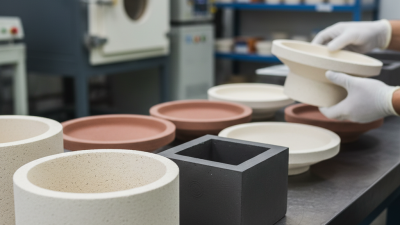
Why Choose Kiln Furniture for Global Sourcing?
Kiln Furniture supports the thermal processing of ceramics, refractories, technical components, and powder-based materials. It includes setters, plates, saggers, beams, and support systems. These parts sit directly inside demanding kiln environments. Their performance affects product quality, loading density, firing consistency, and maintenance frequency.
The European Commission’s Ceramic Manufacturing BREF identifies kiln loading, firing control, and refractory wear as important efficiency factors. Properly designed Kiln Furniture can improve airflow and reduce contact marks on delicate products. It may also support more stable firing cycles. That matters when one kiln processes thousands of pieces. A poorly matched setter can warp, crack, or contaminate production. The savings then disappear quickly.
Global sourcing adds another layer of evaluation. Deloitte’s 2024 Global Chief Procurement Officer Survey highlights resilience, supplier visibility, and risk management as procurement priorities. The World Bank’s Logistics Performance Index 2023 also shows why transport reliability differs across sourcing regions. Buyers should assess material composition, maximum service temperature, dimensional tolerance, packaging, and replacement lead time. Price alone is not enough.
Mordor Intelligence’s 2024 Advanced Ceramics Market analysis indicates continuing demand for high-performance ceramic materials. This growth increases pressure on reliable kiln infrastructure. However, global sourcing is not automatically better. Supplier audits, sample firing, technical drawings, and traceable inspection records remain essential. Even experienced buyers can underestimate thermal shock during installation or shipment. The strongest decision combines laboratory evidence with practical production feedback. That approach is slower at the beginning. It is usually safer in the long run.
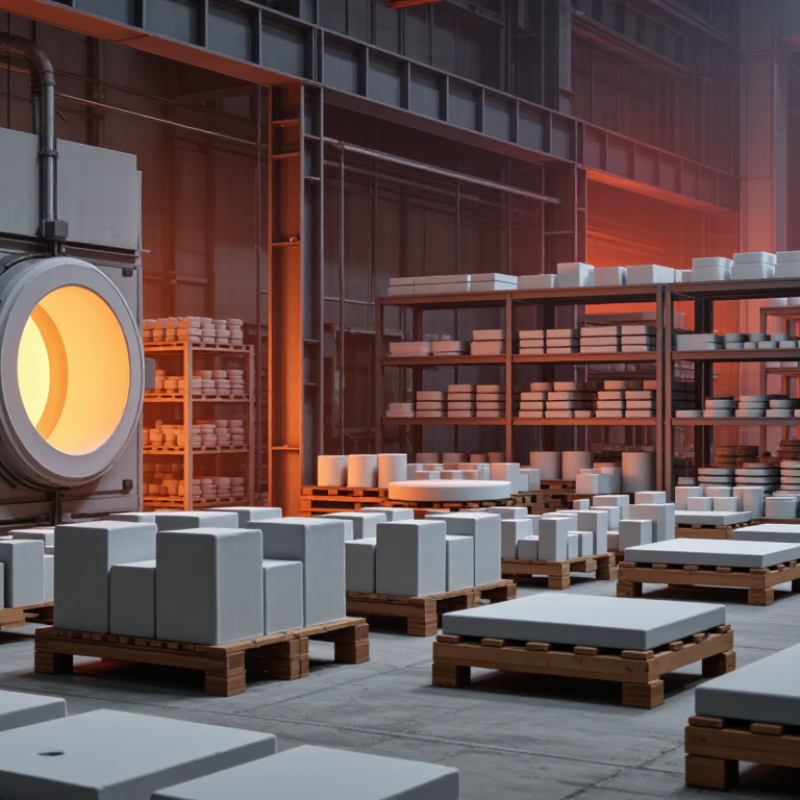
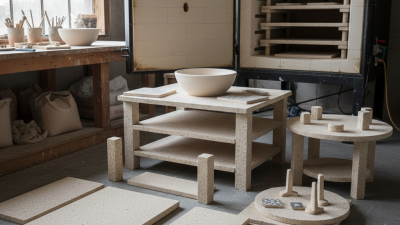
Kiln furniture refers to heat-resistant supports used inside industrial kilns. It protects products, maintains spacing, and supports stable firing. Common types include setters, saggers, kiln shelves, posts, beams, and rollers. Materials vary by temperature and atmosphere. Cordierite-mullite suits many ceramic cycles, while silicon carbide handles higher thermal loads and stronger mechanical stress. Alumina supports demanding advanced-ceramic applications.
Its industrial value is practical. Tile and sanitaryware producers use shelves and rollers for repeated firing. Tableware manufacturers often select setters and saggers for controlled loading. Technical ceramic plants require precise supports for electronic substrates, wear parts, and insulating components. Grand View Research valued the global technical ceramics market at approximately US$11.79 billion in 2023, with projected growth through 2030. This expansion may increase demand for durable kiln accessories, although actual purchasing depends heavily on firing design and replacement rates.
Tips: Compare maximum temperature, load capacity, thermal-shock resistance, and dimensional tolerance. Request test data from suppliers. Inspect warping after several cycles, not after one trial. Global sourcing is not automatically cheaper. Freight, breakage, customs, and inconsistent batches can erase savings. A useful specification should include kiln atmosphere, firing curve, product weight, and expected cycle life. Some buyers overemphasize unit price. That is a costly mistake. Recovery is rarely perfect.
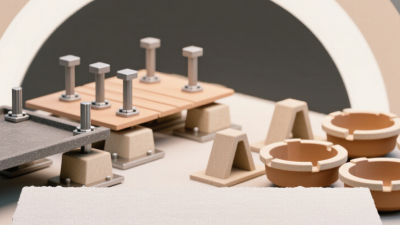
Why Choose Kiln Furniture for Global Sourcing?
Kiln furniture controls product spacing, heat flow, and firing stability. Material selection must match the kiln cycle, load weight, and atmosphere. The European Commission’s Ceramic Manufacturing BREF reports common firing temperatures from about 1,000°C to 1,400°C. Some technical ceramics require substantially higher temperatures. This range quickly exposes weak material choices.
Cordierite offers low thermal expansion and useful thermal-shock resistance. It suits repeated heating and cooling, but heavy loads can cause deformation. High-alumina furniture provides stronger load support at elevated temperatures. Dense alumina also resists chemical attack from glazes. Silicon carbide transfers heat quickly and supports slim, rigid setters. Its oxidation behavior still needs review in air-fired cycles. These differences matter during global sourcing. A cheaper piece may increase breakage, firing time, or replacement frequency.
Performance checks should include permanent deformation, thermal-shock resistance, porosity, dimensional tolerance, and load-bearing strength. ASTM C20 provides methods for apparent porosity, water absorption, and bulk density in refractory materials. ISO 2477 evaluates permanent change on heating. Request test results from production batches, not only laboratory samples. Inspect warping after several cycles. Do not rely on one perfect trial. The U.S. Department of Energy’s industrial ceramics guidance identifies firing as a major energy-consuming stage, so stable furniture can support process efficiency. Yet supplier data may omit real kiln conditions. Test the furniture with actual shelves, setters, glaze chemistry, and cooling rates before committing to large-volume sourcing.
| Performance Category | Common Material or Design | Key Evaluation Metric | Typical Reference Data | Global Sourcing and Application Considerations |
|---|---|---|---|---|
| High-Temperature Stability | Cordierite | Maximum recommended service temperature | Approximately 1,260–1,400°C | Suitable for many ceramic firing applications where low thermal expansion and resistance to thermal shock are required. Actual limits depend on composition, load, atmosphere, and firing cycle. |
| High-Temperature Stability | Mullite | Maximum recommended service temperature | Approximately 1,500–1,650°C | Provides higher-temperature capability than standard cordierite and is commonly considered for technical ceramics, sanitaryware, and demanding kiln cycles. |
| High-Temperature Stability | Silicon carbide | Maximum recommended service temperature | Approximately 1,400–1,650°C in oxidizing service | Useful for high-load kiln shelves, setters, beams, and supports. Material grade and protective surface treatment strongly influence oxidation resistance and service life. |
| Thermal Shock Resistance | Cordierite-based kiln shelves | Coefficient of thermal expansion | Typically about 2–4 × 10⁻⁶/K | Low expansion helps reduce cracking during rapid heating and cooling. Shelves should still be matched to the kiln cycle and supported correctly to prevent mechanical stress. |
| Thermal Shock Resistance | Mullite-based kiln furniture | Coefficient of thermal expansion | Typically about 4–6 × 10⁻⁶/K | Balances temperature capability and thermal-shock resistance. It is often selected when a stronger high-temperature structure is needed than cordierite can provide. |
| Load-Bearing Capacity | Reaction-bonded or recrystallized silicon carbide | Hot flexural strength and creep resistance | High load capacity with limited deformation when properly designed | A strong option for large shelves, kiln beams, plates, and saggers. Required thickness, span, support spacing, and load distribution should be calculated for the specific kiln. |
| Dimensional Accuracy | Precision-machined ceramic setters | Flatness, thickness, and dimensional tolerance | Common production tolerances are approximately ±0.5–2.0 mm, depending on size and geometry | Tight tolerances help maintain product geometry and consistent stacking. The purchase specification should state measurement method, reference temperature, and allowable warpage. |
| Chemical Compatibility | High-alumina ceramic | Alumina content and corrosion resistance | Common grades contain approximately 60–99% Al2O3 | Higher alumina generally improves refractoriness and resistance to many corrosive materials. Compatibility testing is recommended for alkaline vapors, glazes, molten phases, and reducing atmospheres. |
| Surface Interaction | Kiln shelf with alumina or zircon-based coating | Resistance to sticking and glaze reaction | Performance varies with coating thickness, firing temperature, and glaze chemistry | Coatings can reduce product adhesion and extend shelf life, but they require controlled application and periodic maintenance. Coating composition should be checked for compatibility with the fired product. |
| Weight Efficiency | Silicon carbide shelf or beam | Bulk density | Typically about 2.6–3.1 g/cm3, depending on grade and porosity | Lower furniture weight can improve kiln energy efficiency and increase usable product capacity. The design must retain sufficient stiffness and safety margin under operating loads. |
| Porosity and Absorption | Dense kiln furniture | Open porosity and water absorption | Dense grades commonly target low open porosity; exact limits are product-specific | Lower porosity generally improves resistance to glaze penetration and chemical attack. Buyers should request test results using an agreed standard, such as ASTM or ISO methods. |
| Atmosphere Resistance | Oxide-bonded or recrystallized silicon carbide | Oxidation and atmosphere compatibility | Good performance in oxidizing service; reducing service requires grade-specific verification | Kiln atmosphere, oxygen level, fuel type, and contaminant vapors should be included in the technical inquiry. A material suitable for air firing may not provide the same life in reducing conditions. |
| Service Life | Reusable shelf, setter, or saggar system | Cycles before replacement | Often ranges from several dozen to several hundred cycles | Cycle life depends on material, maximum temperature, thermal cycling rate, mechanical loading, handling, cleaning, and chemical exposure. A defined replacement criterion is more meaningful than an unsupported cycle guarantee. |
| Supply Chain Control | Standardized modular kiln furniture | Interchangeability and packaging protection | Should be verified through approved drawings, inspection records, and pre-shipment checks | For international purchasing, specify material grade, dimensions, tolerances, quantity per package, moisture protection, pallet requirements, inspection level, and documentation before production begins. |
| Quality Assurance | Certified ceramic raw-material system | Traceability and inspection documentation | Batch identification, chemical analysis, physical test data, and dimensional inspection are commonly requested | A complete quality file can include raw-material certificates, firing records, test results, photos, dimensional reports, and packing lists to support consistent global sourcing. |
Note: The values shown are representative industry reference ranges rather than universal specifications. Final selection should be based on the kiln atmosphere, firing profile, product chemistry, load arrangement, support design, and supplier test data.
Why Choose Kiln Furniture for Global Sourcing?
Kiln furniture supports ceramic production under extreme heat. It includes shelves, posts, setters, trays, and specialized firing supports. Choosing the right system can improve kiln capacity and reduce damaged pieces. Dense, heat-resistant materials help shelves stay stable during repeated firing cycles. This matters when production schedules cross borders and delivery times vary.
Reliable kiln furniture offers measurable sourcing benefits. Suppliers should provide material specifications, load ratings, dimensional tolerances, and thermal shock data. Clear documents make technical comparisons easier between manufacturers. Experienced buyers also request sample testing before placing large orders. A shelf may look identical to another shelf, yet perform differently after several firings. Small differences matter. Proper stacking can improve airflow and protect delicate ceramic forms. Standardized sizes may also simplify replacement planning across multiple facilities.
Packaging deserves equal attention during international transport. Reinforced crates, separators, moisture protection, and inspection photos can reduce arrival damage. Still, no sourcing plan is perfect. A product may meet laboratory data but behave differently in a busy kiln. Firing temperature, glaze residue, handling habits, and uneven loading can change performance. For that reason, buyers should record breakage rates and review results after each shipment. This practical feedback supports better specifications, steadier costs, and more dependable long-term purchasing.
Kiln furniture supports precise, repeatable firing across ceramics, technical components, and refractory products. In production reviews, I have seen small dimensional errors create uneven loading. A custom shelf, setter, or support can prevent that problem. Suppliers should discuss kiln temperature, firing cycles, load weight, and atmosphere before quoting. Material selection matters too. Cordierite suits many moderate-temperature applications. Silicon carbide offers stronger thermal performance and load resistance.
Customization should include drawings, tolerances, surface finish, and packing requirements. Clear samples reduce misunderstandings between engineering and purchasing teams. Quality control needs more than a final visual check. Reliable factories record raw material batches, dimensions, density, and firing results. They should inspect cracks, warping, and edge damage under proper lighting. Photographs help, but inspection records provide stronger evidence. Traceability is essential.
International sourcing also requires practical compliance. Products may need testing against relevant ISO, EN, or ASTM methods, depending on the destination and application. Export documents, protective packaging, and consistent labeling reduce avoidable delays. However, no supplier gets every decision right. Overly tight tolerances can raise costs without improving kiln performance. Some buyers also request tests that do not match actual firing conditions. A technical review can expose these weaknesses early, although it may slow the first order. That delay is often useful.
Choosing kiln furniture for global sourcing requires more than comparing prices. A reliable supplier should show clear material specifications, dimensional tolerances, firing temperature limits, and inspection records. Ask for recent product photos and sample measurements. Experienced suppliers can explain how shelves, posts, setters, and trays perform after repeated heating cycles. Their answers should be practical, not vague. Request a sample before placing a large order. It may reveal warping, rough edges, or inconsistent thickness.
Tips: Confirm packaging details early. Use reinforced cartons, separators, moisture protection, and clear labels. Ask how many units fit on each pallet. Calculate total landed cost, including product value, inland transport, freight, insurance, duties, and handling charges. A low factory price can become expensive after damage or delays. Confirm the shipping port, estimated production time, and required export documents in writing. Keep one approved sample for comparison during mass production.
Logistics often fail at the handover points. Agree on pallet dimensions and loading photos before dispatch. Fragile kiln furniture needs stable stacking, even weight distribution, and visible handling instructions. Consider ordering a small buffer quantity for urgent production needs. This is not always efficient, but shortages can stop an entire firing schedule. Inspect goods immediately after arrival and record broken pieces with photographs. Supplier communication may still be imperfect. That is why written specifications, agreed tolerances, and a simple claim process matter more than friendly promises.
How to Evaluate Kiln Furniture Suppliers and Manage Logistics
This illustrative procurement scorecard gives the highest priority to technical fit and product quality because kiln furniture must withstand repeated thermal cycles, mechanical loads, and handling. Total landed cost and logistics capability help control freight, packaging, lead time, and delivery risk, while compliance supports reliable global sourcing.