Leave Your Message

Where to Buy the Best Corundum Mullite Sagger in China?

China’s scale in alumina-related supply chains makes it a natural place to compare Corundum Mullite Sagger manufacturers. The U.S. Geological Survey’s Mineral Commodity Summaries 2024 estimated global bauxite mine production at about 400 million metric tons in 2023, including roughly 93 million tons in China. This is useful context, not proof that any supplier makes a superior sagger.

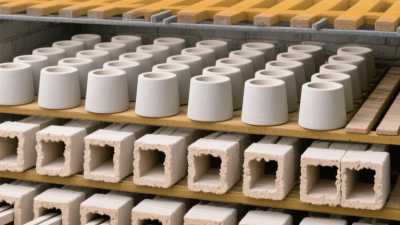
Performance depends on the details. A sagger must withstand repeated firing, thermal shock, and contact with the materials inside it. Buyers should compare alumina content, mullite composition, wall thickness, dimensional tolerances, firing temperature, and service-life test conditions. Ask for batch-level inspection records and clarify whether quoted lifespan comes from documented trials or sales claims. Small differences matter. A warped rim can affect stacking; a rough interior may complicate cleaning.

A reliable supplier should explain its test methods and provide traceable product specifications. Yet a named expert quotation cannot be responsibly included without a verifiable interview, publication, or supplied source. No such source was provided here. Treat that as a sourcing requirement, not a reason to accept an invented endorsement. The right comparison begins with evidence: consistent dimensions, transparent test data, and performance measured under conditions close to your kiln cycle.
Where to Buy the Best Corundum Mullite Sagger in China?

Define Corundum–Mullite Saggers by Alumina Content and Phase Composition

Where to Buy the Best Corundum Mullite Sagger in China?
Define Corundum–Mullite Saggers by Alumina Content and Phase Composition

A corundum–mullite sagger is best judged by more than its product name. Start with alumina content, reported as a percentage by mass, then ask how the phases were identified. Numbers matter. Higher alumina content may support refractoriness, but it does not alone predict service life.

Corundum is the alumina-rich phase; mullite contributes a different balance of thermal and mechanical properties. The actual ratio depends on formulation and firing, so request a recent chemical analysis and X-ray diffraction report. Check whether the results describe the finished sagger, not just the raw batch. That detail is easy to miss.

When comparing suppliers in China, match composition to your kiln temperature, firing cycle, load, and atmosphere. Ask for bulk density, porosity, dimensions, and thermal-shock data from comparable production conditions. A sample test under your own schedule is more useful than a broad “high-alumina” claim. I would not assume the highest alumina figure is automatically the best choice. Small inconsistencies happen. Clarify tolerances and batch traceability before ordering; otherwise, a good laboratory result may not reflect the delivered pieces.

Where to Buy the Best Corundum Mullite Sagger in China? - Define Corundum–Mullite Saggers by Alumina Content and Phase Composition

Indicative Grade Alumina Content (Al₂O₃, wt%) Typical Phase Composition (wt%, approximate) Typical Selection Considerations What to Verify When Sourcing in China Suitable Buying Route
Lower-alumina mullite-rich About 65–75% Mullite: approximately 55–75%; corundum: 0–15%; silica-rich glass or other phases: approximately 10–30%. Consider for applications where thermal-shock resistance and cost are priorities. Suitability depends on firing temperature, load, atmosphere, and the material being fired. Request an Al₂O₃ chemical analysis and an X-ray diffraction (XRD) phase report. Confirm dimensions, wall thickness, firing history, and the stated service conditions. Compare technical quotations from refractory or advanced-ceramic manufacturers and specialist refractory distributors.
Balanced corundum–mullite About 75–85% Mullite: approximately 40–65%; corundum: approximately 15–40%; silica-rich glass or other phases: approximately 5–20%. A common comparison range for general high-temperature sagger applications. Evaluate thermal cycling, abrasion, chemical contact, and expected service life together. Ask for test methods and recent batch data for bulk density, apparent porosity, cold crushing strength, and thermal-shock performance; compare results under equivalent test conditions. Seek quotations from suppliers able to provide batch traceability, sample testing, and custom-size production details.
High-alumina, corundum-rich About 85–95% Corundum: approximately 45–75%; mullite: approximately 15–40%; silica-rich glass or other phases: approximately 3–15%. Consider when higher alumina content or resistance to wear and certain corrosive materials is required. Confirm compatibility with the actual charge and kiln atmosphere. Check whether the quoted alumina value is measured on the finished body or refers only to the raw batch. Request XRF chemistry, XRD phase identification, and dimensional tolerances. Prioritize direct technical engagement with a qualified producer or a distributor that can supply verifiable product and test documentation.
Very-high-alumina, corundum-dominant Typically above 95% Corundum is generally the dominant crystalline phase; minor mullite or other phases depend on formulation and processing. Obtain the actual phase analysis rather than relying on a generic range. For demanding conditions, assess the complete design and operating cycle rather than selecting by alumina percentage alone. Higher alumina does not by itself guarantee longer service life. Request a current certificate of analysis, XRD report, production tolerances, and a documented recommendation for the intended temperature, load, atmosphere, and chemical exposure. Use a technical procurement process with sample evaluation and written confirmation of the agreed composition and performance requirements.
Interpretation note: These are indicative comparison bands, not guaranteed product specifications. Phase ranges are approximate and their endpoints are not intended to be added together; actual phase proportions vary with raw materials and firing conditions. Verify alumina chemistry by a stated chemical-analysis method such as XRF, and confirm crystalline phases by XRD. Compare supplier data using the same test methods and operating conditions.

Compare Al₂O₃ wt%, Bulk Density, and Open Porosity Across Supplier Grades

Where to Buy the Best Corundum Mullite Sagger in China?

When comparing supplier grades, start with the Al₂O₃ content, but do not treat it as a stand-alone quality score. A higher percentage may support better resistance to corrosive kiln conditions, yet the full formulation and firing process also matter. Check whether the stated value comes from a batch test or a typical specification. Small differences can matter. Ask for the test method and recent batch data.

Bulk density helps indicate how compact a sagger is, while open porosity shows how much accessible pore space remains. For example, compare two quoted grades at similar alumina content: one may have higher density and lower open porosity, while the other is lighter and more porous. These figures can affect heat transfer, strength, and exposure to kiln atmospheres. Not always. Shape, wall thickness, and firing cycles change performance too, so request data for the actual product size.

A useful supplier comparison puts Al₂O₃ wt%, bulk density, and open porosity in the same table, with units and measurement conditions stated. Ask whether density was measured on fired material, and whether porosity results use a recognized test procedure. A sample report is more informative than a broad brochure range. Inspect the sagger’s rim and inner surface for cracks or uneven texture, but remember that visual checks cannot replace testing. Trial a small quantity under your own loading and firing conditions; real results may differ from the catalogue.

Check 1,600–1,700 °C Service Ratings Against Your Kiln Operating Cycle

When comparing corundum mullite saggers in China, treat a 1,600–1,700 °C service rating as a starting point, not a guarantee. Ask whether it refers to continuous operation, brief peaks, or a laboratory test. Your kiln cycle matters: peak temperature, hold time, ramp rate, cooling speed, and firing frequency all affect service life. A sagger held near 1,650 °C for hours faces different stress than one briefly exposed to that temperature. Include payload weight and contact with glazes or powders when discussing your application.

Tips: Request written test conditions and batch-level composition data. Compare wall thickness, internal dimensions, and load capacity with your kiln setup. Ask about thermal cycling results, not just maximum temperature. A small trial using your actual firing schedule can reveal cracking or warping.

Before ordering, share a basic kiln-cycle record and the intended load. A knowledgeable technical team should explain how its rating was established and where uncertainty remains. Check whether the quoted temperature assumes a particular atmosphere; kiln chemistry can affect wear. Inspect samples for even walls, sound corners, and consistent dimensions. I would still leave a margin below the stated limit. Ratings rarely reflect every kiln’s hot spots, and that detail is easy to overlook.

Where to Buy the Best Corundum Mullite Sagger in China? — Check 1,600–1,700 °C Service Ratings Against Your Kiln Operating Cycle

Use these temperature checkpoints to compare a sagger’s declared service rating with your kiln’s peak operating temperature. Fahrenheit values are exact conversions; the checkpoints are not product test results.

Before buying, confirm the supplier’s documented rating and whether it applies to continuous use or a specific firing cycle. Peak temperature alone does not determine service life; hold time, atmosphere, loading, and thermal cycling also matter.

Assess Thermal-Shock Life, Wall Thickness, and Dimensional Tolerances

Where to Buy the Best Corundum Mullite Sagger in China?

Assess Thermal-Shock Life, Wall Thickness, and Dimensional Tolerances

When sourcing a corundum mullite sagger in China, compare test records, not just catalog claims. Thermal-shock life depends on heating rate, cooling conditions, load, and kiln atmosphere. Ask suppliers for the cycle protocol and retained strength or visible-crack results after repeated cycles. ASTM C1171 provides a recognized method for evaluating thermal-shock resistance in refractory ceramics; results are meaningful only when test conditions match your firing process. A “long-life” claim without cycle data is hard to assess.

Wall thickness affects heat transfer and resistance to handling damage. Request measurements at several points, including corners and the base, and compare the readings with the drawing. Record actual height, rim diameter, and base dimensions for sample pieces. ASTM C20 describes methods for apparent porosity and bulk density, useful context when assessing whether a thick-looking wall is also consistently made. There is no single tolerance suitable for every sagger; confirm the supplier’s written limits before ordering. Small dimensional variation can matter when saggers are stacked tightly.

Tips: Run a small trial batch. Photograph each sagger before and after firing, and log cycles, cracks, and dimensional changes. This takes time. It can also reveal a mismatch that a polished datasheet misses. Ask for lot-level inspection records, not only a sample report.

Shortlist Chinese Manufacturers by Test Reports, Production Capacity, and Cost

When shortlisting Chinese corundum mullite sagger manufacturers, request recent test reports tied to the actual production batch. Check alumina and silica composition, bulk density, apparent porosity, and cold crushing strength. Numbers need context. Ask how samples were prepared and whether tests came from an independent laboratory or the factory’s own equipment. I would not treat one polished certificate as proof of consistent quality; verify the report date, sample identification, and test method.

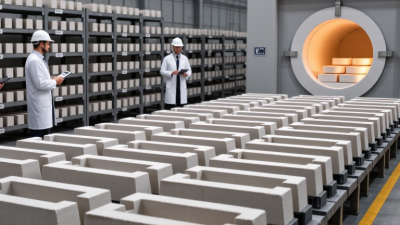
Production capacity matters when your kiln schedule is tight. Ask for monthly output, standard lead time, and the largest sagger dimensions the plant can fire evenly. Request photos of the kiln setting and a sample inspection record. Confirm that the quoted capacity applies to your shape and wall thickness, not only smaller standard products. A large factory may still have a bottleneck. Samples can mislead.

Compare costs on the same specification, including dimensional tolerances, packing, and delivery terms. A lower unit price may reflect thinner walls or less strict inspection. Ask for pricing at several order quantities and clarify replacement terms for transit damage or out-of-tolerance pieces. For a first order, a small trial batch can reveal handling and thermal-cycle issues before you commit to a larger run. Keep the checks practical and documented.