10 Best Porous Alumina Ceramics Suppliers Worldwide
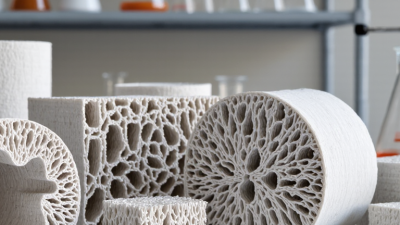
Porous Alumina Ceramics support demanding applications in filtration, thermal management, catalyst carriers, laboratory equipment, and biomedical engineering. Their visible pores may look simple, but performance depends on careful control of pore size, open porosity, alumina purity, strength, and dimensional tolerance. A component with uniform pores can improve gas flow. A poorly controlled batch may crack during thermal cycling or restrict permeability.
Professor Paolo Colombo, a recognized researcher in cellular ceramics, offers a useful design principle: “Porosity is not a defect; it is a design parameter.” This idea guides our review of the 10 Best Porous Alumina Ceramics Suppliers Worldwide. We examine more than product photographs or broad marketing claims. The comparison considers manufacturing experience, technical documentation, testing methods, customization capability, quality systems, and application support. Traceable batch records also matter, especially when parts operate near 1,600°C or contact aggressive chemicals.
No supplier is perfect. That matters.
Some companies excel in standard tubes and plates. Others handle complex filters, custom foam structures, or small research batches. Buyers should verify pore distribution, compressive strength, thermal shock resistance, and actual lead times before ordering. Supplier websites may omit these details, leaving important questions unanswered. Our evaluation therefore encourages direct technical discussions and sample testing. The final choice should reflect the operating environment, not only the lowest quoted price. This approach makes the list more practical, transparent, and useful for engineers, laboratory managers, and procurement teams seeking dependable Porous Alumina Ceramics.
Porous Alumina Basics: 30–70% Porosity and 1–100 µm Pore Sizes
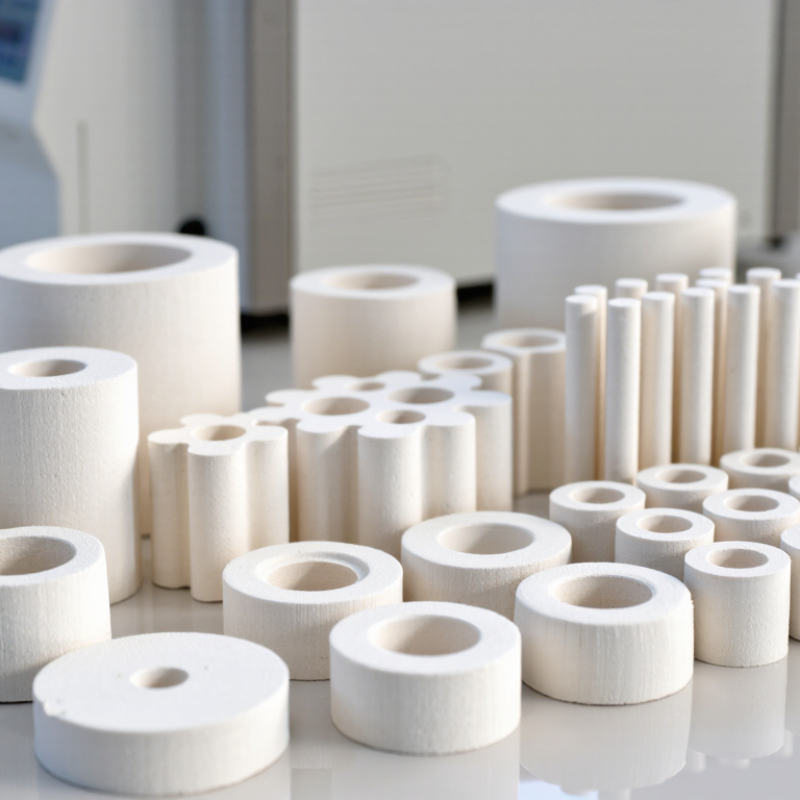
Porous alumina ceramics are valued for thermal stability, chemical resistance, and controlled fluid flow. Their performance depends heavily on porosity and pore size. At 30–70% porosity, the ceramic can balance permeability with mechanical strength. That range is broad. Higher porosity usually lowers weight and improves flow, but it can make the structure more fragile. Lower porosity often improves strength, although pressure drop may increase.
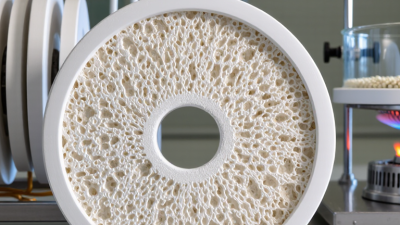
Pore sizes from 1–100 µm support different applications. A 1 µm pore can help retain fine particles and support precise filtration. Larger pores near 100 µm allow faster gas or liquid movement. The tradeoff is not neat. Pore shape, connectivity, and thickness also affect real performance. A stated average pore size may hide blocked channels or uneven distribution.
When comparing global suppliers, ask for measured data, not only catalog ranges. Reliable documentation should identify the testing method, sample density, tolerance, and firing conditions. Archimedes testing can estimate open porosity, while capillary flow or bubble-point testing can reveal effective pore behavior. Microstructural images are useful, but one image cannot represent an entire batch. I would request sample parts and test them under actual temperature, pressure, and fluid conditions. Specifications can still mislead. Minor production variation deserves attention, especially near the 70% porosity limit.
Supplier Evaluation Criteria: Purity Above 99% and 1,600°C Service Ratings
For the “10 Best Porous Alumina Ceramics Suppliers Worldwide,” purity and temperature performance should guide every shortlist. The USGS Mineral Commodity Summaries 2024 reports global alumina output at roughly 140 million metric tons in 2023. That scale shows supply strength, not technical consistency. A qualified supplier should provide batch-specific certificates showing alumina above 99% by mass. Ask for traceable ICP-OES results covering sodium, iron, silicon, and calcium. Small impurities can alter sintering behavior and electrical performance.
Temperature claims need closer examination. A 1,600°C service rating should identify continuous temperature, peak temperature, atmosphere, load, and exposure time. It should also state whether the rating applies to dense ceramic or porous material. Open porosity reduces strength and can accelerate thermal shock damage. Use ASTM C20 or ISO 18754 methods to verify apparent porosity, water absorption, and bulk density. Request compressive-strength data at room temperature and after thermal cycling. The European Commission’s Ceramics BREF highlights how kiln conditions and product design affect energy use and process stability. Therefore, a supplier’s kiln profile matters.
I would reject vague “high-temperature” language. One test coupon is not enough. My own evaluation would include three production lots, not only a sample. This costs more, but it exposes variation that polished datasheets may hide. A 99% purity claim can still disappoint when pore size, binders, or machining damage are poorly controlled.
Top 10 Global Porous Alumina Ceramic Suppliers by Product Expertise
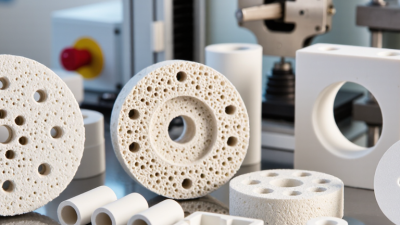
The top 10 global porous alumina ceramic suppliers should be judged by product expertise, not visibility alone. Their capabilities commonly cover catalyst supports, molten-metal filtration, vacuum chucks, membrane substrates, and thermal insulation parts. Grand View Research valued the global advanced ceramics market at about USD 11.8 billion in 2023, with continued growth expected through 2030. That expansion increases demand for controlled porosity and repeatable firing.
Technical leaders usually provide pore sizes from roughly 10 to 200 micrometres, depending on the application. They also document open porosity, density, permeability, flexural strength, and thermal-shock resistance. These figures matter on a factory floor.
A filter with uneven pores may clog early. A chuck with poor flatness may distort wafer handling. Product expertise is visible in testing depth, not attractive catalog language.
The strongest suppliers combine extrusion, tape casting, slip casting, and additive manufacturing. They can adapt alumina purity, wall thickness, and surface finish for demanding environments. MarketsandMarkets has reported steady growth in advanced ceramics, supported by electronics, energy, and industrial filtration. Still, rankings remain imperfect. Public data rarely separates porous alumina from broader ceramic categories.
Buyers should request batch records, dimensional reports, and independent test results before selecting among the top 10. Claims need evidence. Supplier experience also deserves practical verification through samples, pilot trials, and failure analysis.
Applications Across Filtration, Catalysis, Thermal Insulation, and Biomedical Devices
Porous alumina ceramics support demanding work in filtration, catalysis, thermal insulation, and biomedical devices. When comparing global suppliers, engineers should examine more than catalog porosity. Pore-size distribution, alumina purity, wall strength, and batch consistency directly affect performance. A supplier should provide certificates of analysis, production traceability, and practical test data.
In filtration systems, controlled pores can remove particles from gases, liquids, and molten materials. However, a pore-size label alone can mislead. Permeability also depends on tortuosity, thickness, surface finish, and operating pressure. In catalysis, porous alumina offers a stable surface for active chemicals. Suppliers should explain surface area, thermal cycling results, and resistance to reaction environments. Small differences matter.
Thermal insulation components require low heat transfer and reliable shock resistance. This is important near furnaces, sensors, and high-temperature processing lines. Biomedical applications demand stricter evidence. Implantable or fluid-contact parts need controlled chemistry, clean processing, and documented biocompatibility testing. ISO-related records may support evaluation, but they do not replace application-specific validation. No supplier is perfect. Pilot testing remains necessary, especially when machining, sterilization, or repeated heating could change the ceramic structure. A strong supplier answers technical questions clearly and admits limits. That honesty is useful.
Technical Comparison of Suppliers by Pore Structure, Strength, and Customization
Comparing the 10 best porous alumina ceramic suppliers requires more than checking catalog prices. According to MarketsandMarkets’ 2024 porous ceramics report, filtration remains a major demand area, where pore consistency directly affects flow and particle retention. Technical reviews commonly place open porosity between 30% and 60%, while flexural strength may range from 20 to over 150 MPa. The spread is substantial.
Pore structure comes first. Suppliers using controlled pore formers can provide narrow, interconnected channels for gas filtration. Others produce wider, irregular pores for liquid transfer. Ask for mercury porosimetry or capillary-flow data, not only an average pore diameter. ISO 15901-1 supports reliable pore-size analysis, while ASTM C20 measures apparent porosity and water absorption.
Strength depends on firing temperature, wall thickness, and alumina purity. Higher sintering temperatures usually improve strength, but they can shrink pores and reduce permeability. That trade-off is often understated. ASTM C1161 flexural testing gives a better comparison than unsupported “high-strength” claims. Customization also separates serious suppliers: useful options include 5–200 micrometer pore sizes, curved channels, graded porosity, and tight dimensional tolerances. Yet, some supplier data sheets omit batch variation. That omission matters. Request three-lot test results, thermal-shock data, and a sample before approving production.