Leave Your Message

Top Porous Alumina Ceramics Suppliers for Global Buyers

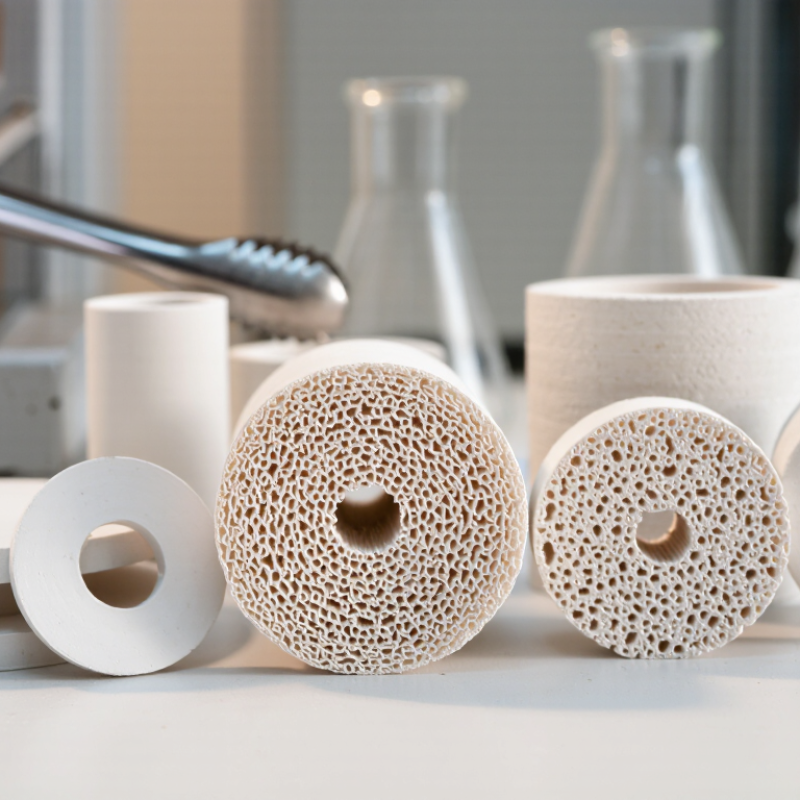
Porous Alumina Ceramics serve demanding applications where controlled permeability, thermal stability, and chemical resistance matter. Buyers may encounter them in filtration, catalyst supports, laboratory components, and molten-metal handling. Performance depends on more than the alumina label. Pore size, porosity, wall thickness, surface finish, and firing consistency can change how a component behaves. Small details matter.

Industry reports help frame the market, but they rarely compare individual suppliers. Grand View Research’s advanced ceramics market analysis tracks broader demand and application trends, while the U.S. Geological Survey’s Mineral Commodity Summaries provides context on alumina-related raw materials. Neither report should be treated as a supplier scorecard. That distinction is useful. Global buyers still need to verify product-level evidence, including technical data sheets, batch traceability, sample results, and stated tolerances.

This guide examines suppliers through practical purchasing questions: Can they hold pore specifications across production runs? Do they offer custom shapes, reliable lead times, and export-ready packaging? Can their engineers explain pressure drop, permeability, and thermal-shock limits without hiding behind vague claims? Ask for test methods, not just headline values. A datasheet may look polished, yet a sample can tell a different story. That is worth admitting. Supplier choice should balance documented capability, communication, and total delivered cost—not marketing language alone.
Top Porous Alumina Ceramics Suppliers for Global Buyers

What Porous Alumina Ceramics Are and How They Are Made

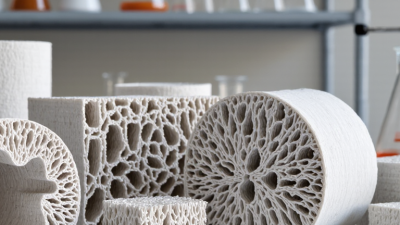
Porous alumina ceramics are rigid, heat-resistant bodies containing connected or isolated voids. Their pores can filter particles, support catalysts, or reduce weight. Performance depends on pore size, connectivity, and wall thickness—not porosity alone. A highly porous part may pass fluid easily, but often loses strength. That trade-off matters.

Manufacturers blend alumina powder with a pore-forming material, such as starch or polymer beads. The mixture is then pressed, cast, or extruded into shape. Heating removes the pore former; firing bonds the alumina particles while preserving the intended void structure. Temperature and firing time need tight control. A few degrees can change shrinkage and permeability.

The USGS Mineral Commodity Summaries 2024 estimated global alumina output at roughly 140 million metric tons in 2023. This figure covers commodity alumina, not porous ceramic grades, but it shows the scale of the material supply behind ceramic manufacturing.

Tips: Ask suppliers for open-porosity, pore-size, permeability, and strength test results. Check whether data comes from the finished part or a laboratory sample. That distinction is easy to miss. Also, do not assume two parts with identical porosity will perform alike; pore shape and distribution can differ.
Key Properties and Industrial Applications

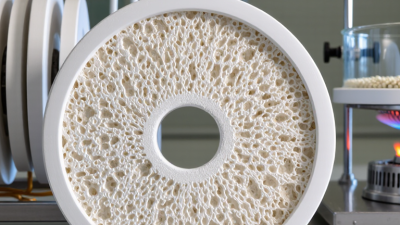
Porous alumina ceramics pair a rigid oxide framework with connected voids that let gases or liquids pass through. Their pore size and open-area fraction influence flow, filtration efficiency, and pressure drop. Engineers often compare these measurements with operating temperature and chemical exposure before selecting a grade. Alumina generally tolerates high temperatures and many corrosive environments, but performance depends on composition, pore structure, and service conditions. Small differences matter. A component that works well with clean air may clog quickly in a dusty process stream.

These properties support industrial uses such as hot-gas filtration, liquid clarification, burner components, and porous supports for catalysts. In a filtration line, for example, a ceramic element may capture fine particles while handling heat that would challenge some polymer media. Porous alumina can also distribute gas through a reactor or provide a stable surface for catalytic coatings. It is not automatically the right choice: brittle parts can crack under impact, rapid temperature changes, or uneven mounting pressure. Buyers should request data on pore-size distribution, permeability, strength, and thermal cycling, then check that results reflect the intended conditions. Supplier consistency matters too; even a sound specification needs verification across production batches.

Top Porous Alumina Ceramics Suppliers for Global Buyers - Key Properties and Industrial Applications

The profiles below summarize common porous-alumina product capabilities by supplier specialization. They are general industry benchmarks, not specifications for any individual supplier. Pore size and porosity depend on the product, test method, and manufacturing process.

Supplier specialization Common product forms Indicative pore structure Key material characteristics Typical industrial applications Buyer checks
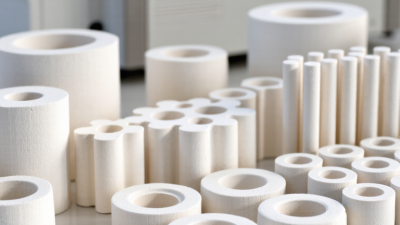
Industrial filtration specialists Tubes, discs, plates, and custom filter elements Common nominal pore sizes are approximately 10–100 μm; open porosity often falls around 30–50%. Rigid, heat-resistant ceramic; porous grades allow fluid or gas flow while retaining particles according to the specified pore rating. Liquid and gas filtration, process clarification, and filtration of hot or chemically demanding streams. Confirm rated pore size, permeability, pressure drop, chemical compatibility, cleaning method, and operating conditions.
Ceramic membrane and support producers Multilayer membrane tubes, monoliths, and porous substrates Fine selective layers may have nominal pores from submicron to a few microns, supported by a coarser porous body; exact grades vary. Layered construction can combine a fine separation surface with a stronger, more permeable support. Microfiltration, separation processes, water and wastewater treatment, and selected chemical-process duties. Request layer structure, pore-size distribution, permeability, sealing details, and evidence from representative process testing.
Porous vacuum-fixture manufacturers Vacuum tables, chucks, platens, and porous inserts Often engineered for distributed airflow; pore structure and permeability are specified for the intended vacuum system rather than by pore size alone. Uniform porosity can provide broad-area suction; alumina offers hardness and dimensional stability, while porosity reduces strength compared with dense alumina. Workholding, wafer and component handling, precision grinding, and other flat-surface processing. Check flatness, thickness, airflow uniformity, vacuum level, surface finish, and cleaning or regeneration procedure.
Gas-diffuser and aeration component suppliers Diffuser plates, spargers, discs, and custom porous bodies Typically selected for controlled gas flow and bubble formation; pore size and permeability vary by process requirement. Porous ceramic distributes gas through its surface; alumina is hard and heat-resistant, but the component must be protected from excessive mechanical loads. Aeration, gas sparging, laboratory equipment, and gas distribution in selected industrial processes. Compare flow rate, pressure requirement, bubble behavior, back-flushing options, and resistance to the process fluid.
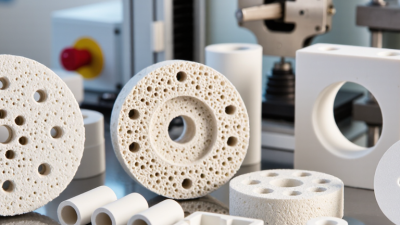
Custom technical-ceramic fabricators Machined plates, blocks, carriers, and application-specific shapes Designed to the application; pore size, porosity, and permeability should be stated on the drawing or agreed specification. Alumina ceramics are generally hard, electrically insulating, and resistant to high temperatures; porous grades have lower strength than comparable dense grades. Fixtures, supports, porous flow-control parts, and specialized components for thermal, electrical, or chemical equipment. Review tolerances, machining limits, batch consistency, strength data, inspection methods, and prototype qualification needs.

Note: Pore size, open porosity, permeability, strength, and temperature capability are interdependent and product-specific. Treat the ranges above as screening guidance only; obtain current technical data and verify the test method and service conditions before specifying a component.

Types of Porous Alumina Ceramic Suppliers Worldwide

Porous alumina ceramic suppliers worldwide generally fall into several practical categories. Direct manufacturers produce standard plates, tubes, discs, and filter elements, often controlling forming and sintering in-house. Their catalogs may list porosity, dimensions, and operating limits, but buyers should confirm how these values were measured. A stated pore size does not always describe the full pore distribution.

Custom engineering suppliers adapt ceramic shapes or pore structures for particular equipment. They may work from drawings, samples, or target flow rates, and can discuss wall thickness, surface finish, and material purity. Useful questions include whether samples are available and whether test data cover permeability and mechanical strength. Small details matter. The categories overlap more than catalogs suggest, especially when a manufacturer also offers design support.

Regional distributors and technical stockists help buyers source standard parts, compare specifications, and manage local delivery. Some also provide cutting or assembly, while larger component integrators combine porous alumina with housings or other system parts. Their technical depth can vary, so check which services are performed in-house. A datasheet may still leave questions. For consistent sourcing, compare tolerances, batch documentation, packaging, and the supplier’s ability to explain how a part performs under your actual temperature, pressure, and fluid conditions.

How to Evaluate Suppliers for Quality and Technical Capability

A capable porous alumina supplier should explain how its ceramic structure is controlled, not just quote a pore-size range. Ask for measured porosity, pore-size distribution, bulk density, and dimensional tolerances for the grade you need. A data sheet is useful, but verify how values were measured and whether they describe routine production or one sample. Check that the supplier can discuss your operating temperature, contact materials, and thermal cycling. Small differences matter. Request a sample.

Technical capability shows in the questions a supplier asks about your part. They should clarify flow rate, pressure drop, geometry, and cleaning conditions before recommending a material. Ask how each production lot is inspected, identified, and protected during shipping. Review sample inspection records and request evidence of repeatability across more than one batch. A polished brochure proves little. Pilot the part. Compare results against your actual process, since lab conditions may not match the factory floor. The lowest quote can be tempting, but price alone says little about consistency or support. No checklist catches every failure; keep some uncertainty in your evaluation.

Global Sourcing, Logistics, and Procurement Considerations

Global sourcing of porous alumina ceramics starts with a clear technical specification. Define dimensions, pore size, porosity range, operating temperature, and acceptable tolerances before requesting quotations. Small differences matter. A component designed for filtration may need different pore consistency than one used for thermal insulation. Ask suppliers how they verify these properties, and request representative test data alongside sample parts.

Logistics can affect product condition and landed cost. Request packaging details, including separators, moisture protection, and carton limits. Porous parts can chip when they shift during transit. Confirm production lead time, shipment method, export documents, and delivery terms in writing. For a first order, a small sample shipment may reveal packaging weaknesses before a larger consignment travels. It adds time, though that delay may be worthwhile.

Compare quotations by total procurement cost, not unit price alone. Include freight, inspection, customs-related charges, and the cost of rejected parts. Check whether the supplier can keep dimensions and test methods consistent across batches. Ask how changes in raw materials or production schedules are communicated. Records help. Still, supplier questionnaires cannot replace physical evaluation; that is an easy detail to overlook when deadlines tighten. A practical sourcing plan leaves room for inspection, transit delays, and corrective action.

Use these general membrane-filtration pore-size bands as a starting point when comparing porous alumina products. They are not supplier-specific specifications; classifications and measured results can vary with test method and product. For global procurement, confirm the supplier’s pore-size test method, tolerances, operating conditions, and export packaging requirements.