
Kiln Furniture for Electronic Ceramic Sintering: Materials, Types, and Selection Criteria
Common Types of Kiln Furniture in Electronic Ceramic Sintering
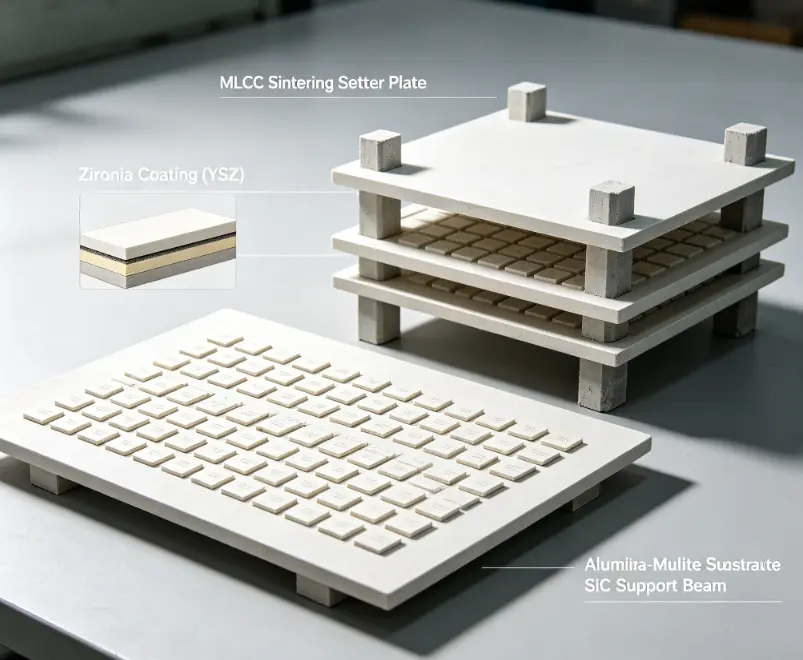
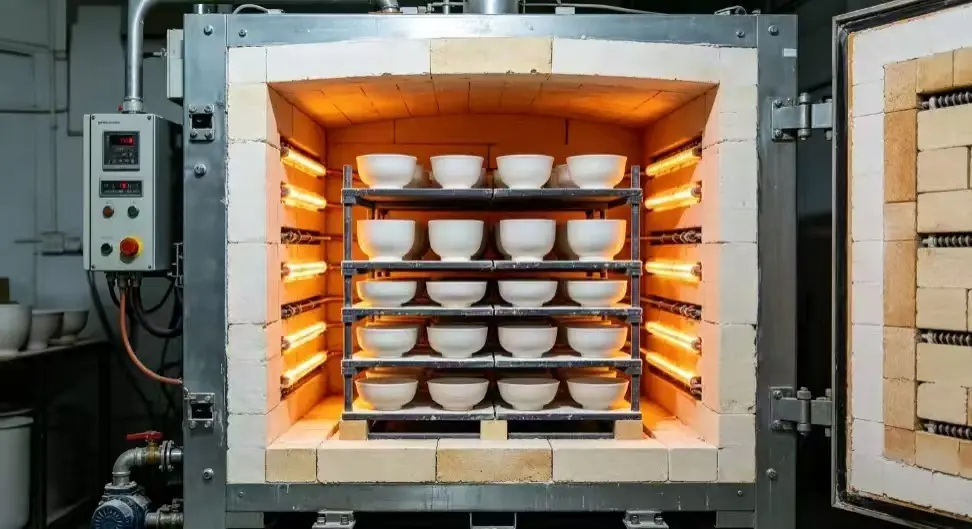
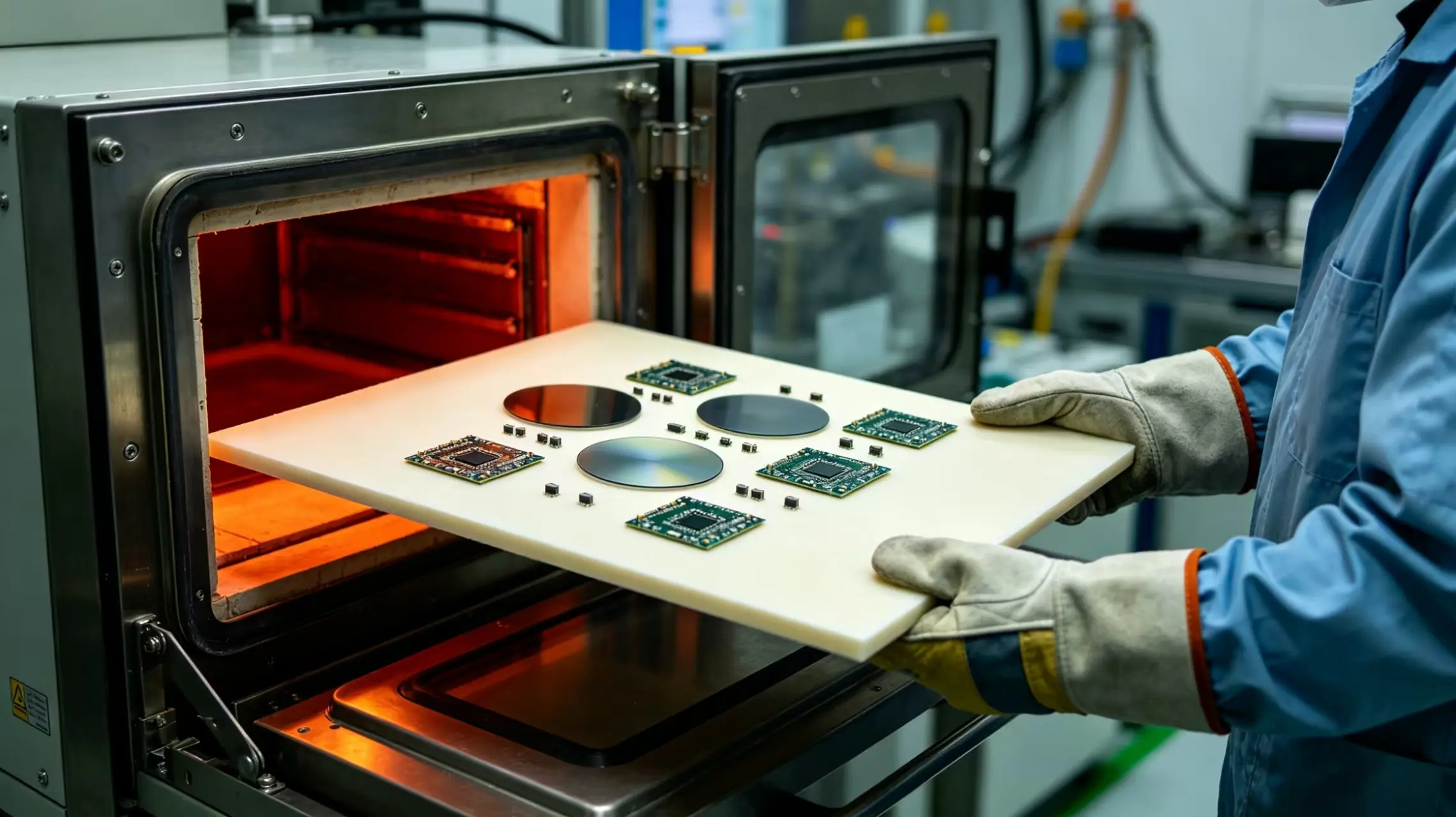
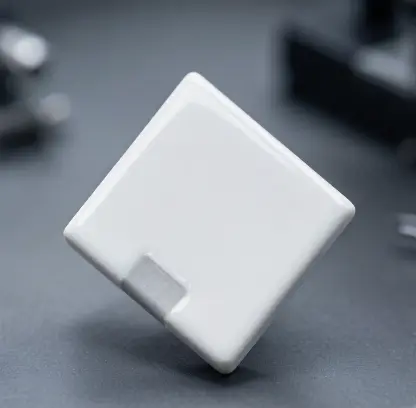
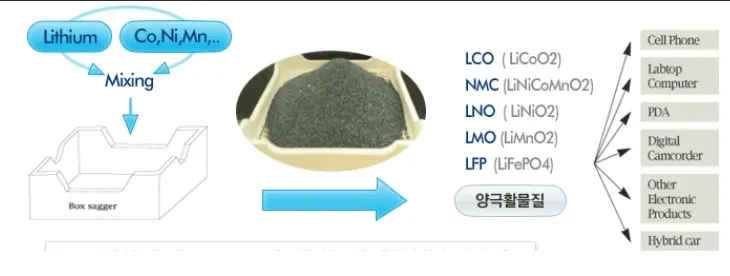
The principal forms of kiln furniture used in electronic ceramic production include setter plates (setter boards), saggers (saggars or enclosed containers), push plates (pusher plates for tunnel or pusher-type kilns), support beams and posts, and thermocouple protection tubes. Setter plates are flat, thin refractory boards on which individual green chips or substrates are placed directly or with a parting agent to prevent adhesion. Saggers are box-like containers that enclose powder or components, protecting them from oxidative impurities or retaining a controlled local atmosphere (for example, a slight reducing atmosphere for some ferrite sintering). Push plates are thick, dimensionally stable refractory slabs that carry setters and product through continuous pusher kilns. Support beams and pillars, typically made of high-strength materials such as recrystallized silicon carbide (RSiC), create multi-tier stacking systems to maximize kiln throughput. Each of these components must exhibit dimensional stability, chemical inertness toward the product, and resistance to repeated thermal cycling.
Material Options and Their Suitability
The material composition of kiln furniture is selected based on the sintering temperature, furnace atmosphere (oxidizing, reducing, or inert), required thermal shock resistance, and sensitivity of the electronic ceramic to contamination.
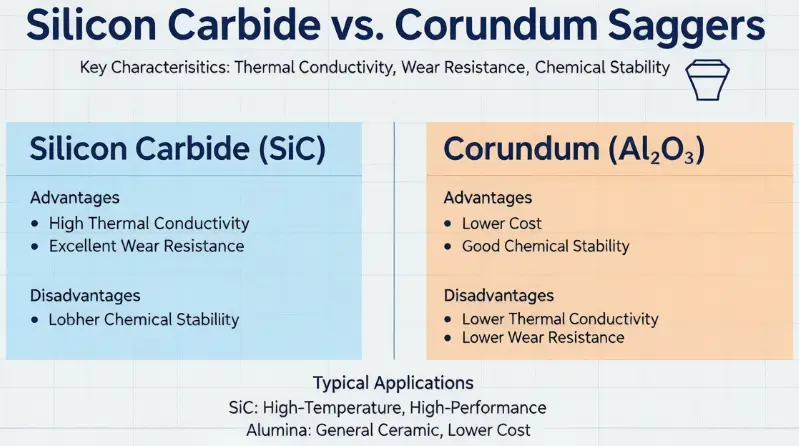
High-Purity Alumina (Al₂O₃): High-purity alumina—typically 95% to 99.7% Al₂O₃—is the most widely used material for setters and saggers in electronic ceramic sintering up to approximately 1600–1700°C in air. Its advantages include excellent chemical inertness, very low metallic impurity levels (especially Fe₂O₃, Na₂O, K₂O when high-grade raw material is used), good compressive strength at elevated temperature, and electrical insulation properties. High-purity alumina setters are the default choice for MLCC sintering, barium titanate-based dielectrics, and alumina substrate firing. The main limitation of alumina furniture is its relatively moderate thermal shock resistance (coefficient of thermal expansion ≈ 7–8 × 10⁻⁶ /°C) and lower thermal conductivity compared with silicon carbide, which can make it prone to edge chipping or cracking under very rapid heating/cooling cycles. To mitigate sticking, alumina setters may be coated with a thin layer of yttria-stabilized zirconia (YSZ) or magnesium oxide (MgO), which also provides an additional barrier against trace impurity migration.
Zirconia (ZrO₂) and Zirconia-Coated Alumina: Yttria-stabilized zirconia setters or zirconia-spray-coated Alumina Plates are employed for sintering highly contamination-sensitive components such as MLCCs with base-metal electrodes (BME), NTC thermistors, or PZT piezoelectrics where interaction with alumina could introduce dopant effects. Zirconia is chemically inert, has low thermal conductivity (which can be advantageous for certain soak profiles), and its cubic/tetragonal stabilized form offers good fracture toughness. However, zirconia furniture is more expensive and has a higher density, resulting in greater heat capacity and potentially slower furnace response.
Silicon Carbide (SiC — Recrystallized RSiC, Sintered SiC, Nitride-Bonded SiC): SiC is prized for its exceptional thermal conductivity (80–180 W/m·K depending on grade), very low coefficient of thermal expansion (≈ 4.0–4.5 × 10⁻⁶ /°C), and outstanding thermal shock resistance. These properties make SiC the material of choice for support beams, posts, push plates, and kiln rollers in continuous electronic ceramic sintering lines, where rapid cycling and minimal beam deflection under load are essential. SiC is also used for open setters in some ferrite sintering applications. However, SiC is semiconductive and may slowly oxidize in air above ~800–1000°C (forming a passive SiO₂ layer), and in strongly reducing atmospheres it can be subject to active oxidation or interact with certain metal vapors. For high-purity dielectric ceramic sintering where any silicon migration could be detrimental, direct contact between SiC and the product is typically avoided—SiC is used structurally (beams, rollers, push plates) while the product contacts a high-purity alumina or zirconia setter placed atop the SiC-supported system.
Cordierite-Mullite and Corundum-Mullite Composites: Cordierite-mullite furniture (2MgO·2Al₂O₃·5SiO₂ + 3Al₂O₃·2SiO₂) offers an extremely low CTE (≈ 1–2 × 10⁻⁶ /°C), conferring excellent thermal shock resistance, and is commonly used for sintering ferrites and thick-film resistor pastes in the 1200–1350°C range. Corundum-mullite (high alumina blended with mullite) extends the service temperature to ~1500–1600°C with better load-bearing capacity than cordierite-mullite, making it suitable for intermediate-temperature electronic ceramic processes or as push plates in pusher kilns. These composites are more economical than high-purity alumina but have higher impurity levels, limiting their use in ultra-high-purity applications.
Specialty Materials: For certain lead-based piezoelectrics (PZT with PbO volatility) or varistors containing bismuth, magnesia (MgO) or spinel (MgAl₂O₄) setters are occasionally specified because they are less reactive with lead oxide vapors than alumina. In hydrogen or strictly controlled reducing atmospheres for some HTCC or special ferrite processes, fully dense, high-purity alumina or specially treated SiC with protective coatings may be required.
Selection Criteria and Practical Considerations
When specifying Kiln Furniture for electronic ceramic sintering, manufacturers evaluate several interdependent factors:
-
Sintering Temperature and Atmosphere: Products fired above 1600°C in air typically require 99%+ alumina or occasionally zirconia setters; below 1400°C with fast cycling, cordierite-mullite or corundum-mullite may suffice. Reducing atmospheres necessitate careful verification of SiC oxidation behavior or substitution with appropriate oxide-based furniture.
-
Contamination Sensitivity: Ultra-high-purity applications (BME-MLCC, PZT) favor ≥99.5% alumina or YSZ-coated setters with certified low Fe/Na/K content (<50–100 ppm total metallic impurities).
-
Thermal Shock and Cycle Time: Fast-fire continuous kilns demand furniture with low CTE and high thermal conductivity—RSiC for structural elements, alumina or zirconia for contact setters.
-
Flatness and Surface Quality: Setter plates for MLCC or substrate sintering require very high flatness (e.g., ≤ 0.02 mm/m) and low surface roughness (Ra < 1 µm) to permit uniform shrinkage and prevent warpage or adhesion of the green tape.
-
Load-Bearing and Creep Resistance: Multi-deck loading in tunnel kilns places considerable static load on bottom beams and push plates; RSiC or dense corundum-Mullite Push Plates are engineered for minimal high-temperature creep.
-
Total Cost of Ownership: While high-purity alumina and zirconia furniture carry higher upfront cost, their contamination control and product yield benefits often justify the investment. SiC structural furniture, though initially expensive, delivers 3–5× longer service life than oxide alternatives in thermally cyclic lines.
Typical Application Examples
-
MLCC Sintering (NCM/BME): Pusher kiln with RSiC push plates and beams → 99.5%+ alumina setter plates (sometimes YSZ-coated) → product placed on setter with MgO or proprietary parting powder; sintering at 1050–1200°C in N₂/H₂ atmosphere.
-
Soft Ferrite (MnZn, NiZn): Continuous pusher kiln using corundum-mullite push plates, cordierite-mullite or alumina setters; sintering at 1250–1350°C in slightly oxidizing or equilibrium atmosphere.
-
PZT Piezoelectric / BaTiO₃ Dielectrics: High-purity alumina saggers or setters, optionally with MgO or YSZ coating; sintering at 1250–1350°C (PZT) or 1300–1450°C (BaTiO₃) in sealed or controlled atmosphere to manage PbO or dopant volatility.
-
LTCC / HTCC: Alumina or aluminum nitride (AlN) setter plates with precision-machined recesses; firing at 850–900°C (LTCC) or 1500–1600°C (HTCC) in air or N₂.
Conclusion
Kiln furniture for electronic ceramic sintering is a precision-engineered system rather than a generic refractory item. High-purity alumina and zirconia-based setters address contamination and purity concerns for capacitive and piezoelectric components; silicon carbide provides the structural backbone for fast-cycling, high-load continuous kilns; cordierite-mullite and corundum-mullite composites serve cost-effective roles in less purity-critical, moderate-temperature segments such as ferrite sintering. Optimal selection—balancing material compatibility, thermal-mechanical performance, and lifecycle cost—directly influences product yield, dimensional accuracy, and electrical characteristics of the finished electronic ceramic components. As electronic ceramics trend toward finer layer structures, base-metal electrode systems, and tighter tolerance specifications, the demands placed upon kiln furniture purity, flatness, and thermal stability will continue to intensify, driving ongoing refinement in refractory ceramic formulation and surface engineering.