


History of Alumina Ceramic Development
The early exploration of alumina dates back to ancient times. Humans naturally used alum minerals for dyeing and water purification. In 1754, German chemist Marggraf successfully separated pure aluminum oxide from alum, laying the theoretical foundation for subsequent alumina research. In 1856, the soda sintering method for bauxite was invented, which realized large-scale extraction of industrial alumina and opened the prelude to alumina industrialization. The Bayer process in the 1880s greatly reduced the cost of alumina powder, providing sufficient raw materials for the birth of alumina ceramic.
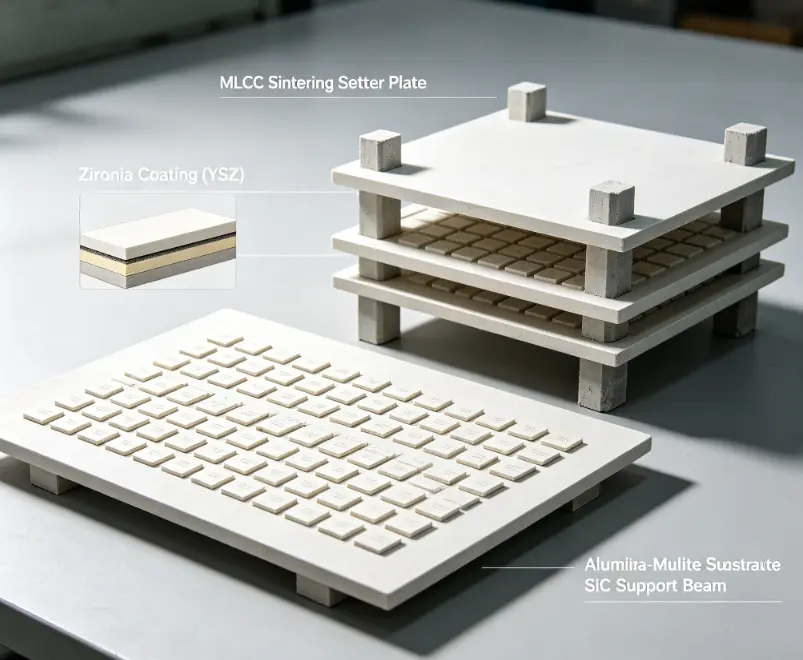
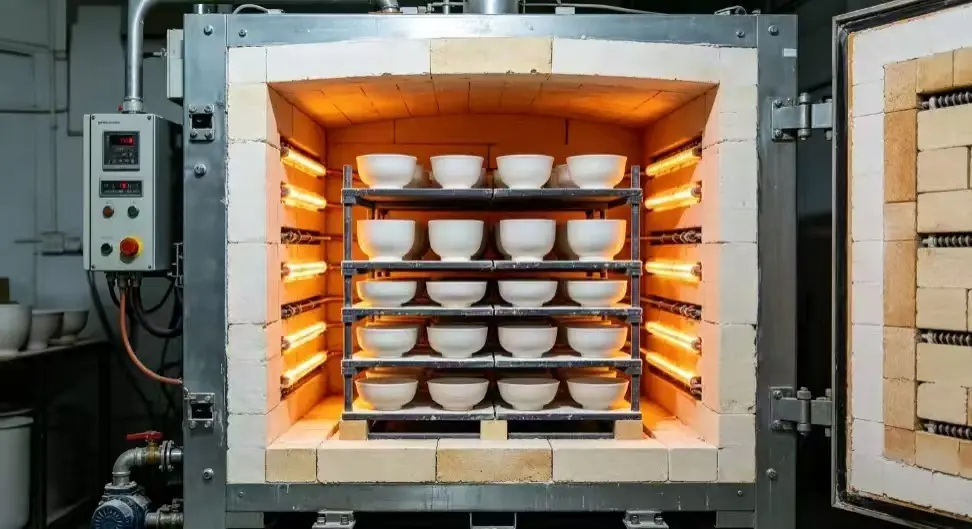
In 1905, Germany took the lead in researching alumina cutting tools, marking the official start of alumina ceramic application. In 1910, pure alumina ceramicslip casting technology was patented, realizing the preliminary forming of high-purity alumina products. In 1923, Germany achieved industrial mass production of 99% high-purity alumina ceramic. Since then, sintered corundum materials began to be used as high-temperature furnace linings and refractory Kiln Furniture, stepping from laboratory to actual industrial production. In 1931, Siemens applied alumina ceramic to spark plug insulators, expanding its application to electronic insulation fields and greatly promoting technological progress.
After World War II, global alumina ceramic technology entered a golden rapid development period. In the 1950s, American enterprises adopted hot isostatic pressing (HIP) technology, which raised the density of alumina ceramic to over 99.5% and significantly improved high-temperature strength and wear resistance. Alumina ceramics were widely used in mechanical seals, wear-resistant parts and kiln supporting structures, and the global output grew steadily every year. From the 1970s to 1990s, Japan optimized sintering additives and precision molding processes, developed ultra-fine grain dense alumina ceramics, and expanded applications to medical biomaterials, electronic substrates and precision structural parts. High-purity alumina showed excellent biocompatibility, and was made into artificial joints and dental implants, becoming important medical inert ceramics.
In recent decades, with the development of new energy, semiconductor and high-temperature kiln industries, alumina ceramic technology continues to iterate. Ultra-high purity 99.9% alumina, Porous Alumina, composite toughened alumina and special-shaped integrated kiln furniture are continuously launched. It undertakes key tasks such as high-temperature support, corrosion resistance, electrical insulation and powder sintering carrier in kilns, new energy devices and precision machinery.
Up to now, alumina ceramic remains the most cost-effective advanced ceramic in the world. It has stable high temperature resistance, low thermal expansion, corrosion resistance and insulation properties. After more than 100 years of development, it has formed a complete industrial chain from powder processing, molding sintering to finished product processing. It still irreplaceably supports high-temperature kiln, electronic ceramics, metallurgy, medical treatment and many key industries, and keeps moving towards higher precision, higher purity and longer service life.