

Sintering Technologies for Barium Titanate Ceramics
1 Traditional and Liquid-Phase Sintering
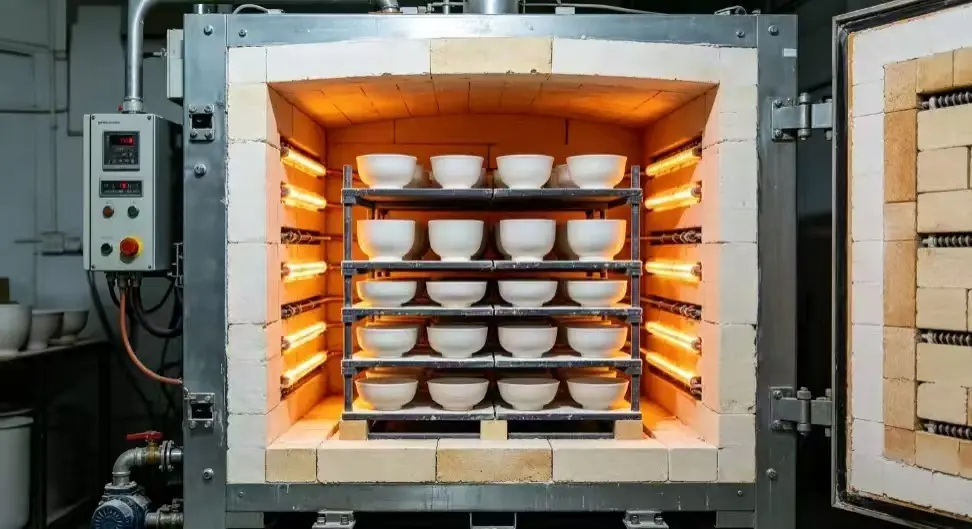
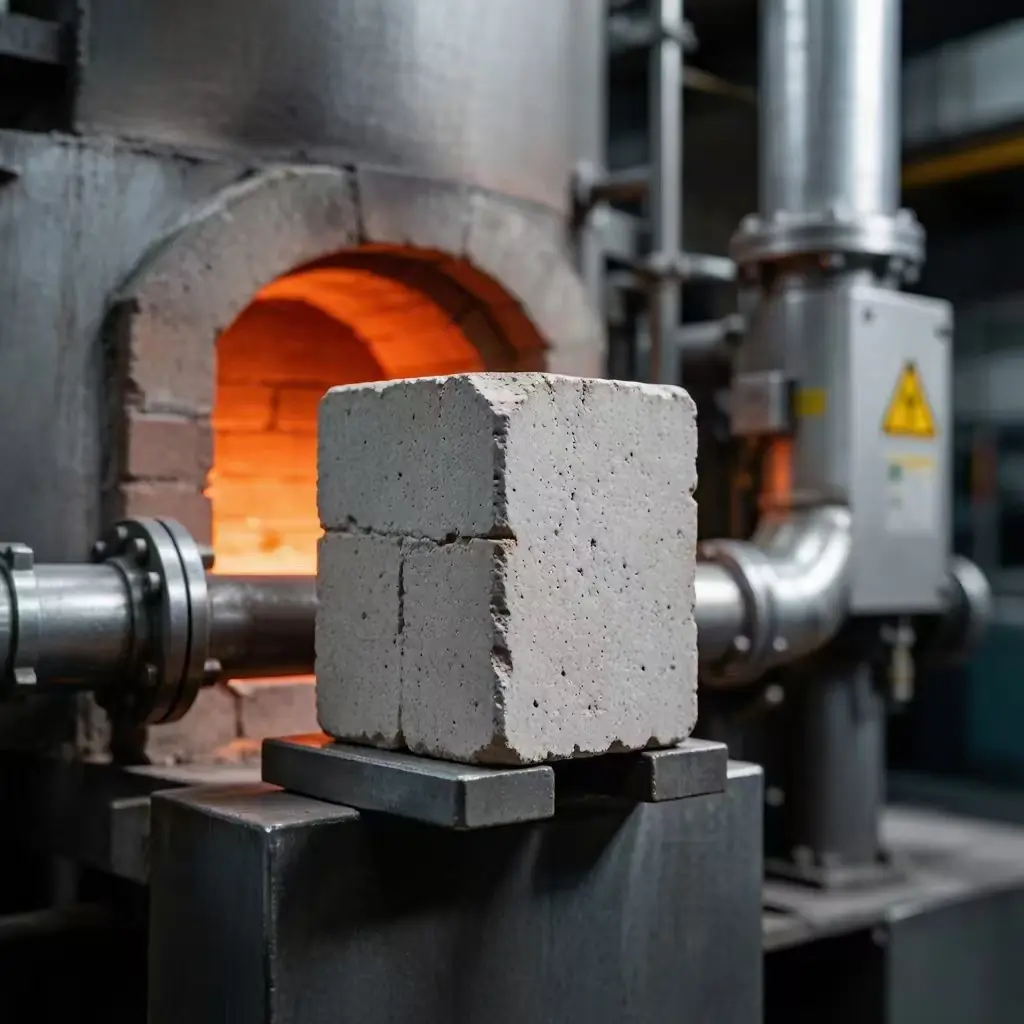
Conventional solid-state sintering of BaTiO₃ typically involves high temperatures, often exceeding 1300°C, for several hours. While this method can produce ceramics with a density of about 93% and a room-temperature permittivity of around 2000 at 1 kHz, it often leads to excessive grain growth, which can be detrimental to dielectric strength and reliability. To address this, methods like two-step sintering and rate-controlled sintering have been explored to produce fine-grained ceramics. These approaches generally achieve sintering temperatures below those used in conventional processes, effectively yielding ceramics with significantly smaller grain sizes. Furthermore, doping is a common strategy to modify sintering behavior and electrical properties. For instance, the addition of Lanthanum (La) can impart semiconducting properties, and such doped ceramics have been successfully sintered using a CO₂ laser as the main heating source. This laser sintering technique, even when performed in an open atmosphere, can produce crack-free, homogeneous microstructures with a positive temperature coefficient of resistivity (PTCR) showing an increase of two orders of magnitude. Similarly, the incorporation of Nickel (Ni) or Nickel Oxide (NiO) influences the sintering behavior, microstructure, and electrical characteristics, including the defect chemistry and reduction resistance of the material.
2 Advanced Sintering Techniques
To overcome the limitations of conventional sintering, several advanced techniques have been developed, focusing on grain growth suppression, energy efficiency, and microstructural control.
-
Ultra-fast High-Temperature Sintering (UHS): This innovative method utilizes rapid heating to achieve densification in an extremely short time. For example, BaTiO₃ ceramics can be sintered at a current of 180 A for only 5 minutes, which is 196 times faster than conventional sintering. This process effectively suppresses grain growth and results in excellent properties, including a dielectric constant of 3,450 and a piezoelectric constant of 283 pC/N. This represents a significant breakthrough for the efficient production of functional ceramics.
-
Cold Sintering Process (CSP): CSP is a groundbreaking low-temperature technique that uses a transient aqueous solvent, applied heat, and pressure to achieve densification. Researchers have successfully densified BaTiO₃ at temperatures as low as 300°C using an alkaline hydroxide solution, marking the lowest processing temperature recorded for this material. This method not only saves substantial energy but also opens possibilities for integrating ceramics with polymers or cheaper metals. A related process has been applied to barium strontium titanate (BST), using Ba(OH)₂·8H₂O as a flux at 350°C, which resulted in improved dielectric tunability and thermal stability compared to conventionally sintered BST.
-
Combined and Novel Pressureless Sintering: One study proposed a novel pressureless approach that integrates rapid-rate sintering, rate-controlled sintering, and two-step sintering in a controlled atmosphere. This combined method facilitates superior control over grain and pore morphology. When applied to pure nanocrystalline BaTiO₃ powder, it produced fully dense ceramics with a fine grain size of 108 nm, demonstrating a grain growth factor 17 times smaller than that achieved by conventional sintering.
3 Conclusion
The sintering of barium titanate ceramics has evolved significantly from energy-intensive conventional methods toward a diverse set of advanced technologies. Techniques like ultra-fast high-temperature sintering, cold sintering, and novel combined sintering methods offer powerful tools to precisely control the ceramic's microstructure while dramatically reducing processing time and energy consumption. The choice of sintering technology is paramount, as it directly influences key properties such as dielectric constant, piezoelectric response, and reliability. These advancements are pivotal for meeting the escalating demands of modern electronics for miniaturized, high-performance, and sustainably manufactured components. Future research will likely focus on further refining these techniques and exploring new sintering chemistries to enable the next generation of electronic devices.