
The Evolution of Electrical Insulating Ceramics: From Porcelain Telegraph Insulators to Advanced Electronic Substrates
Origins: Early Concepts and the Advent of Porcelain Insulators
The conceptual foundation for insulating materials was laid in the eighteenth century when Stephen Gray (1729) distinguished conductors from insulators, and later when the Leyden jar (1746) employed glass as a dielectric medium to store static charge. However, the practical use of ceramics as electrical insulators did not begin until the mid-nineteenth century. Although glass had been used initially on early telegraph lines in the 1830s and 1840s, it proved vulnerable to thermal shock, surface moisture accumulation, and mechanical fragility—particularly in damp European and North American climates.
In 1849, Werner von Siemens adopted traditional triaxial porcelain—composed of kaolin (≈50%), feldspar (≈25%), and quartz (≈25%)—to insulate telegraph lines between Frankfurt and Berlin, marking the first large-scale application of ceramic electrical insulators. By the 1850s–1860s, glazed hard-paste porcelain and salt-glazed stoneware insulators were being mass-produced by firms such as Doulton & Co. and Denby Pottery in Britain, replacing glass on telegraph and early telephone poles. Porcelain offered superior weatherability, higher surface resistivity under humid conditions, compressive strength, and the ability to be molded into complex petticoat shapes that increased creepage distance to prevent surface flashover.
Throughout the late nineteenth century, as urban electrification spread, porcelain found applications in lamp holders, switchgear, fuse blocks, and early distribution transformers. The 1909 invention of the cap-and-pin suspension insulator—which utilized porcelain's high compressive strength in a modular disc design—was pivotal, enabling high-voltage AC transmission by allowing insulator strings to be scaled to any system voltage. By the early twentieth century, electrical porcelain (also called "triaxial porcelain" or "steatite" in some formulations) had become the global standard for power transmission and distribution insulators.
The Emergence of Technical Ceramics: Alumina, Steatite, and the Electronics Revolution
The interwar period and the post-World War II boom in electronics drove a decisive shift from commodity porcelain toward high-purity technical ceramics with tailored dielectric properties. Traditional porcelain, while adequate for power line insulation, exhibited relatively high dielectric loss and variable composition—unsuitable for radio-frequency (RF) components, vacuum tubes, and emerging semiconductor devices.
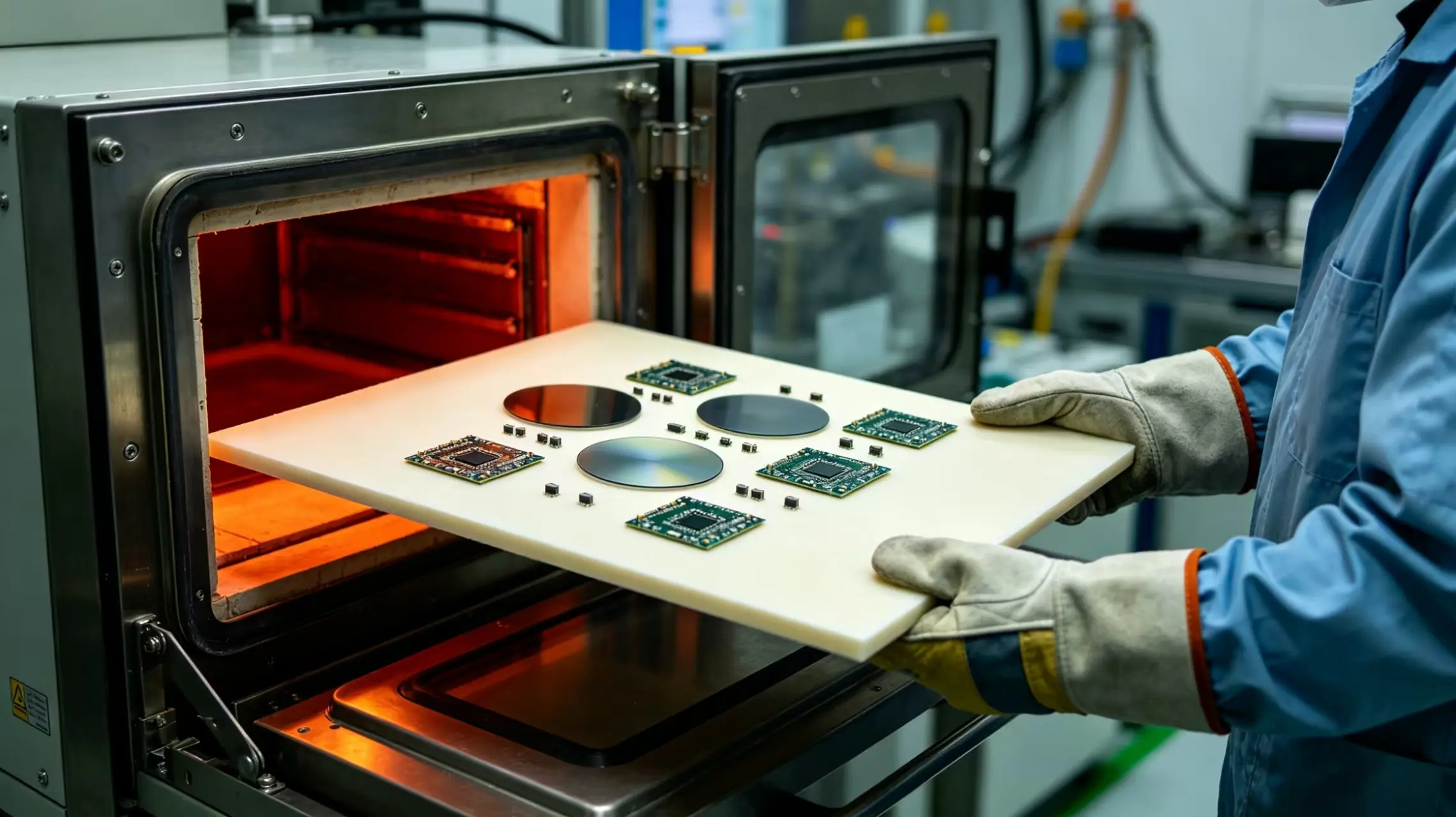
In the 1920s–1940s, steatite (magnesium silicate, MgO·SiO₂) ceramics were developed for use in RF coils, trimmer capacitors, and television deflection yokes due to their low dielectric loss at high frequencies and excellent dimensional stability. Simultaneously, high-alumina ceramics (typically 92–99.9% Al₂O₃) began to be adopted for demanding applications requiring higher dielectric strength, better thermal conductivity, and superior mechanical robustness compared to porcelain. After WWII, alumina became the dominant substrate material for thick- and thin-film hybrid circuits, transistor headers, and integrated circuit (IC) packages.
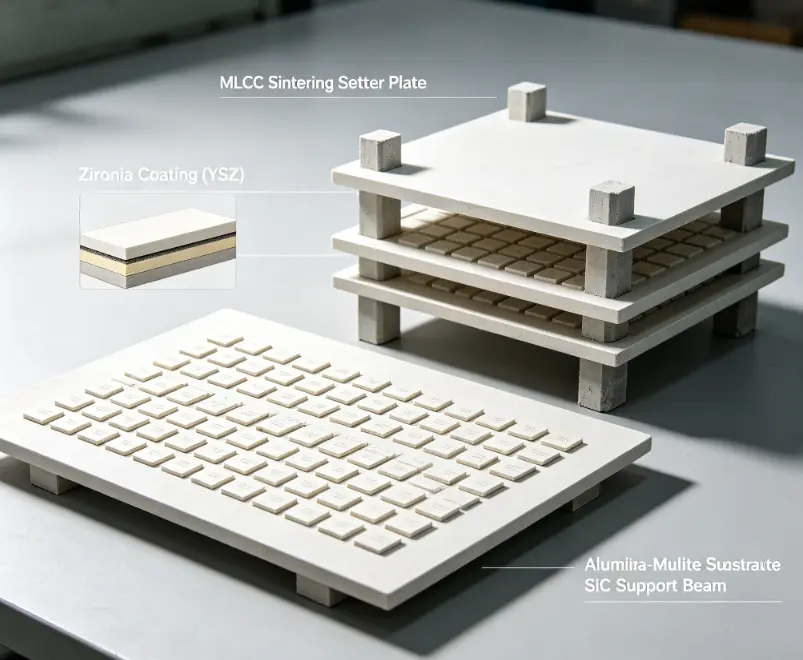
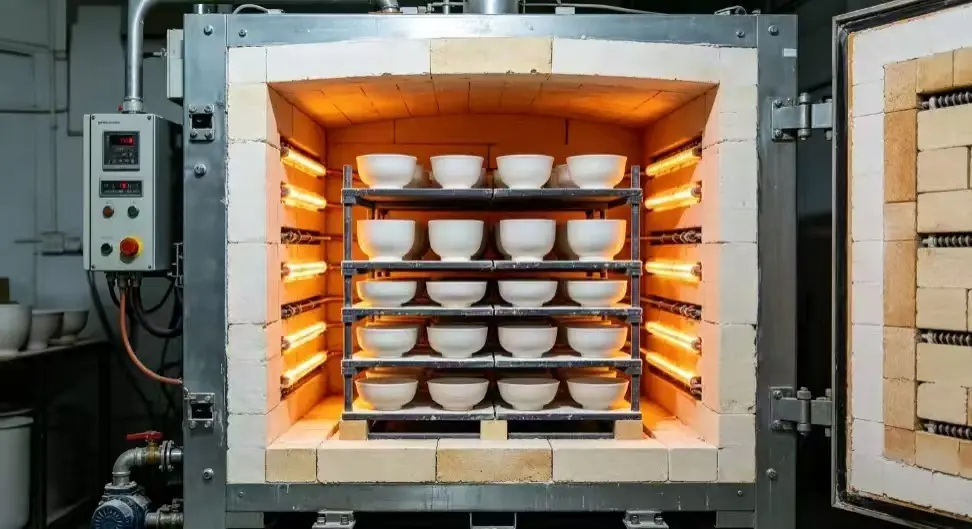
The 1950s–1960s saw the commercialization of barium titanate (BaTiO₃)-based multilayer ceramic capacitors (MLCCs) and the introduction of Low-Temperature Co-fired Ceramics (LTCC) technology in the 1980s, which allowed passive components and interconnects to be embedded within ceramic multilayer substrates—ushering in the miniaturization era of modern electronics. Alongside these developments, cordierite (2MgO·2Al₂O₃·5SiO₂) and Mullite Ceramics were optimized for applications requiring low thermal expansion and good thermal shock resistance, such as kiln furniture and certain electronic substrates.
Modern Advanced Insulating Ceramics: Thermal Management and Extreme Environments
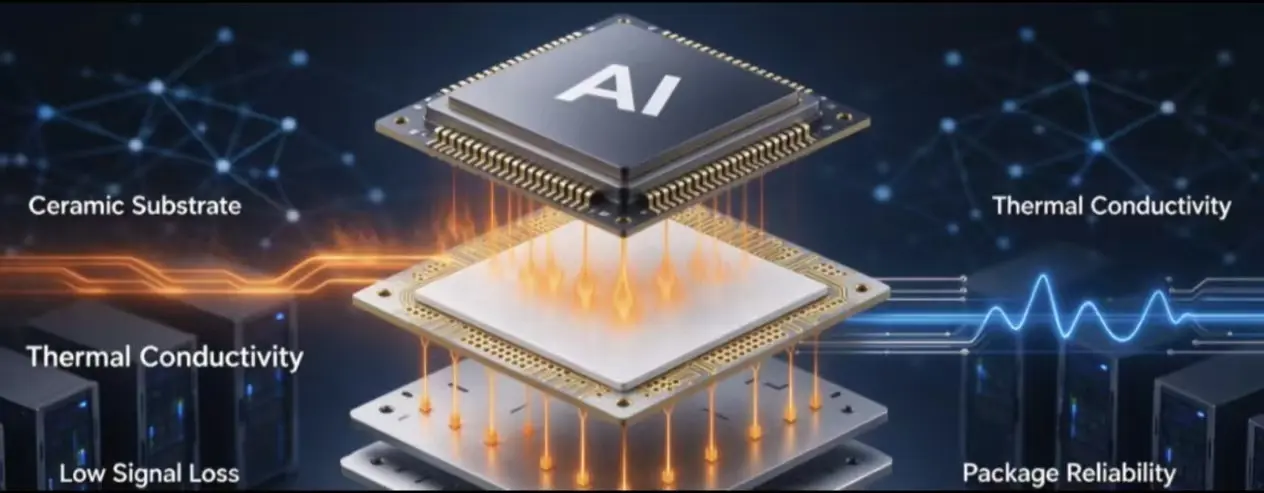
As power densities in electronic devices escalated from the 1970s onward, the demand for insulating ceramics with high thermal conductivity—beyond what alumina could provide—intensified. Beryllia (BeO) offered thermal conductivity approaching that of metals (~250 W/m·K) with excellent electrical insulation, but its toxicity restricted widespread use. This limitation catalyzed research into alternative materials, most notably Aluminum Nitride (AlN), which combines good thermal conductivity (up to 170–200 W/m·K for high-purity grades), a coefficient of thermal expansion closely matched to silicon, and nontoxicity. AlN is now the material of choice for high-power LED substrates, IGBT modules, and RF power device packages.
Other modern insulating ceramics include Boron Nitride (BN)—often used as a thermally conductive filler or in crucibles and microwave windows due to its lubricity and stability—and zirconia-toughened alumina (ZTA) composites for mechanically demanding high-voltage applications. In the realm of ultra-high-temperature ceramics (UHTCs), compositions based on zirconium diboride (ZrB₂) and hafnium diboride (HfB₂), sometimes reinforced with SiC, are being developed for hypersonic vehicle leading edges and re-entry vehicle components where conventional insulators would fail.
Contemporary ceramic insulation technology also addresses environmental challenges. In outdoor high-voltage applications, traditional porcelain insulators face competition from composite (non-ceramic) polymer insulators with silicone rubber sheds for superior pollution performance; nevertheless, porcelain and alumina-based insulators remain irreplaceable in many substation and apparatus applications due to their arc resistance, incombustibility, and proven century-long service life.