
Why Cordierite-Mullite Kiln Furniture is Used in Powder Metallurgy Sintering
1. Superior Thermal Shock Resistance
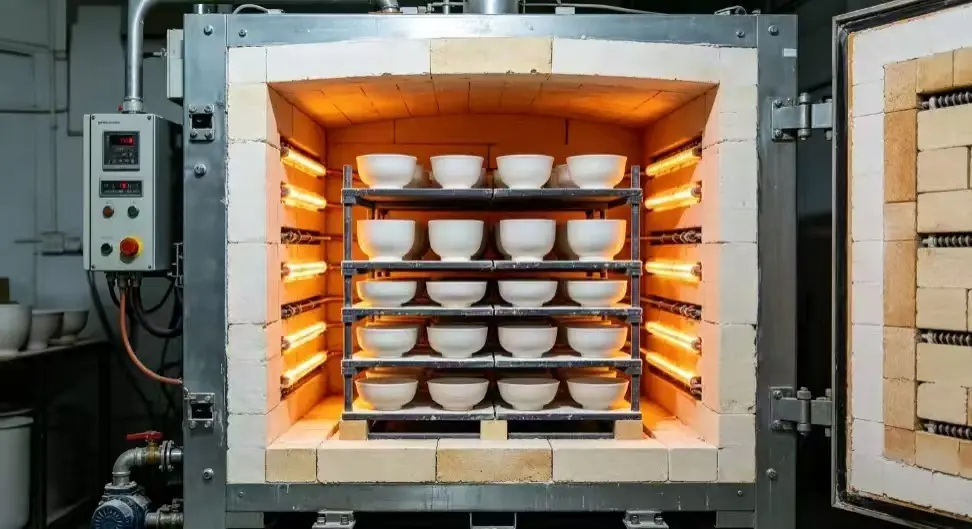
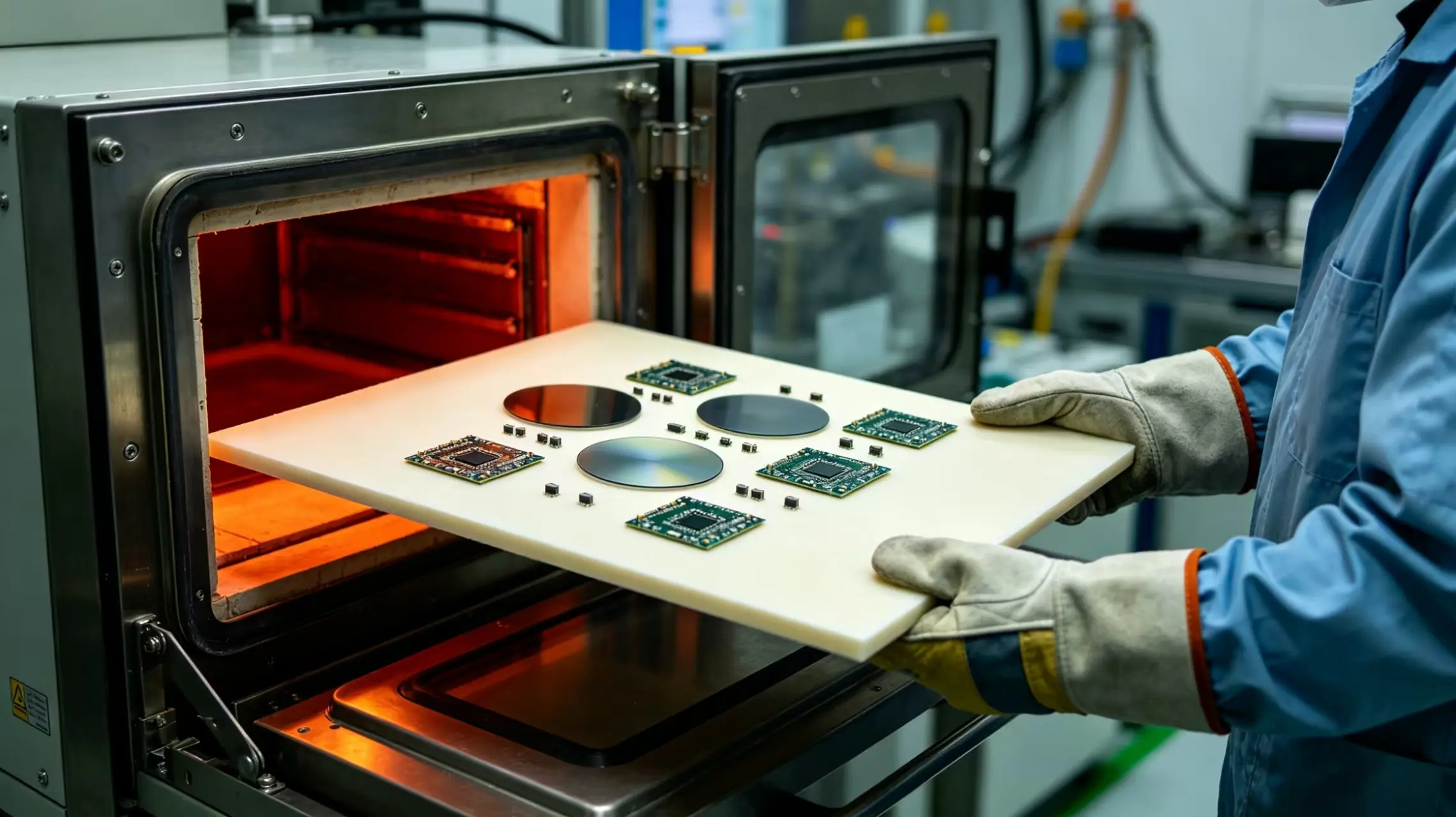
The primary challenge in PM sintering is the repeated cycling between extreme temperatures. In continuous mesh-belt furnaces, Kiln Furniture enters the hot zone (up to 1150°C) and exits into the cooler atmosphere (often water-cooled sections or ambient air). This rapid expansion and contraction induce massive thermal stress.
Cordierite (2MgO·2Al₂O₃·5SiO₂) possesses an exceptionally low coefficient of thermal expansion (CTE), typically around 2.0–2.5 × 10⁻⁶/°C. When combined with mullite (3Al₂O₃·2SiO₂), which provides structural integrity, the resulting composite can withstand rapid temperature changes without cracking or spalling. Unlike dense alumina or silicon carbide, which are prone to catastrophic failure under sudden thermal gradients, cordierite-mullite furniture survives thousands of cycles, making it ideal for the stop-start nature of industrial PM production.
2. Lightweight and Energy Efficiency
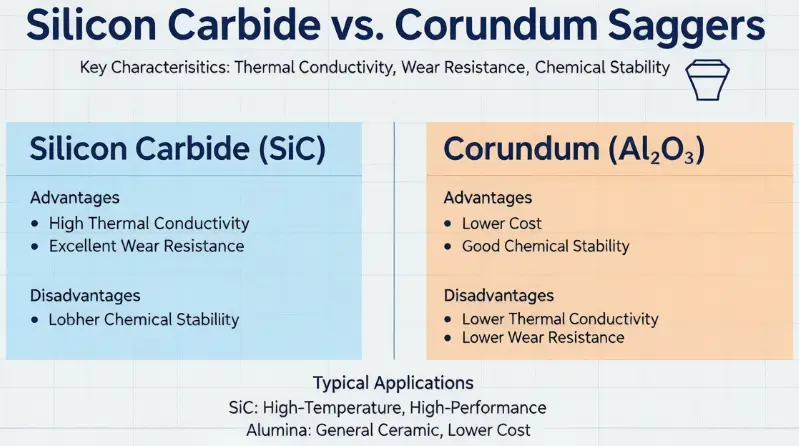
Energy consumption is a major cost driver in sintering. Cordierite-mullite furniture is significantly lighter than traditional dense refractories or silicon carbide (SiC) systems. Because the furniture itself must be heated and cooled with every cycle, a lighter load requires less energy to maintain the furnace profile.
Furthermore, the lower thermal mass of cordierite-mullite allows furnaces to reach target temperatures faster during heat-up phases and cool down quicker during maintenance shutdowns. This reduces downtime and increases throughput, providing a direct economic advantage over heavier ceramic alternatives.
3. Chemical Inertness and Contamination Control
Powder metallurgy often involves reactive metals such as iron, stainless steel, and copper alloys. During sintering, these metals are susceptible to carburization or oxidation if the environment is not controlled.
Cordierite-mullite exhibits excellent chemical stability. It does not outgas volatile compounds at typical sintering temperatures (below 1300°C). Crucially, it is highly resistant to carbon absorption. In endothermic gas atmospheres (common in steel sintering), carbon can diffuse into dense ceramics, causing them to swell and crack. The porous microstructure of cordierite-mullite (typically 20–30% porosity) is engineered to resist this penetration, maintaining structural integrity. Additionally, it does not react with the metal powders, preventing unwanted contamination of the final part.
4. Dimensional Stability and Flatness
The flatness of kiln furniture is critical for producing dimensionally accurate PM parts. If a setter plate warps at high temperatures, the metal components resting on it will also warp. Mullite provides high refractoriness (resistance to deformation under load), while cordierite contributes to volume stability.
Cordierite-mullite furniture maintains its shape even after prolonged exposure to high temperatures. It exhibits minimal creep, ensuring that parts remain level during the densification process. This stability reduces scrap rates caused by distortion and eliminates the need for frequent furniture replacement due to warpage.
5. Cost-Effectiveness and Availability
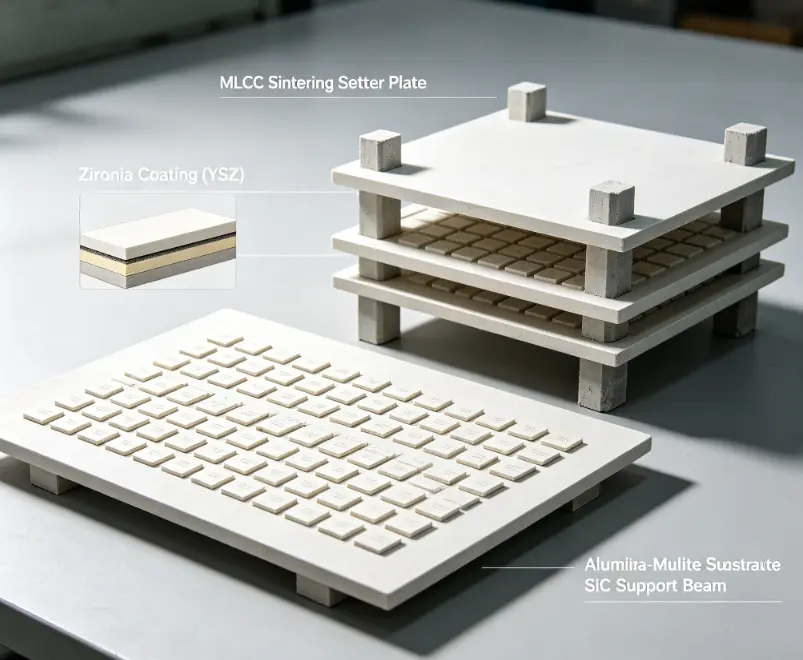
Compared to advanced ceramics like silicon carbide (SiC) or alumina, cordierite-mullite is relatively inexpensive to manufacture. The raw materials (talc, clay, alumina) are abundant and low-cost. The firing process is well-established, allowing for the production of large, complex shapes such as corrugated beams, batts, and custom setters at a reasonable price point.
While SiC offers higher strength and thermal conductivity, it is often over-engineered for standard PM sintering temperatures (<1200°C) and comes at a premium cost. Cordierite-mullite hits the "sweet spot" of performance versus price.
6. Compatibility with Atmospheres
PM sintering frequently occurs in reducing or neutral atmospheres (e.g., hydrogen, nitrogen, dissociated ammonia). Cordierite-mullite performs reliably in these environments. It does not oxidize or degrade when exposed to hydrogen-rich atmospheres, unlike some metallic alloys used in furnace construction.
Conclusion
The selection of cordierite-mullite kiln furniture in powder metallurgy is not accidental; it is a result of sophisticated materials engineering. Its unique combination of low thermal expansion, light weight, chemical inertness, and dimensional stability directly addresses the operational challenges of high-volume sintering. By minimizing thermal shock failures, reducing energy consumption, and preventing part contamination, cordierite-mullite furniture ensures consistent quality and profitability in the powder metallurgy industry. As PM technologies advance toward higher temperatures and cleaner atmospheres, this versatile ceramic composite remains the backbone of efficient sintering operations worldwide.