
News


0102030405
Why we use ceramic saggars to fire pearl pigment
2026-05-23
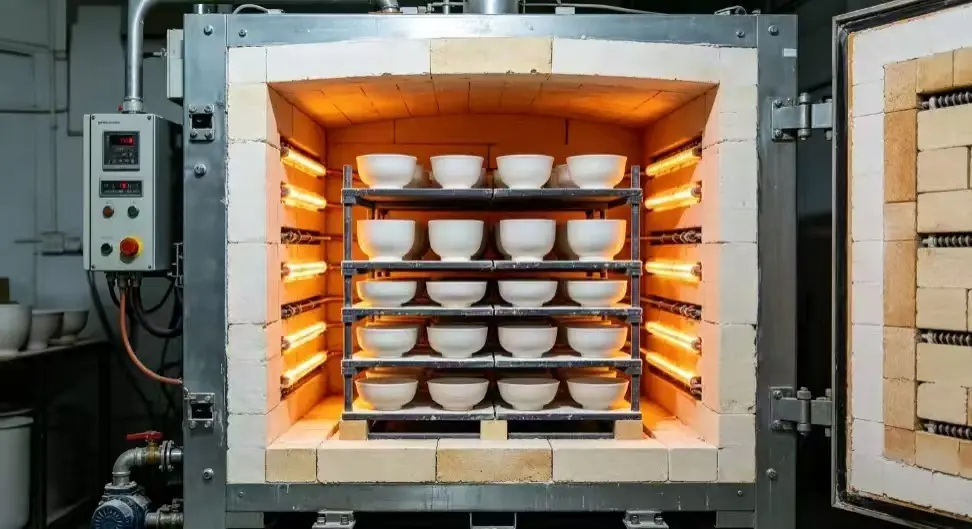
The primary reason for using ceramic saggars is to isolate harsh kiln environments and protect the fragile pigment microstructure. In open firing, ceramic wares are directly exposed to kiln flue gas, sulfur compounds, floating ash and residual impurities. At high temperatures, these contaminants easily react with the titanium dioxide or iron oxide coating of pearl pigments, damaging the layered interference structure. Once the micro-layers are destroyed, the pearl light interference effect disappears, resulting in dull, gray or uneven surfaces. Ceramic Saggars are made of high-purity refractory materials with stable chemical inertness. Their closed space completely separates the decorated ceramics from the external kiln atmosphere, effectively preventing chemical contamination and irreversible pigment deterioration.
Secondly, saggars provide a uniform and stable thermal field, which is critical for preserving pearl pigment optical properties. Pearl pigments require mild and consistent heating and cooling cycles. Rapid temperature rise, local overheating or violent thermal fluctuation will cause internal stress, leading to micro-cracks and delamination of pigment layers. Unlike open firing, which suffers from uneven temperature distribution and direct flame radiation, saggars rely on refractory thermal radiation to achieve gentle and balanced heat conduction. The enclosed firing space eliminates temperature differences across ceramic surfaces, ensuring every area receives identical heat treatment. This stable thermal environment allows the glaze layer to fuse fully and bond tightly with pigments without damaging their light-refracting structure.
Thirdly, saggar firing optimizes the sintering atmosphere to standardize pearl color presentation. Most pearl pigments require a clean and weak oxidizing atmosphere to maintain pure luster. Open kilns often feature unstable oxygen content and occasional local reduction, which easily darkens metallic pigments and causes inconsistent color shifting. Saggars form a relatively independent micro-atmosphere. With reasonable sealing gaps, they maintain stable oxygen levels, avoid excessive reduction or over-oxidation, and ensure uniform color and luster consistency in mass production. This atmospheric control capability fundamentally improves the repeatability of pearl decoration effects.
In addition, ceramic saggars greatly reduce production defects and improve finished product yield. Open firing frequently causes pinholes, ash spots, blisters and surface scratches, which severely damage the delicate pearl finish. By shielding external impurities and blocking direct flame scouring, saggars significantly reduce surface imperfections. Meanwhile, saggars prevent mutual friction and collision between stacked ceramics, maintaining the integrity of fresh pigment coatings. For manufacturers, this means lower rework rates, more stable batch quality and higher production efficiency.
To sum up, ceramic saggars are not merely simple refractory containers, but core process guarantees for qualified pearl pigment firing. They solve the key pain points of open firing, including easy contamination, unstable temperature and poor atmosphere control. By protecting pigment microstructures, stabilizing thermal conditions, standardizing sintering atmosphere and reducing defects, saggars ensure that pearl pigments can fully display their elegant iridescent and luminous effects. Therefore, using ceramic saggars has become a standard and necessary process in high-end pearl ceramic manufacturing.